Elham Asaad Buaras
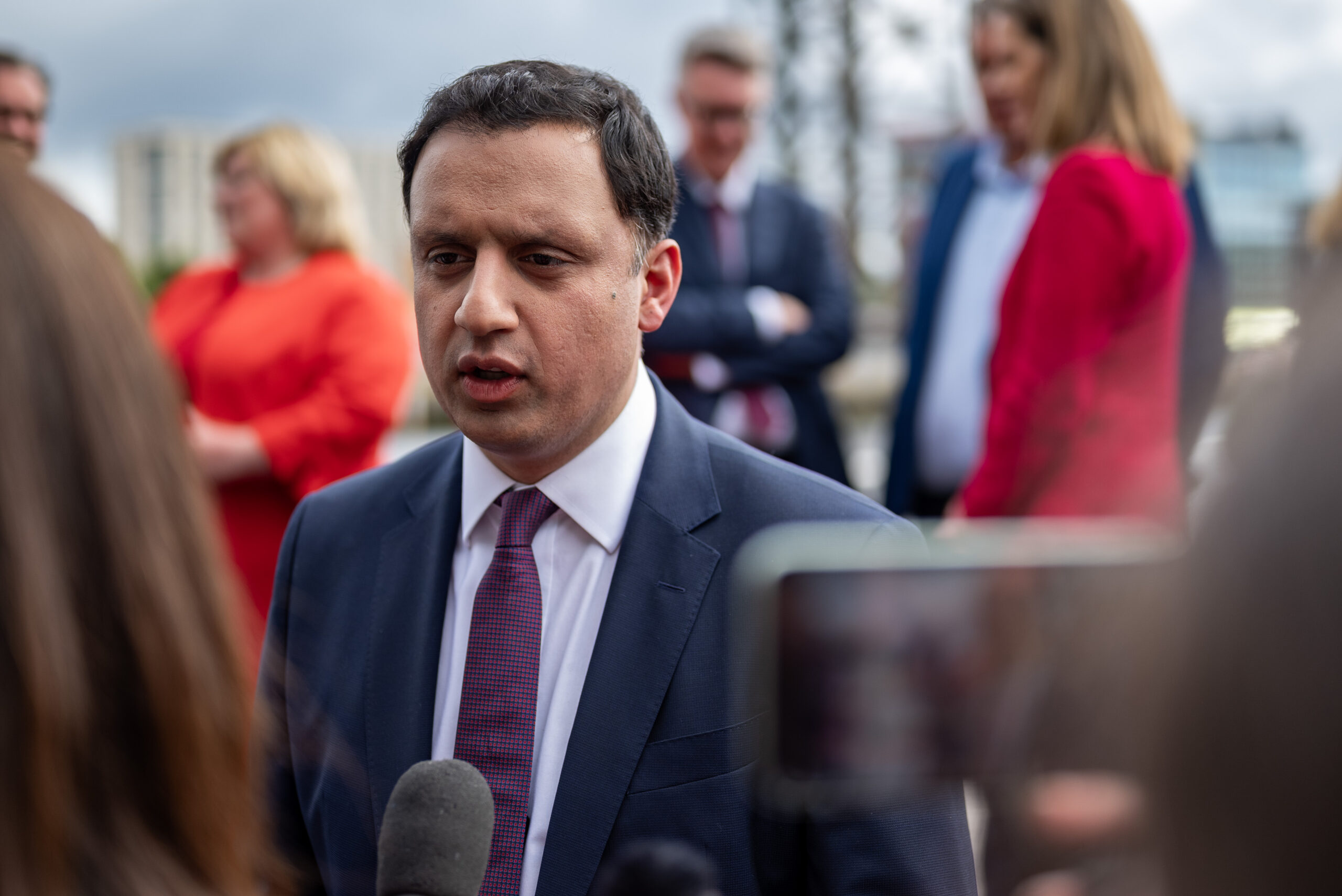
Only two Muslim candidates have been elected to the Scottish Parliament following a bruising election night on May 7 that saw Scottish Labour leader Anas Sarwar lose his constituency contest and concede defeat, as the SNP emerged as the largest party but with a reduced share of seats.
Despite a record 30 Muslim candidates standing across the political spectrum, just 6.7 per cent secured seats – a success rate well below the overall average for Holyrood elections, where approximately one in six candidates is returned as an MSP.
The results laid bare the challenges facing minority representation within Scotland’s mixed-member proportional system. Voters cast two ballots: one for a constituency MSP under first-past-the-post, and a second for a regional list used to top up party representation.
Sarwar, who has led Scottish Labour since 2021, arrived at the Glasgow count centre alongside his wife Furheen to concede that the party had fallen short of its ambitions.
“We argued the case for change but ultimately it is an argument we lost,” he said.
Labour had concentrated a large part of its campaign on Glasgow, expecting to make gains in key battlegrounds. Instead, the party suffered a series of constituency defeats across the city.
In Glasgow Cathcart and Pollok, Sarwar stood as the Labour constituency candidate but was defeated by SNP candidate Zen Ghani, a former Glasgow City councillor elected in 2022. Ghani, who has spoken publicly about growing up in kinship care and experiencing poverty, won with a majority of more than 5,000 votes, taking 44.3 per cent of the vote.
Although Sarwar lost the constituency contest, he was also placed on Labour’s Glasgow regional list and was returned to Holyrood through that mechanism, underscoring the importance of Scotland’s dual-ballot system for party leaders who fail to win their local seats.
The SNP won 58 seats and is expected to form the next Scottish government, though without an overall majority. Labour and Reform UK both finished on 17 seats, the Scottish Greens won 15, the Liberal Democrats 10 and the Conservatives 12.
Turnout fell sharply to 53 per cent, down from 63 per cent in 2021, reflecting what analysts described as voter fatigue after a decade of constitutional turbulence.
Labour made just one constituency gain – in Na h-Eileanan an Iar – while the Scottish Greens won their first-ever constituency seats in Glasgow Southside and Edinburgh Central.
It was in Glasgow Southside that one of the night’s most dramatic upsets occurred. SNP candidate Kaukab Stewart lost her seat after being defeated by Scottish Greens candidate Holly Bruce, who secured a majority of 3,101 votes.
Muslim candidates: data analysis shows stark barriers
Official results show that 30 Muslim candidates stood across both ballot types, representing Labour, the SNP, the Scottish Greens, the Liberal Democrats, the Conservatives, Reform UK, Advance UK, the Workers Party of Britain, Scottish Common, and one independent.
Only two Muslim candidates were elected: Anas Sarwar through the regional list for Labour in Glasgow, and Zen Ghani through a constituency win in Glasgow Cathcart and Pollok.
Both successful candidates are male. No female Muslim candidate won a seat, despite ten standing.
The highest-performing female Muslim candidate was Kaukab Stewart, who received 10,947 votes, equal to 28.4 per cent in Glasgow Southside, but lost to the Greens. Her vote share fell significantly compared to the previous election, marking the largest decline of any Muslim candidate standing for re-election.
Of the 30 Muslim candidates, 20 were men and 10 were women. Two men were elected, while no women secured seats.
Labour fielded the most Muslim candidates with seven, followed by the SNP with five and the Workers Party of Britain also with five. However, Labour’s only elected Muslim MSP was Anas Sarwar via the regional list, while the SNP’s only elected Muslim MSP was Zen Ghani via a constituency win.
Smaller parties including the Workers Party of Britain, Scottish Common and Advance UK collectively fielded nine Muslim candidates, none of whom secured meaningful vote shares or came close to winning seats.
Seventeen Muslim candidates stood on regional lists, but only Anas Sarwar was elected through this route.
Several candidates received substantial personal vote totals but were placed too low on party lists to benefit. Adam Al-Khateb of the Scottish Greens, for example, received strong support in Edinburgh and Lothians East but was not returned. Similarly, Rana Moro Hamed performed well in Glasgow but did not make it into a winning list position.
Conservative candidate Farooq Choudhry and Labour candidate Afifa Khanam also polled tens of thousands of votes in their regions but failed to secure seats due to list positioning and party allocation outcomes.
In Glasgow Southside, four Muslim candidates stood in the same constituency, collectively securing nearly half of all votes cast. However, their support was split across parties and an independent candidacy, while the Scottish Greens were able to consolidate their vote behind Holly Bruce, who won the seat.
Across the regional lists, North East Scotland also saw a high concentration of Muslim candidates from multiple parties, but none were elected. While the Greens and Liberal Democrats each secured regional representation in the area, Muslim candidates competing on their tickets were not placed high enough to benefit.
Labour candidate Irshad Ahmed, born in Pakistan and moved to Edinburgh in 1993, was elected through the regional list in Edinburgh and Lothians East. His earlier constituency performance in Edinburgh North Western saw a low vote share of 4.7 per cent, highlighting the contrast between constituency and list outcomes.
Speaking after the results, Anas Sarwar said Labour’s defeat reflected wider dissatisfaction across the UK, though he did not directly blame UK Labour leader Sir Keir Starmer. A Scottish Labour MP said there was “no mood” within the party for Sarwar to resign.
“My immediate focus is to hold the party together,” Sarwar said, as Labour moves into opposition after an election that left the SNP as the largest party.
For Muslim political representation, the 2026 Holyrood election presents a mixed picture. A record number of candidates stood, reflecting growing political engagement across communities. However, with only two seats won and no female Muslim MSPs elected, the results underline how structural factors within Scotland’s electoral system – particularly regional list placement and vote splitting in key constituencies – continue to limit breakthrough representation at Holyrood.
EXCLUSIVE ENGLISH LOCAL ELECTION: Full list of newly elected Muslim councillors
EXCLUSIVE: Over 450 Muslim councillors elected in England’s local polls as Labour bleeds urban seats
EXCLUSIVE: England Local Elections – Muslim Councillors: Representation & Share
Elections day study finds one in three Britons fail to identify deepfakes