Home Affairs Correspondent
Ramadan has brought into sharp focus the soaring demand at the food bank run by Ashton Central Mosque in Ashton-under-Lyne, where the number of users has risen from around 60 a month to more than 500 over the past year.
The mosque’s food bank has evolved from a modest distribution scheme into a vital lifeline for struggling families, homeless residents, and refugees across Ashton and the wider Manchester area.
Adam Ahmed, one of the project leaders, described the mounting pressure caused by local poverty and the cost-of-living crisis. “We were serving about 60 users a month. Now we’re serving over 500,” he said.
A grant from National Zakat Foundation has enabled the mosque to expand its support beyond food parcels. Staff now provide advice on benefits and debt, emergency financial assistance, clothing and essentials, access to a health clinic, and structured Zakat assessments.
For many applicants, the help is basic but crucial, food for families unable to afford groceries, clothes for children, and support with travel costs or urgent household bills.
Ahmed highlighted the plight of homeless refugees and asylum seekers, often sleeping under city bridges with no family or support network. “Asylum seekers, refugees, they don’t know anyone. They don’t have families to help them out,” he said.
“Seeing first-hand how desperate they really are, how they’re in dire need of any support that we can give them.” For many, the mosque’s Zakat clinic has become “their only lifeline.”
Ashton, within Tameside, ranks as the 20th most deprived local authority area in England, with around 40 per cent of children living in poverty. Volunteers say the rise in need has affected all services, including Ramadan iftars, where several tables are now regularly filled by homeless and low-income guests.
The mosque has also become a broader community hub, hosting children’s classes, Scouts groups, daily prayers, Friday congregational worship, and other social activities. Some former beneficiaries have gone on to volunteer at the mosque, while others have secured employment through connections within the congregation.
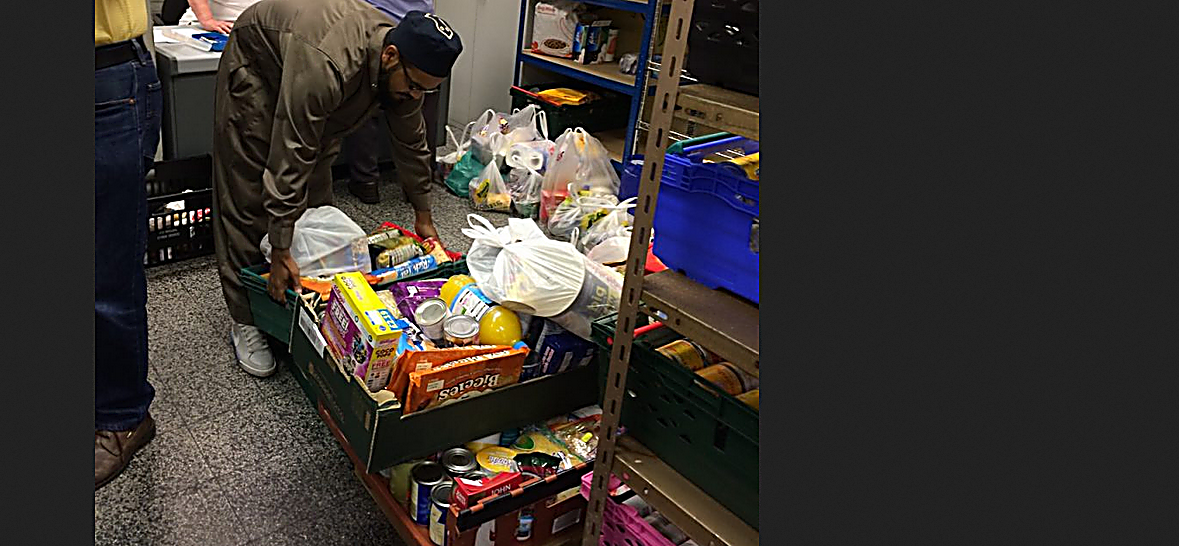
The food bank and Zakat clinic operate alongside the Ashton Community Fridge initiative, which has supported thousands of people with essentials such as fresh food, household items, clothes, toys, and baby supplies, while also saving tonnes of food from waste.
The expansion of the mosque’s services demonstrates both the depth of local need and the capacity of grassroots organisations to provide direct help and a sense of belonging.
Feature photo: Volunteers distribute food and essentials at the Ashton Community Fridge initiative at Ashton Central Mosque. (Credit: Ashton Community Fridge)