Elham Asaad Buaras
The Metropolitan Police and the UK government have faced criticism from Muslim and anti-racism organisations, who accuse authorities of a “double standard” in how alleged hate speech at public demonstrations is handled.
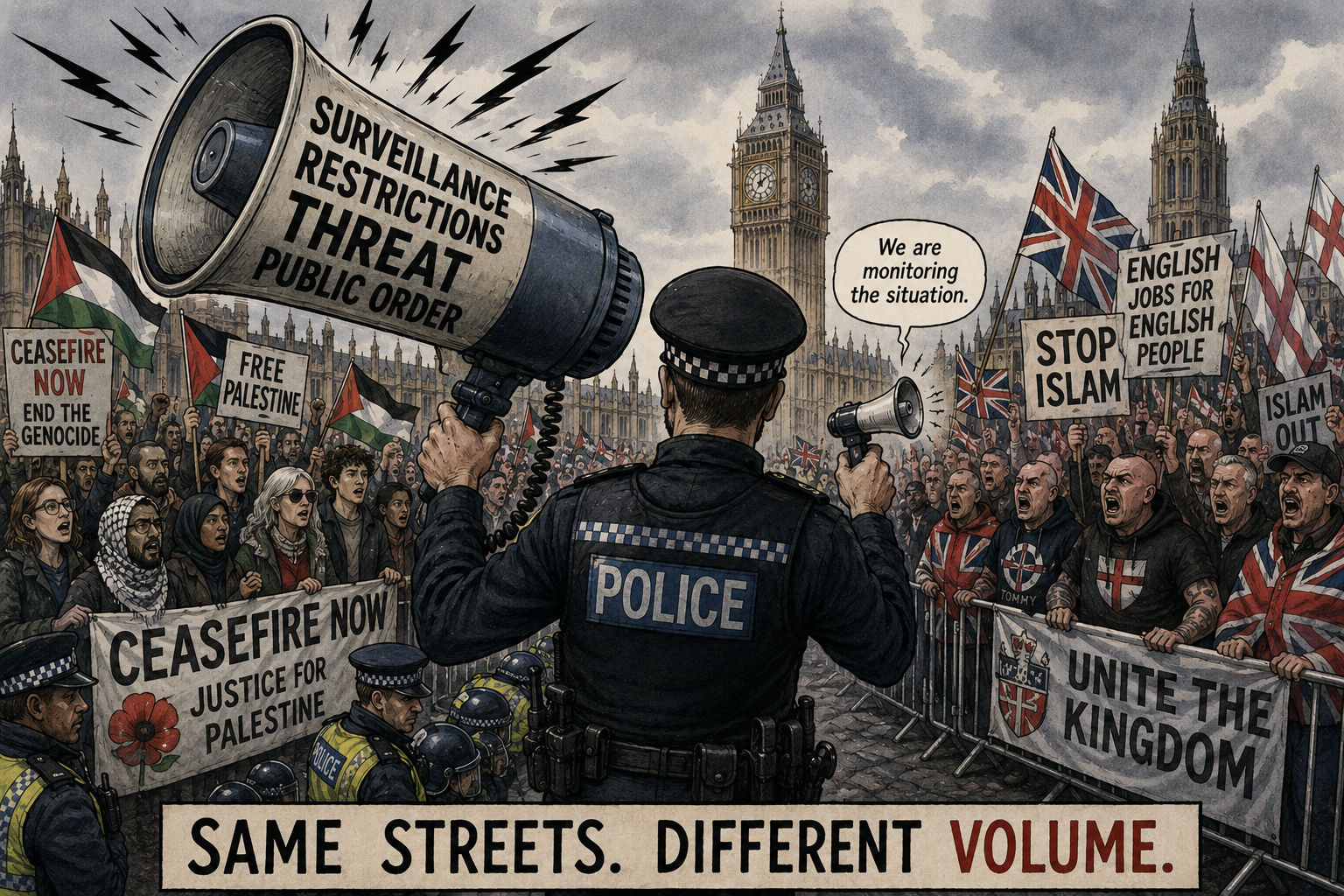
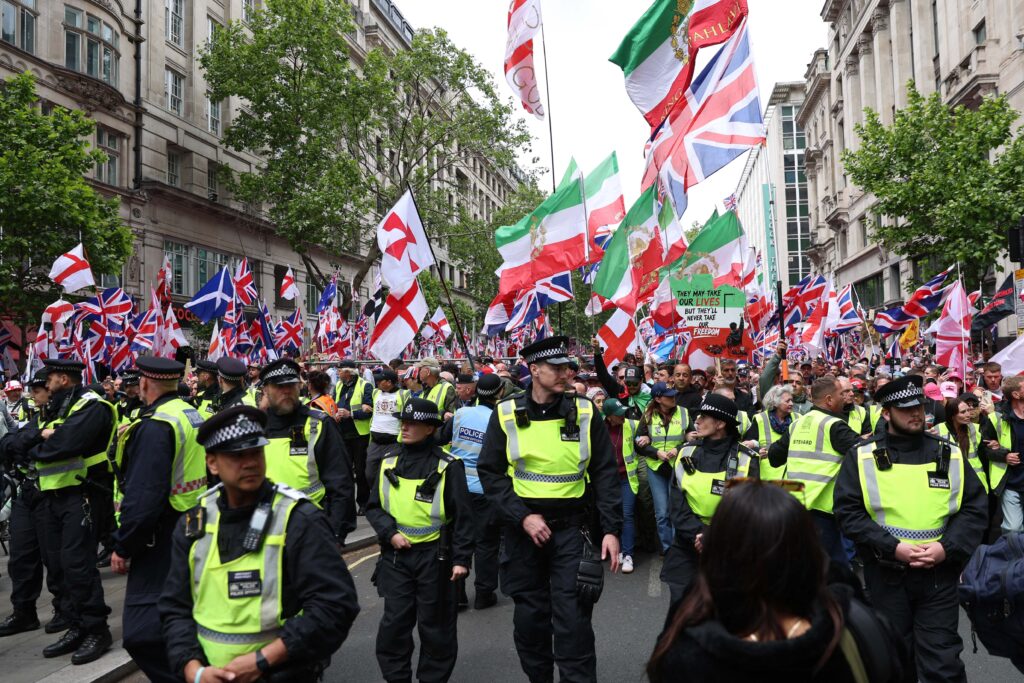
The controversy follows the “Unite the Kingdom” rally held in Westminster on May 16, where tens of thousands gathered for an event organised by far-right activist Tommy Robinson.
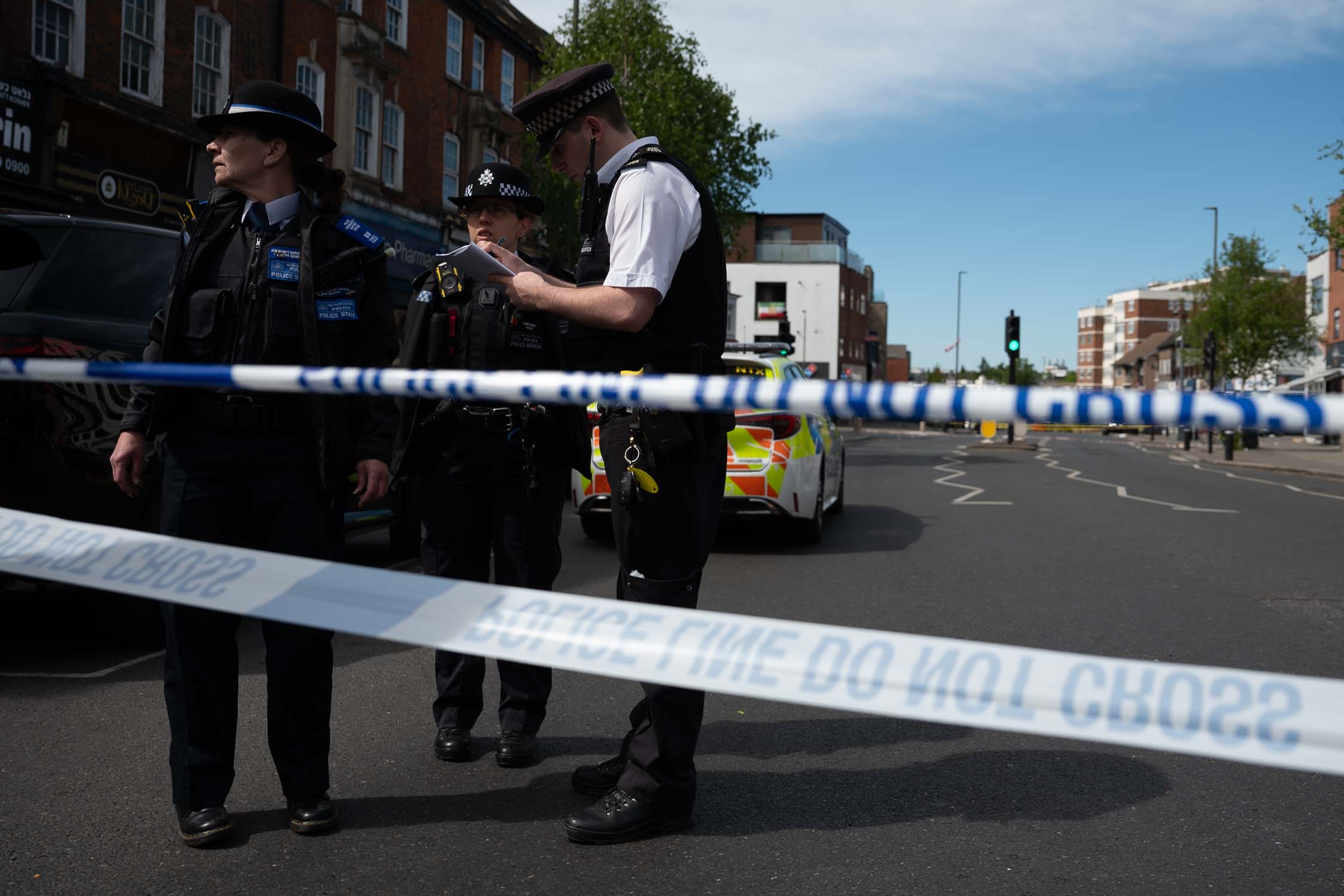
The Metropolitan Police said 43 arrests were made during the operation, which cost an es-timated £4.5 million and coincided with the annual pro-Palestine Nakba Day march and the FA Cup final. More than 4,000 officers were deployed, supported by 660 from other forces, in a major policing operation across central London.
Speeches and performances at the rally have been widely condemned by Muslim organisations, faith groups and anti-racism campaigners, who say elements of the event were Islamophobic and racially inflammatory.
Organisers described the demonstration as a patriotic mobilisation. However, it has since become the subject of political and legal debate over the boundaries of free expression, public order, and hate speech law.
Critics argue that the policing response missed its central target: alleged hate speech delivered from the main stage in Whitehall.
The Metropolitan Police defended its handling of the rally, saying officers had taken a “proactive and robust approach” to policing the event and that a number of arrests had already been made for alleged anti-Muslim hate offences.
In a statement to The Muslim News, the force said officers were continuing to review footage from the demonstration and that “further investigations, arrests and charges will follow” where offences were identified.
The Met also said organisers had been placed under additional Public Order Act conditions making them jointly responsible for speeches that “crossed into criminality”.
However, the force did not clarify whether specific remarks made from the stage — including calls to “remove Islam from every single place of authority”, suggestions Muslims should “leave this country”, and pledges to “stop Islam” — were being treated as potential hate speech offences.
The force also declined to say whether UK-based speakers with histories of anti-Muslim rhetoric had been assessed as public order risks before the rally.
Responding to accusations of double standards, the Met said it treated “anti-Muslim hate crime just as seriously as hate crime targeting other groups”, while acknowledging that some comments made during protests may be “offensive or insulting” without meeting the threshold for a criminal offence.
Muslim advocacy groups have now directly challenged Met Commissioner Sir Mark Rowley, questioning why officers did not intervene more robustly against speeches they say crossed into incitement.
The Muslim Engagement and Development (MEND) organisation has written to the Met demanding legal clarification, describing the rhetoric as prima facie incitement to hatred.
In its letter, MEND accused speakers of carrying out, “A coordinated attack on the Muslim community, deliberately dressed in the language of religious criticism to evade legal accountability.”
Among the statements highlighted were calls to “remove Islam from every single place of authority” and references to the long-discredited “rape jihad” narrative.
In widely circulated footage, Robinson himself later said that if he entered government he would “stop Islam” and that “many Muslims” should “leave this country”.
The Muslim Council of Britain (MCB) warned that such language amounted to incitement rather than legitimate political expression. An MCB spokesperson said, “Language demanding the removal of an entire group from its home is the language that precedes ethnic cleansing and genocide.”
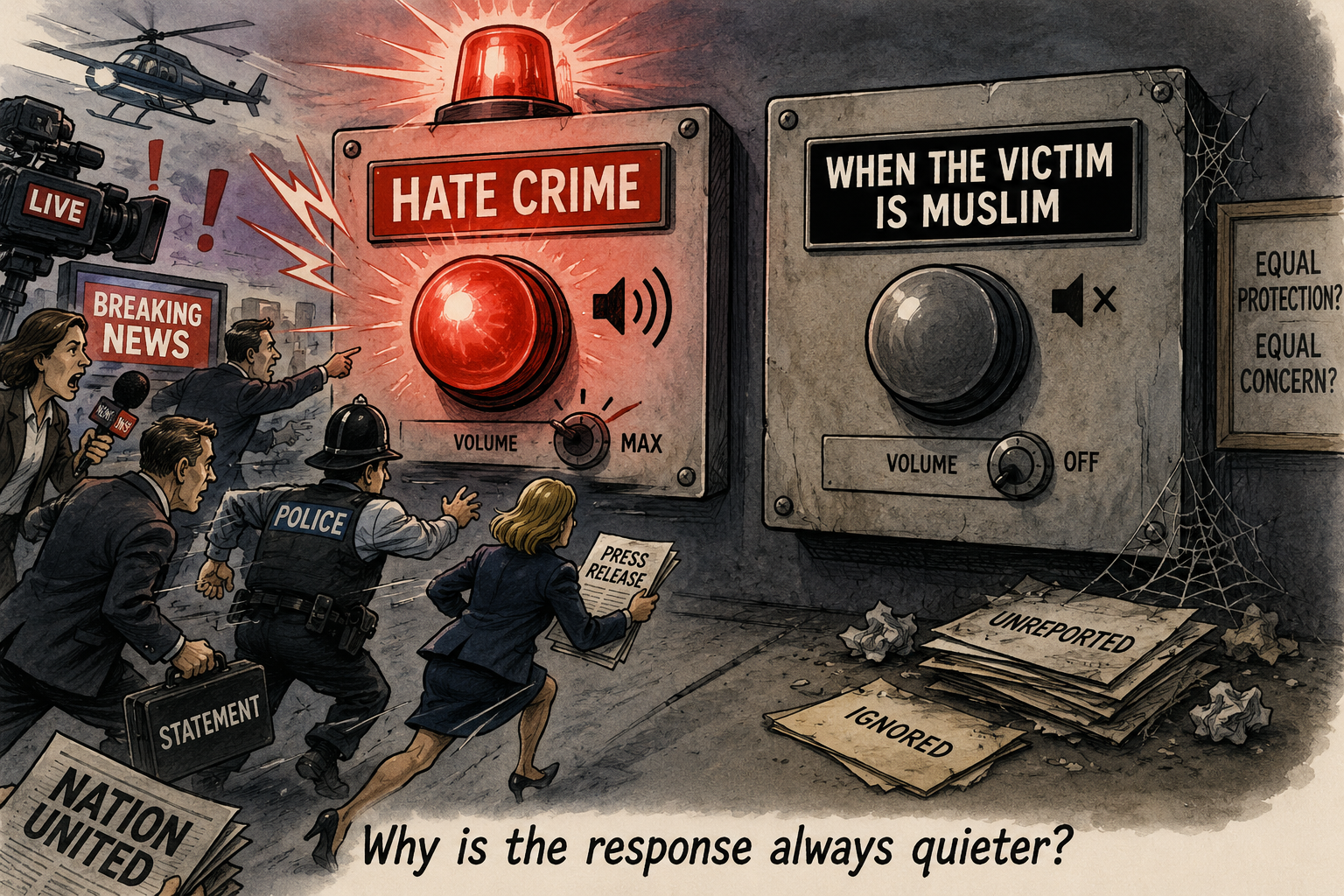
The group has called on ministers and police to explain why such rhetoric appears to be tolerated when directed at Muslims, arguing that comparable statements aimed at other communities would likely trigger immediate prosecution and political condemnation.
Allegations of selective enforcement now sits at the centre of the controversy
Campaigners argue that hate speech law is applied inconsistently, allowing far-right figures to frame inflammatory remarks as “religious criticism”. The result, they say, is a legal and political grey zone in which collective religious identity is increasingly targeted without consequence.
One of the most contentious speeches came from anti-trans activist Kellie-Jay Keen-Minshull, who called for Islam to be “removed from every single place of authority” in Britain.
The remarks sparked widespread condemnation online, with critics questioning why ministers who have previously described pro-Palestine marches as “hate marches” have remained largely silent.
Social media users directly challenged Home Secretary Shabana Mahmood, accusing her of inconsistency in applying the language of extremism and hate.
The rally was also marked by a series of provocative performances and symbolic stunts that campaigners say were designed to humiliate Muslims.
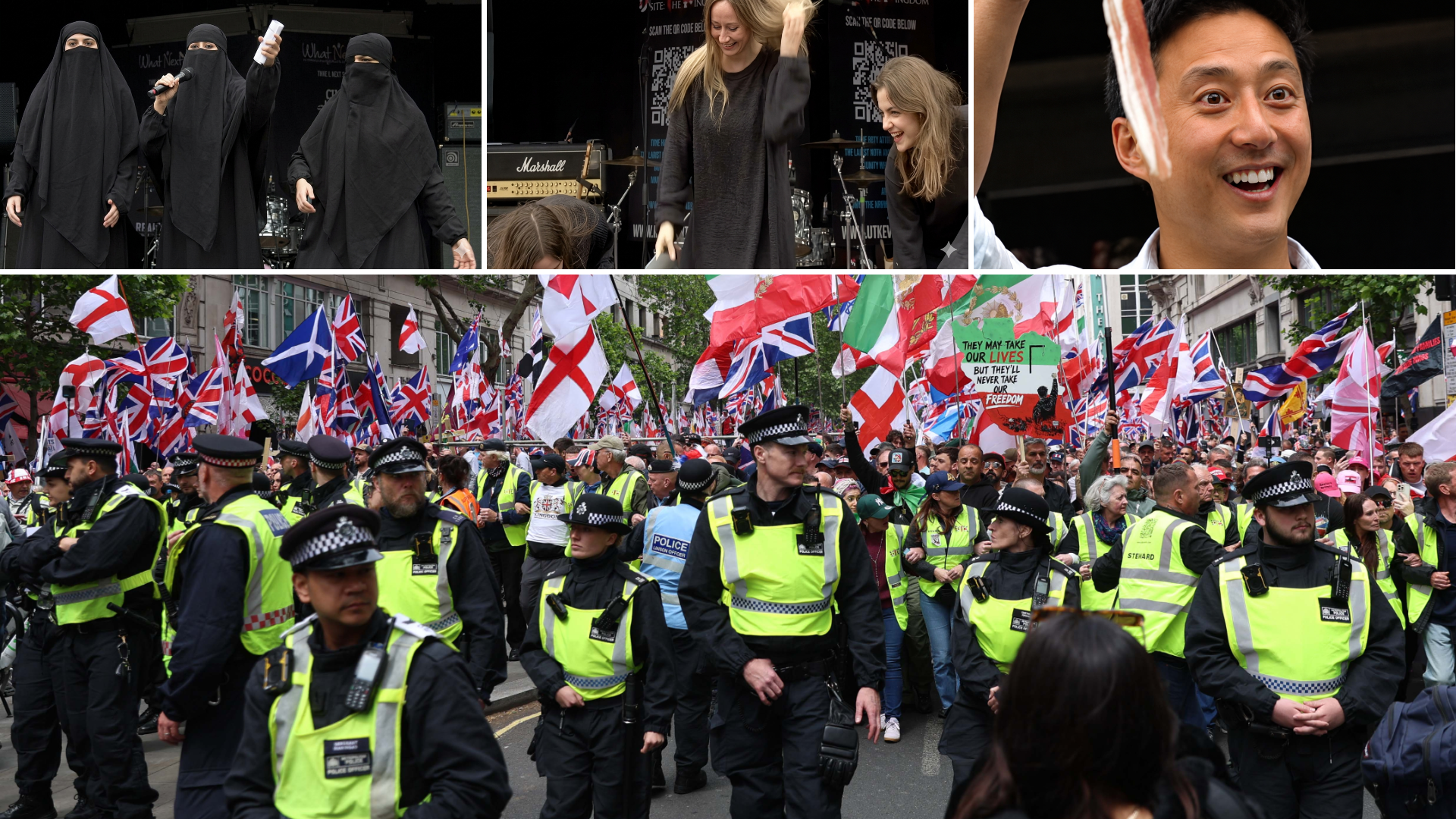
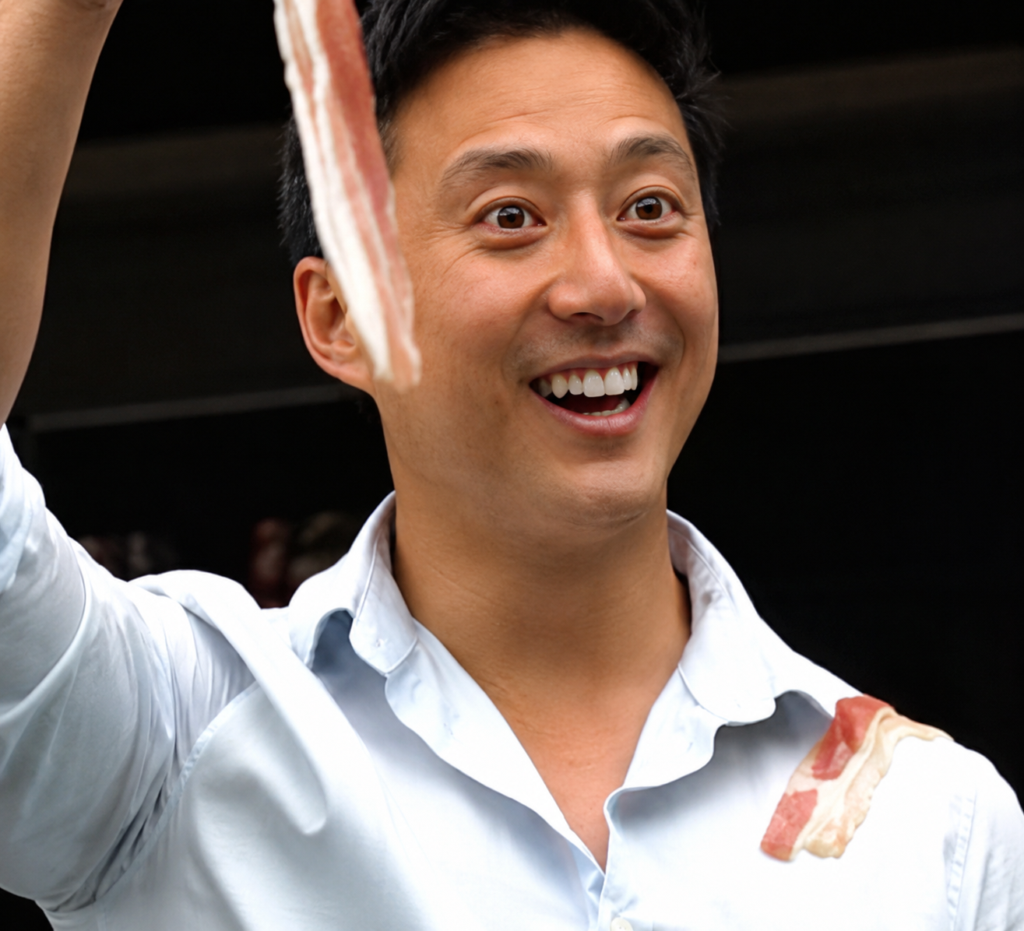
The Scottish-Korean cellist Ryan William appeared on stage draped in raw bacon, an act condemned by Muslim groups as a deliberate provocation aimed at Islamic dietary sensitivities.
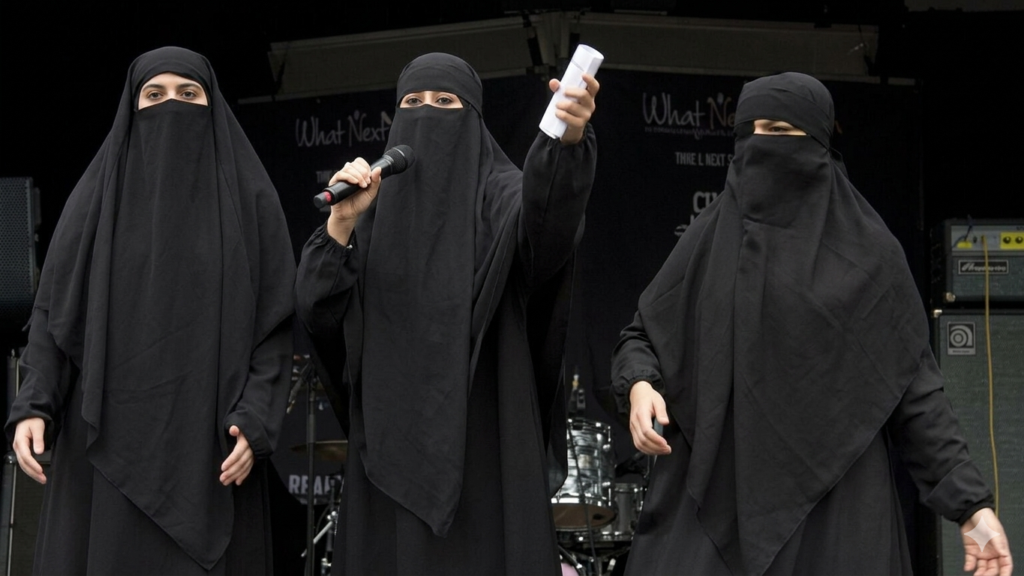
Elsewhere, members of the French far-right group Collectif Nemesis entered the stage wearing niqabs, prompting chants of “take it off” from the crowd before removing the veils to applause and delivering anti-immigration speeches.
The Muslim Women’s Network UK described the episode as “provocative and disrespectful”.
Its chief executive, Shaista Gohir, said, “The deliberate humiliation of Muslim women and a public display of anti-Muslim hostility aimed at dehumanising visibly Muslim women and reducing their religious dress to a source of ridicule and contempt.”
Human rights academic Alonso Gurmendi, of the London School of Economics, warned that such acts “put Muslim women at risk”.
Observers also noted the carefully staged symbolism of the rally, including marchers carrying wooden crosses through Westminster while chanting “Christ is king”, imagery critics say framed the event in explicitly civilisational terms.
The symbolism on display throughout the rally also drew significant attention from observers and researchers.
Union flags and St George’s Crosses were joined by Israeli flags, Iranian monarchist symbols, and “Make England Great Again” caps, a clear nod to Donald Trump’s political branding.
Analysts describe the event as part of an increasingly “hybridised far-right ecosystem”, blending domestic nationalism with imported international imagery and narratives. Some attendees distributed leaflets calling for a “future for white people”, further fuelling accusations of ethnonationalism.
Robinson himself repeatedly urged supporters to “register to vote” and join political parties, telling the crowd, “Are you ready for the battle of Britain?”
He added, “If we don’t send a message in our next election… we are going to lose our country forever.”
He also praised billionaire Elon Musk, thanking him for support, while Musk later described Britain as a “prison island” where people were allegedly being punished for “speaking their mind”.
In the run-up to the rally, border officials barred 11 foreign nationals from entering the UK, including Colombian-American activist Valentina Gomez, citing concerns over far-right agitation and anti-Muslim rhetoric.
Sir Keir Starmer had earlier condemned organisers for “peddling hate and division, plain and simple”, while the Home Secretary warned that anyone inciting violence would face the full force of the law.
But critics now argue that those warnings have not been matched by enforcement on the ground.
A government spokesperson told The Muslim News, “Anti-Muslim hatred is completely unacceptable and has no place in British society. We work closely with police so they can ensure anyone using hate speech faces the full force of the law.”
The Home Office said operational decisions on arrests and charges rest with the police, adding that new legislation strengthens public order powers and protections for communities and places of worship.
It also confirmed an independent review of hate crime and public order legislation led by Lord Macdonald KC, due to report later this month.
However, the department did not directly address questions about whether specific remarks made at the rally, including calls to “remove Islam from every single place of authority”, meet the threshold for investigation under existing hate speech laws.
Nor did it respond to concerns about perceived inconsistencies in how similar rhetoric is treated depending on the target community.
The controversy has also intensified scrutiny of the Conservative Party’s response to the rally, feeding wider accusations of double standards in how different demonstrations are treated.
Despite repeated displays of hostility towards Muslims at the event, the party’s response drew criticism primarily for what senior figures declined to condemn. Appearing on Sunday Morning with Trevor Phillips on May 17, Conservative leader Kemi Badenoch suggested many of Robinson’s supporters had “good reasons” for attending, saying “they are talking about uniting the kingdom”. At the same time, Badenoch has supported tougher restrictions on pro-Palestinian demonstrations on public order grounds, a contrast critics argue with her more sympathetic framing of the “Unite the Kingdom” rally. When Trevor Phillips suggested she was applying double standards, she rejected the accusation, saying she was not focusing on “things that don’t matter to the people of this country.”
Meanwhile, Bob Blackman, the Conservative MP for Harrow East, publicly supported the use of facial recognition technology against participants attending the Nakba Day march, while making no public criticism of the “Unite the Kingdom” rally despite reported anti-Muslim rhetoric there.
During the operation, the Metropolitan Police released footage of officers being subjected to racist abuse, including a Black officer told to “go back to your f homeland”.
The force said officers had faced “more of the same” abuse seen in previous demonstrations. As investigations continue, both the Home Office and Metropolitan Police face growing scrutiny over whether Britain’s legal framework is being applied evenly across communities.
Faith leaders and campaign groups argue the controversy points to a deeper structural problem: unless hate speech laws are enforced consistently, they warn, public confidence in the neutrality of British institutions will continue to erode.
A tale of two demonstrations: Britain’s hierarchy of outrage and action