Nadine Osman
Israel’s military was responsible for more journalist deaths in 2025 than any other government since 1992, according to a damning new report by the Committee to Protect Journalists (CPJ).
The New York-based press freedom watchdog said Israel accounted for 84 of 129 journalist and media worker fatalities recorded worldwide last year — more than two-thirds of the global total, making 2025 the deadliest year on record for the press.
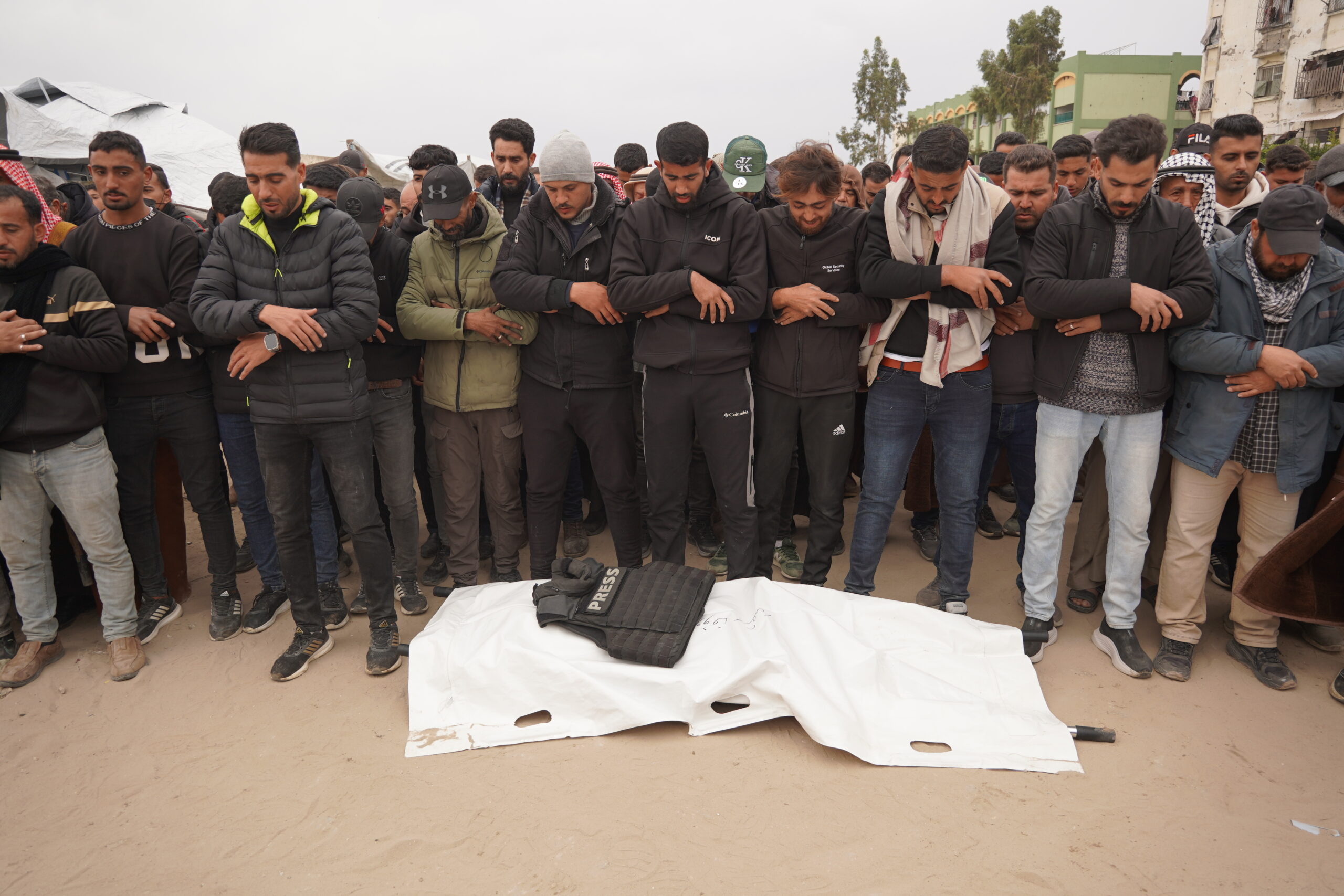
The findings mark the second consecutive year of record-breaking journalist fatalities. CPJ described Israel’s role in the killings as “unprecedented,” noting that the majority of those killed were Palestinian reporters covering Gaza, where human rights groups and UN experts have documented what they say is a genocide.
“Israel has now killed more journalists than any other government since CPJ began collecting records in 1992,” the organisation said, highlighting the scale, frequency, and deliberate targeting behind many of the deaths.
More than 60 per cent of journalists killed by Israeli fire in 2025 were Palestinians reporting from Gaza. CPJ noted that over three-quarters of journalist deaths globally last year occurred in conflict zones, but said Israel’s conduct “remains a significant exception” in scale and pattern.
At least 104 of the 129 journalists killed worldwide died amid armed conflict. Fatalities in Sudan and Ukraine rose slightly — to nine and four respectively — but these figures were far lower than those attributed to Israel.
CPJ documented 47 cases in 2025 that it classified as “murder,” meaning there were reasonable grounds to believe the journalists were deliberately targeted because of their work. Israel was responsible for 38 of those cases, or 81 per cent. Under international humanitarian law, journalists are civilians and must not be deliberately targeted. CPJ stressed that the killing of a journalist by a military force constitutes a war crime.
The organisation warned that the true number of Palestinian journalists deliberately killed in Gaza may never be known. Severe restrictions on independent access, the destruction of communications infrastructure, mass displacement and the scale of devastation have made investigations extraordinarily difficult.
“With much contemporaneous evidence now destroyed, the true number of Palestinian journalists in Gaza who were deliberately targeted by Israel may never be known,” the report said.
One of the most striking trends identified by CPJ was the sharp rise in drone killings. The organisation recorded 39 journalist deaths involving drones in 2025, up from just two in 2023, the first year it began documenting such cases. Of those, 28 were attributed to Israeli military drones in Gaza.
Among those killed was Hossam Shabat, a 23-year-old correspondent for Al Jazeera Mubasher and contributor to Drop Site News, who died in March 2025 when an Israeli drone struck his vehicle near the Indonesian Hospital in Beit Lahia. Israel accused him of being affiliated with Hamas, a claim CPJ said lacked credible evidence.
The report also highlighted the killing of Al Jazeera journalist Anas al-Sharif, who had publicly warned that his life was in danger following repeated allegations by Israel that he was linked to militant activity. He was killed in August 2025 in a strike on a tent housing journalists in Gaza City, alongside three other Al Jazeera staff members and two freelancers.
In another major incident, Israeli forces carried out multiple airstrikes on two newspaper offices in Yemen, killing 31 journalists and media workers — CPJ described this as the second-deadliest attack on the press it has ever documented. Israel said it struck military targets.
A separate strike on Nasser Hospital in Gaza in August killed five journalists among at least 20 people in what investigators described as a “double-tap” attack. Those killed included Palestinian freelance photojournalist Mariam Abu Dagga, who contributed to the Associated Press, and Reuters contractor Hussam Al-Masri. A Reuters investigation later reported that the apparent target was a camera set up to provide a live news feed.
CPJ said the surge in journalist killings reflects a broader global decline in press freedom and a “persistent culture of impunity”.
Very few transparent investigations were conducted into targeted killings in 2025, and no one has been held accountable in any of the cases documented last year. Globally, around 80 per cent of journalist killings remain unsolved.
To date, CPJ said it has found no evidence that anyone has been held accountable for any targeted killing of a journalist by Israeli forces since October 7, 2023, or in the preceding 22 years.
“Journalists are being killed in record numbers at a time when access to information is more important than ever,” said CPJ Chief Executive Jodie Ginsberg. “Attacks on the media are a leading indicator of attacks on other freedoms, and much more needs to be done to prevent these killings and punish the perpetrators.”
Outside Gaza and Yemen, journalist killings also rose in Sudan, where civil war between the Sudanese Armed Forces and the Rapid Support Forces has intensified. Nine journalists were killed there, including Sudan News Agency Director, Taj al-Sir Ahmed Suleiman, who was reportedly executed by the RSF.
In Ukraine, four journalists were killed in Russian drone strikes, the highest annual toll for media workers in the country since 2022.
Journalists were also killed in countries including Mexico, India, Bangladesh, Colombia and the Philippines, often in connection with reporting on corruption and organised crime.
But despite the global spread of violence, CPJ concluded that one government stood apart in 2025. Within what it described as a “new normal of war,” Israel’s record — in scale, frequency, and the proportion of targeted killings — was “unparalleled” in the organisation’s more than 30 years of documentation.