Ramadan, the ninth month of the Islamic (Hijri) calendar, follows the lunar cycle and is expected to begin on February 17 or 18, depending on the sighting of the new moon.
As the holiest month in Islam, Ramadan is a time when Allah commands Muslims to fast, abstaining from food and water during daylight hours. The month aims to increase Taqwa (God-consciousness) through fasting, prayer, and acts of charity. It is also a period of reflection and personal growth, reinforcing discipline, good character, and obedience to Allah.
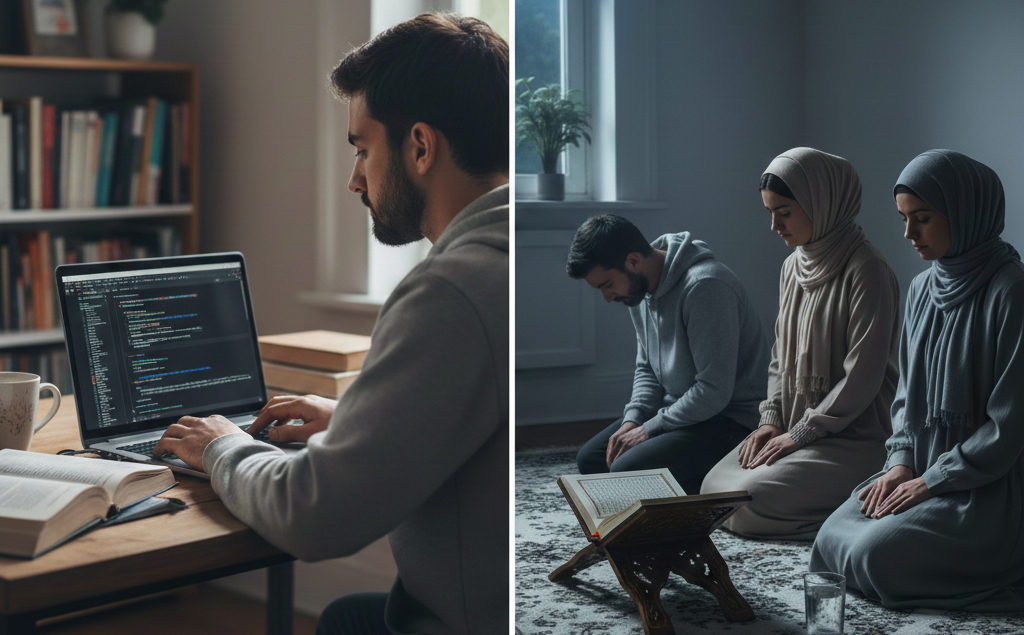
For many young Muslims, Ramadan is an opportunity to reaffirm their faith and Muslim identity, whether at school, university, or in the workplace. Below, young Muslims in the UK share their experiences and perspectives on the blessed month.
Ramadan is a time to deepen my God-consciousness through understanding His attributes and strengthening my connection to Him. When I became Muslim at 19, Ramadan was primarily about fasting. As my knowledge of Islam grew and I began to pray, Ramadan became more than that. I began attending halaqah, tarawih, and focused on increasing my understanding of the deen.
One of the greatest benefits I gain from Ramadan is an environment where I am encouraged to seek taqwa and become more spiritually aware. This helps me reground my faith. There is also a social aspect of Ramadan that helps me do this – being surrounded by friends who are on the same journey, helps with the remembrance of Allah (Glory be to Him, the Exalted).
My first Ramadan was during Covid lockdown. It was isolating, as I did not have the opportunity to surround myself with Muslims. However, after lockdown, the prayer room became a place where I could meet other Muslims, socialise, and increase my knowledge. We would lay mats down and break our fasts together, as many students were away from home, and many of us made a lot of progress in our knowledge of Islam. During my first Ramadan, I didn’t know what I needed to recite during prayer, but I had some brothers with impeccable character that I could learn from. Over the years, I have managed to memorise parts of the Qur’an, and I had the opportunity to lead (regular) prayers (and iqamat mainly, but I was always ready if needed for tarawih) because of that.
My personal goal for Ramadan 2026 is to memorise more of the Qur’an. I adopted the practice of reading the chapter of the Qur’an that will be read in the evening at tarawih so that it sounds familiar during the prayer, and I can increase my Khusuhu whilst praying. I plan to continue this practice and memorise more of the Qur’an, Insha Allah.
Ramadan allows me to reflect on my actions and intentions as a Muslim. I find myself guilty of letting life get in the way of focusing on what is important. It also brings more value to my time as I try to make every minute count. We never know which Ramadan is our last, so it’s a time when I try my best to be the best version of myself.
Ramadan has always been a time of year I look forward to. It brings me a sense of peace that I can’t replicate in other months. Ramadan brings immense benefit to me. It helps me prioritise my deen, even when daily life gets in the way. Ramadan also brings families closer as we spend more time together. Fasting also brings a level of self-control, which stays with me even after the month.
Ramadan was a bit more challenging when I was younger, as the fasting hours were longer and I was in full-time education. But it reinforced the self-control that I needed to develop and helped me in my everyday life. Also, planning a nutritious meal helped get through the long hours of fasting during the summer. Another challenge I’ve recently come across when observing Ramadan is at work. It is difficult to pray when I need to and break my fast. Managers do try to accommodate, but it is hard when most colleagues are also Muslim. We all take turns going up to pray and have to keep water and a date nearby when it’s time to break our fast. It takes away the sense of spirituality at home, where you can make Du’a and reflect on your day.
This Ramadan, I intend to carry the good habits I develop beyond the month. I also want to reduce any negative habits, establish consistent routines, and cultivate greater gratitude, as it is all too easy to take things for granted.
Ramadan feels like a fresh start. It is a reminder of my goals not only in this life but also in the afterlife. At Cambridge, academics can be intense and at times overwhelming, so Ramadan gives me an important pause to reflect and make sure I am meeting my religious goals alongside my academic ones.
I have found Ramadan extremely rewarding. One of the biggest benefits for me has been the sense of community. At Cambridge, the community within our Islamic society is very strong, and that really helps Ramadan feel meaningful, even when the term is busy. Before university, my favourite part of Ramadan was observing it with my family. It was a time to be together and to appreciate what we had. Moving away from home was difficult at first, especially during Ramadan, because I really missed that family environment. However, I now find it just as rewarding to build a spiritual connection with friends who are going through Ramadan alongside me.
Although I find Ramadan very rewarding, balancing it with my studies can be challenging. Suhoor can be difficult when I have lectures or supervisions only a few hours later, and I definitely feel more tired throughout the day. To manage this, I try to be more intentional with my schedule during Ramadan. I plan my most demanding academic work earlier in the day, allow myself to be more realistic about my energy levels, and make sure I rest properly rather than pushing through as I would outside of Ramadan.
My main goal is to use Ramadan as a chance to reset and reflect. I want to stay consistent with both my academic ambitions and my religious goals, rather than letting one completely take over the other. I also want to be more consistent in my worship and more mindful of how I use my time, especially during such a busy term. Ultimately, I want Ramadan to help remind me of my goals so I can continue reaching these during Ramadan and after it, Insha’Allah.
Ramadan is a month of reflection – a pause to evaluate myself, my faith, and my relationship with the Almighty. It is not just about abstaining from food, but about the heart and spirituality. A time when I felt my faith peaked, and I have not been able to recreate the level of imaan and peace I felt during Ramadan a few years ago. This month is essential in grounding me and my peace.
However, Ramadan has not always been easy, particularly during secondary school. Ramadan sometimes fell on exam season; for example, during my A-level studies. I had to revise and sit exams while fasting for long hours. In recent years, where I began working, I have scheduled my annual leave for Ramadan to ensure I can make the most out of the holy month.
One challenge is caffeine withdrawal – starting the day without coffee is difficult at first, but becomes manageable after a few days. Another challenge that many women and girls feel during Ramadan is being expected to make an extravagant iftar, which limits the time for dhikr. My goal this Ramadan is to spend more time doing ibadah and attend tarawih more. I also aim to reflect more on the Qur’an and the tafsir (meaning) of it.
Compiled by Iqbaal Abdi
Interviews by Iqbaal Abdi, Politics & International Relations Graduate
MORE RAMADAN NEWS |
Exclusive —Ramadan message from political leaders
Ramadan, Lent and the call to protect Creation
MCB launches Ramadan campaign to boost Muslim voter turnout ahead of local elections
Davison High School to host third annual Big Iftar
Ramadan 2026 Advertorial: Make eye drops a part of your routine: wake, drops, eat, pray, done!