Nadine Osman
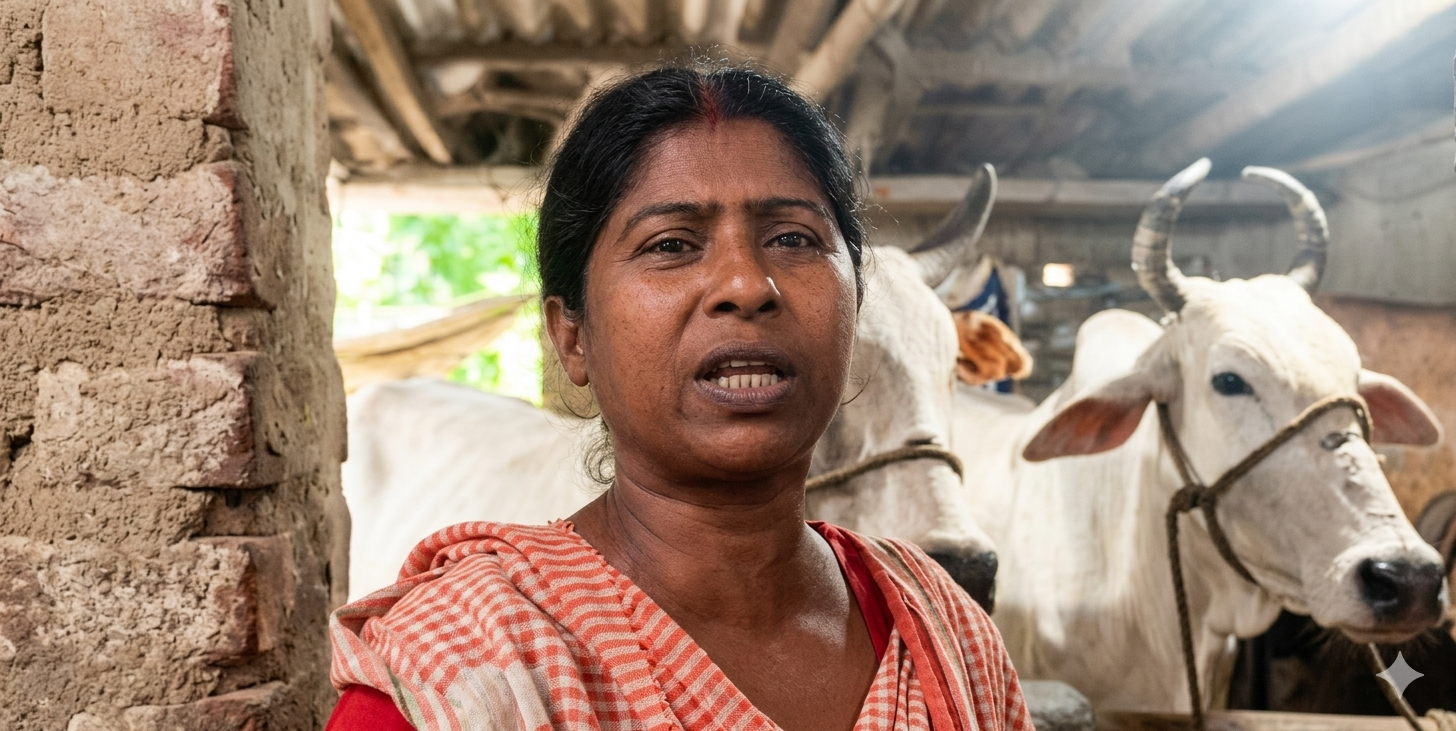
“Why is the BJP not allowing us to sell our cows to Muslims?…“Muslims never harm us. Why is the BJP stopping us from selling and trading with Muslims? Give us poison then.”
Hindu cattle traders and livestock farmers in India’s eastern state of West Bengal have begun openly criticising the newly elected BJP government after a sweeping crackdown on cattle trading ahead of Eid al-Adha disrupted local markets and triggered mounting financial losses for rural households.
The controversy follows intensified enforcement of the West Bengal Animal Slaughter Control Act by the state government under Chief Minister Suvendu Adhikari in the run-up to Eid al-Adha, one of the most significant religious festivals in the Muslim calendar, during which animal sacrifice is traditionally observed.
Authorities announced that cattle and buffalo slaughter would only be permitted after official veterinary certification confirming animals were legally fit for slaughter. Police also moved to curb slaughter outside designated facilities and tighten restrictions on informal cattle markets operating across the state.
While the BJP government has insisted the measures merely enforce existing legislation and court directives, the restrictions have sparked growing anger among Hindu traders who rely heavily on seasonal Eid cattle sales for their livelihoods.
Videos circulating widely on social media show distressed Hindu cattle sellers accusing the BJP administration of dismantling long-established rural trading networks linking Hindu livestock farmers with Muslim buyers.
In one widely shared clip, a Hindu trader said he had borrowed nearly 500,000 rupees (approximately £4,300) to rear cattle for Eid sales but was now unable to find buyers because of fear surrounding police action and stricter enforcement measures.
“Why is the BJP not allowing us to sell our cows to Muslims?” the trader said. “Muslims never harm us. Why is the BJP stopping us from selling and trading with Muslims? Give us poison then.”
Another Hindu woman criticised the government’s enforcement drive, saying Muslim customers had stopped visiting cattle markets altogether, leaving many Hindu families facing severe economic hardship.
She called for restoration of the previous system, arguing that small traders and livestock-rearing households could not survive under the new restrictions.
The backlash has underscored how anti-cattle slaughter politics and heightened policing around Muslim religious practices are increasingly affecting wider rural economies in India, where cattle trading networks have historically depended on close commercial ties between Hindu sellers and Muslim buyers.
In another widely circulated incident from Magrahat, a Hindu cattle seller reportedly arrived at a market hoping to sell a cow ahead of Eid, only for local Muslims to refuse to purchase the animal because of fears surrounding government scrutiny and restrictions.
“You consider the cow your mother, so why have you brought it here to be sold for sacrifice?” one Muslim man was heard telling the trader in a video shared online.
Others warned that continued restrictions could financially devastate small dairy-linked households that depend on annual Eid demand to offset rising feed and maintenance costs.
The BJP government has defended the crackdown by citing provisions within the West Bengal Animal Slaughter Control Act of 1950, alongside a 2018 Calcutta High Court directive requiring veterinary certification before slaughter.
However, civil rights advocates and opposition figures have increasingly argued that cattle-related restrictions in BJP-ruled regions disproportionately target Muslims and foster a climate of fear surrounding Eid al-Adha, cattle transportation and livestock trading.
The controversy has also exposed deeper tensions between Hindutva-inspired cow protection politics and the economic realities of rural India, where cattle markets have traditionally operated through longstanding interdependence between Hindu and Muslim communities.