Dawud Ashari
Almost three months after unveiling its social cohesion strategy, the Government has yet to appoint the Special Representative on Anti-Muslim Hostility, prompting accusations of continued institutional neglect.
In a highly publicised announcement on March 8, as part of the Ministry of Housing, Communities and Local Government’s (MHCLG) Protecting What Matters strategy, the Government pledged to appoint a Special Representative on “anti-Muslim hostility”.
According to the Government, the representative’s role would be to “champion efforts across the UK to tackle hostility and hatred directed at Muslims” and to “engage with communities and stakeholders, and support cross-sector action to strengthen understanding, reporting and response.”
“Not only has there been no appointment, but there has also been no meaningful communication, no clarity on the role’s remit, and no indication of when or whether this commitment will be honoured. This is not an administrative oversight. It is a signal.”
The role appears to be modelled on the Government’s Independent Adviser on Antisemitism, held by Lord John Mann since 2019 and supported by an annual government grant of £100,000 for secretariat support. However, unlike Lord Mann’s position, the proposed Special Representative on anti-Muslim hostility has not been described as an independent role. No Terms of Reference have yet been published, and no budget has been announced.
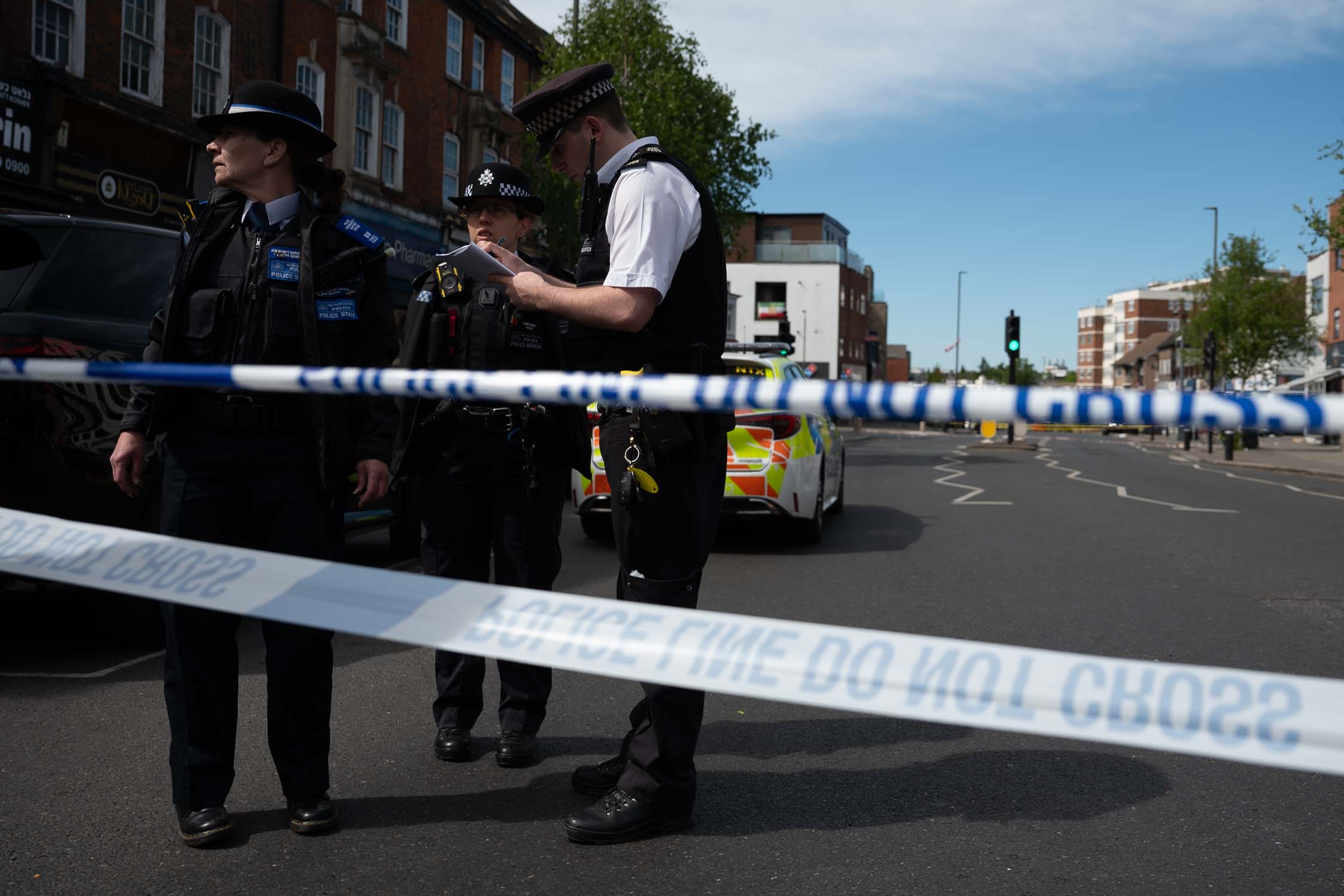
The continued delay comes amid a series of anti-Muslim incidents reported across the country in recent months. These include a third vandalism attack on Darul Arqam Mosque in Newham, east London; Nazi swastika graffiti painted on the entrance of Shrewsbury Muslim Centre in Shropshire; and threatening letters sent to mosques in Buckinghamshire stating “We do not want your hijab; we do not want your community’s men and women parading in your Pakistani clothes in our streets… PLEASE ask your community to GO BACK to their HERITAGE COUNTRY and MAKE PAKISTAN GREAT.”
Government figures accompanying the new definition recorded 4,478 anti-Muslim hate crimes in the year to March 2025 — almost half of all religious hate crimes in England and Wales — while Home Office data also showed a 19 per cent increase over the previous year, with officials noting a spike following the Southport murders and subsequent disorder.
In March, concern also followed an incident in Abbey Wood “hit-and-run” in which a visibly Muslim woman wearing a headscarf was struck by a car travelling at speed. CCTV footage appeared to show the driver intentionally steering towards the woman before accelerating and fleeing the scene.
The incidents prompted further parliamentary scrutiny of the delayed appointment process.
A written question from Conservative Baroness Scott of Bybrook prompted an MHCLG minister to state on April 27: “The Terms of Reference and appointment process for the Special Representative on anti-Muslim hostility will be published in due course.”
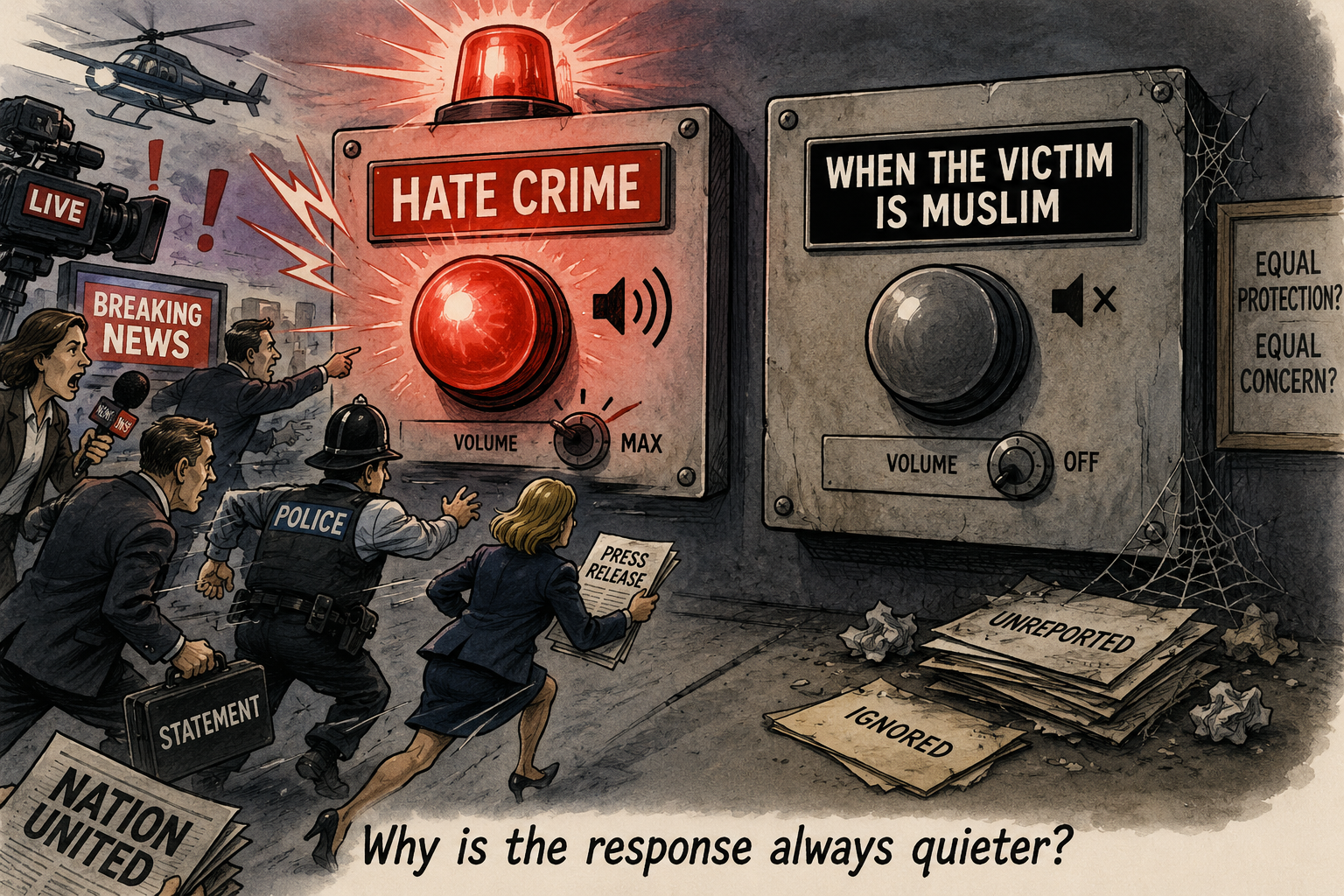
Campaigners against anti-Muslim hatred have criticised what they describe as a lack of urgency from ministers, arguing that the delay leaves British Muslims exposed during a period of heightened hostility and hate crime.
Majid Iqbal, CEO of the Islamophobia Response Unit (IRU), told The Muslim News, “Not only has there been no appointment, but there has also been no meaningful communication, no clarity on the role’s remit, and no indication of when or whether this commitment will be honoured. This is not an administrative oversight. It is a signal.”
He added, “The IRU calls on the Government to make this appointment without further delay, to set out clearly the remit and powers of the role, and to demonstrate through action and not rhetoric, that the safety and dignity of Muslim communities in this country genuinely matter.”
The delay in appointing the representative has also compounded anger over the government’s controversial decision to discard the widely accepted term “Islamophobia” in favour of what critics regard as a diluted, caveat-laden definition of “anti-Muslim hostility”.
Commenting at the time, Dr Wajid Akhter, Secretary General of the Muslim Council of Britain, said the MCB was “unable to endorse such a definition at the present time.”
He added, “Rather, it is for the Government to convince and earn the trust of the British Muslim community that this definition will help stem the rising discrimination, systematic othering and harms that British Muslims are facing on a daily basis.”
The Muslim News understands that Labour parliamentarians are among those being considered for the post. However, no final decision has yet been reached on either the appointment itself or the Terms of Reference under which the representative would operate.
Asked when the Special Representative on Anti-Muslim Hostility would be appointed, and what consultation with Muslim community groups has been undertaken to date to support the appointment, an MHCLG spokesperson told The Muslim News, “We’ve been clear that we will appoint a Special Representative, and further details will be set out in due course.”
When asked the same question, the Prime Minister’s Spokesperson told The Muslim News, “As with all appointments, it will be set out in due course.”