Elham Asaad Buaras
Germany has experienced a sharp rise in hate crimes alongside a troubling erosion of civil liberties, with anti-Muslim hatred and restrictions on freedom of expression increasingly affecting minority communities and political dissent, according to warnings from the United Nations and Human Rights Watch (HRW).
Official statistics show a 40 per cent increase in politically motivated hate crimes in 2024 compared with the previous year, with 84,172 offences recorded. Around half were classified as right-wing extremist. Islamophobic crimes rose by 26 per cent to 1,848 cases, while civil society organisations documented 3,080 anti-Muslim incidents using broader human rights criteria, a 60 per cent increase.
The findings coincide with growing international concern over Germany’s handling of freedom of expression. Irene Khan, the UN Special Rapporteur on the right to freedom of opinion and expression, warned that the country was witnessing a “rise of hate speech, anti-Muslim hatred, anti-migrant and gendered hate speech” during a press conference in Berlin following an official visit.
Khan said Germany stood at a “critical juncture” and must prioritise safe, inclusive spaces for debate, warning that current policies risk deepening social divisions.
“Anti-Semitism, Islamophobia, and anti-migrant vitriol have surged, as some political forces rooted in racist, xenophobic and authoritarian ideologies have weaponised freedom of expression to marginalise, intimidate and abuse minorities,” she said.
Palestine solidarity and shrinking civic space
Both the UN and HRW highlighted growing restrictions on freedom of expression and assembly, particularly targeting Palestine solidarity activism. German authorities have increasingly relied on security and anti-terrorism frameworks to restrict protests, advocacy and academic debate.
Khan said activists, students and members of minority communities told her that hateful attacks, often amplified through social media, had left them afraid to speak out publicly or online.
While acknowledging the government’s responsibility to address threats, she warned that some countermeasures had been “inconsistent with international human rights standards”.
“They have generated uncertainty as to the line between protected and prohibited speech and have encouraged stigmatisation and self-censorship,” she said.
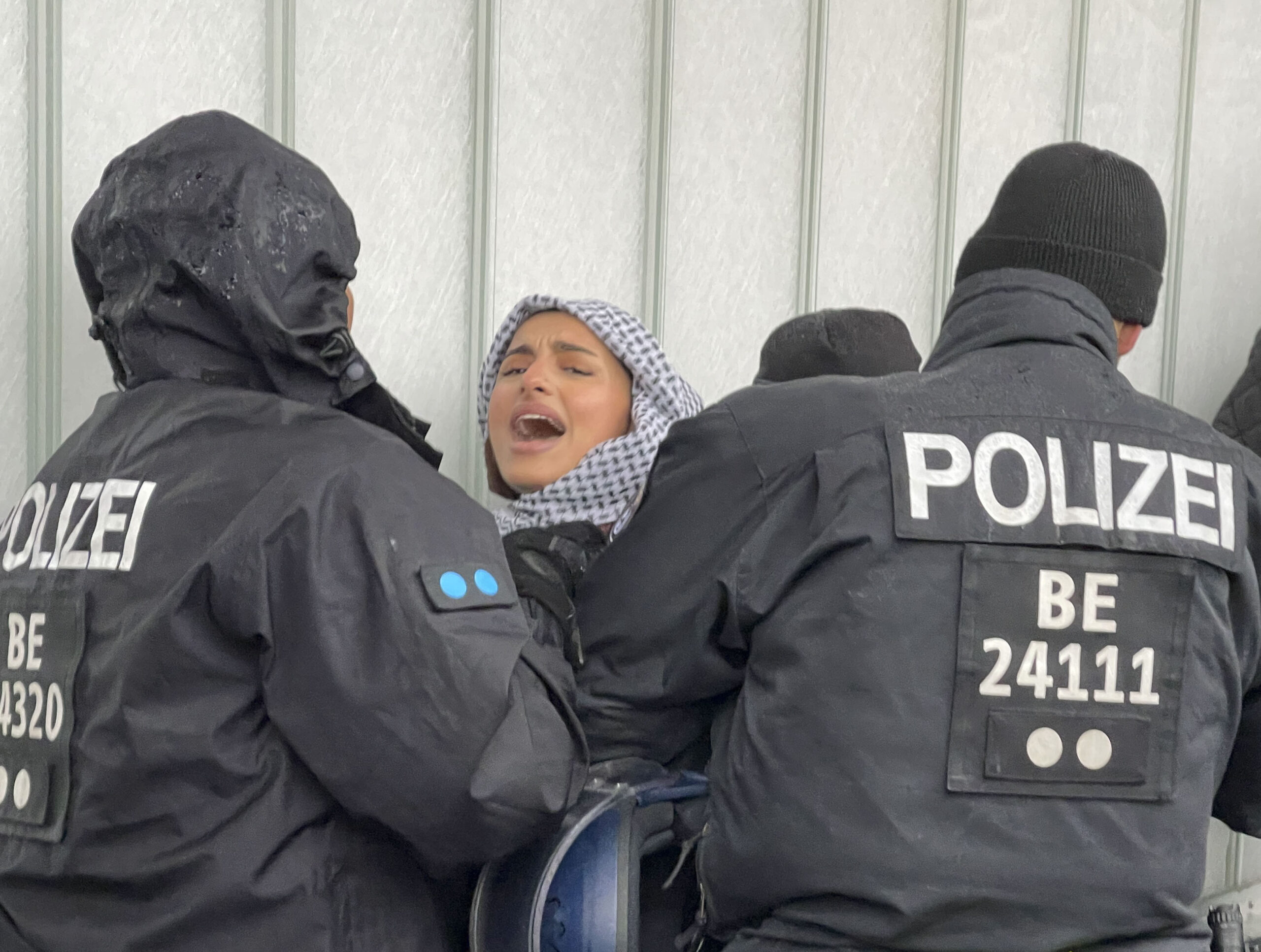
HRW similarly raised concerns about the use of blanket classifications equating criticism of Israel with antisemitism, excessive police force against demonstrators in Berlin, and restrictions imposed on cultural and educational institutions.
Asked about bans in some regions on the slogan “from the river to the sea”, Khan said authorities in certain areas had “got the balance wrong”.
“We have complained about restrictions on speech,” she said.
“We have complained about the overuse of police force. We have complained about charges that have been brought.”
She stressed that while incitement to violence must be prohibited, offensive expression that remains lawful should not be criminalised.
“To be clear, advocacy of hatred that constitutes incitement to discrimination, hostility, or violence is and must be prohibited under international law,” Khan said, adding that speech which is “lawful but awful” should be addressed through education, awareness and debate rather than censorship.
Political context and intimidation concerns
HRW’s assessment situates the deteriorating rights environment within Germany’s changing political landscape. The February 2025 general elections, following a campaign marked by the mainstreaming of extremist rhetoric targeting migrants and minorities, resulted in a coalition government between the conservative CDU/CSU and the Social Democratic Party.
Since taking office, the new administration has pursued increasingly restrictive migration policies while civic space has narrowed. In an unprecedented move, the CDU/CSU submitted 551 parliamentary questions concerning 14 civil society organisations that had protested against right-wing extremism, scrutinising their funding and political neutrality. Affected groups described the move as an attempt at intimidation.
Climate activists have also faced intensified criminalisation, with prosecutors charging five members of the Last Generation movement under allegations of operating a criminal organisation.
Violence against journalists more than doubled in 2024, with Reporters Without Borders documenting 89 attacks, compared with 41 the previous year.
Migration, racism and social inequality
HRW reported sweeping new restrictions on asylum and migration, including intensified border controls allowing the rejection of asylum seekers, despite a court ruling that the policy violated EU law, a two-year suspension of family reunification for some refugees, and expanded executive powers to designate “safe countries of origin” without parliamentary oversight.
Germany also suspended its humanitarian admission programme for Afghan refugees and announced plans to end refugee resettlement schemes altogether.
The fatal police shooting of Lorenz A., a 21-year-old Black man, reignited debate over systemic racism within law enforcement, though the Justice Ministry denied any racist motivation.
Domestic violence affected nearly 266,000 people in 2024, with women accounting for more than 70 per cent of victims, while around one-fifth of the population remained at risk of poverty or social exclusion.
Warnings of deepening polarisation
Khan concluded that Germany’s increasingly security-driven approach to speech and dissent risked leaving people feeling less safe and uncertain about their rights, warning that it could narrow democratic debate and accelerate social polarisation.
Human rights groups have urged German authorities to reverse the contraction of civic space and address rising Islamophobia through rights-based policies, accountability and inclusive public dialogue.
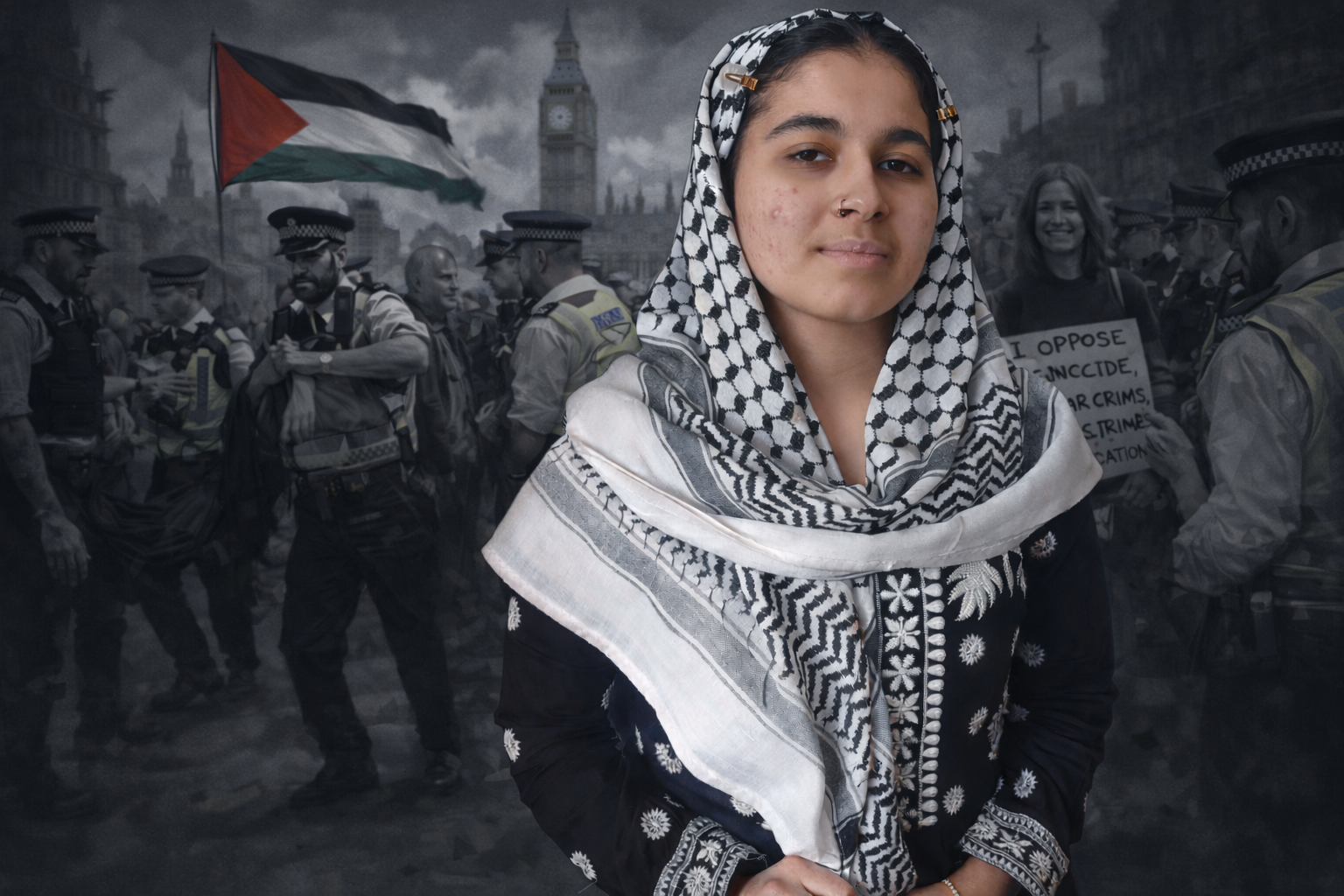
Feature photo: Pro-Palestinian activists rally at Turmstraße underground station in Berlin on October 26, 2025, expressing solidarity with the “Ulm 5” and protesting against arms manufacturer Elbit Systems. Police detained several demonstrators during the march, amid growing scrutiny from UN experts and Human Rights Watch over restrictions on protest and dissent in Germany. (Credit: İlkin Eskipehlivan/Anadolu Agency)