Nadine Osman
A South African artist has launched legal action against the country’s arts and culture minister after being blocked from representing South Africa at the 2026 Venice Biennale over an artwork addressing Israel’s killing of Palestinians in Gaza.
Artist Gabrielle Goliath, together with curator Ingrid Masondo and studio manager James Macdonald, filed a lawsuit in late January against Arts and Culture Minister Gayton McKenzie, a senior member of South Africa’s coalition government, accusing him of acting unlawfully and violating constitutional protections on freedom of expression.
The case seeks an urgent court order to reinstate Goliath’s participation in South Africa’s national pavilion, ahead of a February 18 deadline set by Biennale organisers for confirming installations. National pavilions at the Venice Biennale are organised and funded by governments, giving ministers significant control over who represents their country.
At the centre of the dispute is Goliath’s long-running video installation Elegy, part of which pays tribute to Hiba Abu Nada, a Palestinian poet killed alongside her son in an Israeli airstrike on Khan Younis in October 2023.
McKenzie blocked the work after describing its subject matter as “highly divisive” and linked to a “widely polarising” international conflict.
Goliath said the decision went beyond her own participation. “More importantly than reclaiming the pavilion,” she said, “is the significance of the work, which speaks to whose lives are recognised as lives worth grieving.”
In letters included in court filings, McKenzie said it would not be “wise or defensible” for South Africa to support an installation critical of Israel while the country itself faces accusations of genocide at the International Court of Justice (ICJ).
South Africa launched the case at the ICJ in The Hague in 2023, accusing Israel of violating the Genocide Convention over its military assault on Gaza — a move that drew global attention and positioned the country at the centre of international legal and diplomatic debate.
McKenzie also raised concerns that South Africa’s pavilion could be used as a vehicle for foreign political influence, referring to early inquiries by Qatar Museums about funding the exhibition. Goliath rejected the allegation, saying the discussions never progressed and describing claims of “foreign capture” as a “damaging conspiracy theory”.
Goliath had planned to present three video works from Elegy, a piece shown internationally for more than a decade. Alongside the tribute to Abu Nada, the works also honour Ipeleng Christine Moholane, a 19-year-old murdered in South Africa in 2015, and two women killed during the German colonial genocide in Namibia.
The Venice Biennale is one of the world’s most influential contemporary art events, alternating annually between art and architecture exhibitions. In the most recent edition, 86 countries participated through their national pavilions.
The minister’s decision has sparked widespread condemnation from South African artists, writers and cultural organisations, many of whom signed open letters calling for Goliath’s reinstatement. The opposition Democratic Alliance, which is part of the governing coalition, has also referred McKenzie to the country’s public watchdog.
The ministry has not announced any alternative plans for South Africa’s pavilion, and McKenzie’s office did not respond to further requests for comment.
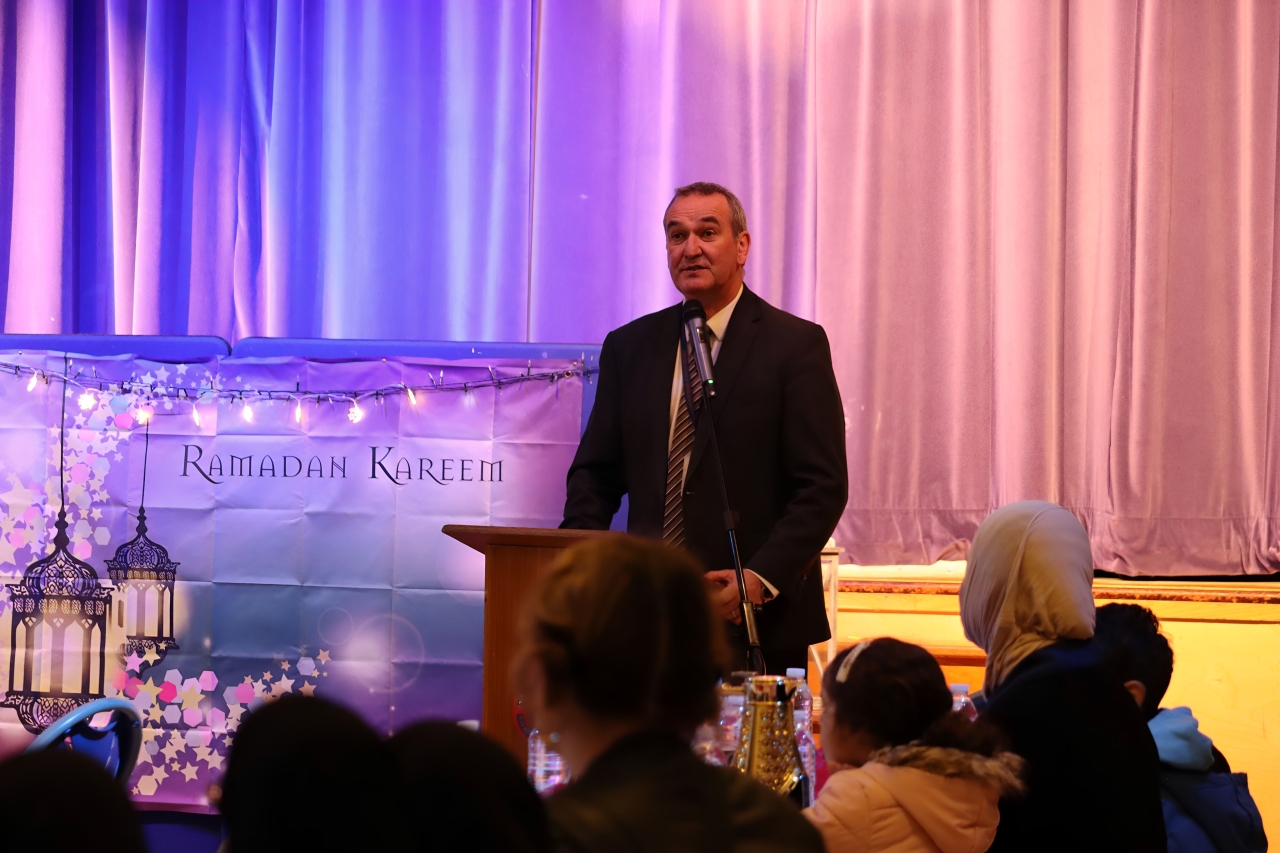
Feature Photo: Gayton McKenzie, South Africa’s Arts and Culture Minister, who is being sued by artist Gabrielle Goliath after he blocked her Gaza-themed installation from representing the country at the Venice Biennale 2026. (Credit: US Embassy South Africa/Flickr CC)