Elham Asaad Buaras
Leading scholars and Muslim community leaders have warned that recent comments by far-right Australian politician Pauline Hanson reflect a broader normalisation of Islamophobia in Australian political discourse, as data reveal sharp increases in anti-Muslim hostility across the country.
Hanson, leader of the right-wing One Nation, a populist party founded in the late 1990s that opposes immigration and multiculturalism, provoked widespread condemnation on February 16 during an interview with Sky News Australia, when she claimed there are no “good” Muslims. “You say, ‘Well, there’s good Muslims out there.’ How can you tell me there are good Muslims?” she asked, prompting political, civic, and religious backlash across Australia.
Two days later, Hanson issued a partial apology on the Australian Broadcasting Corporation (ABC), expressing regret for offending Muslims who did not believe in sharia law or a caliphate, but reaffirmed her broader criticisms: “In general, that is what they want — a world caliphate. And I am not going to apologise.”
While the immediate controversy has subsided, experts warn that the deeper concern lies in the systemic normalisation of anti-Muslim rhetoric in Australian public life. Dr Ali Mamouri, Research Fellow in Middle East Studies at Deakin University, and Professor Fethi Mansouri, a Deakin Distinguished Professor and UNESCO Chair-holder in cultural diversity and social justice, say such statements are symptomatic of a broader societal trend.
“The question is no longer whether Islamophobia exists in Australia,” they wrote in a recent analysis. “The question is whether it has become normalised, tolerated in ways other forms of discrimination are not, and what this means for the country’s commitment to multiculturalism and liberal democracy.”
Their concerns are supported by hard evidence. Following the October 2023 Hamas attack on Israel, reported Islamophobic incidents in Australia more than doubled compared with previous years, with Palestinians disproportionately targeted. During Ramadan this year, three threatening letters were sent to Lakemba Mosque, a centre of Sydney’s Muslim community, and leaders reported harassment of Muslims in public spaces.
Institutional data reinforce the systemic nature of prejudice. The Australian Human Rights Commission’s February 2026 report found that more than 75 per cent of Muslim students and staff surveyed had witnessed racism directed at their communities, with figures exceeding 90 per cent among Palestinian respondents and over 80 per cent for Middle Eastern participants. Researchers stress that these statistics indicate entrenched patterns, not isolated incidents.
Mamouri and Mansouri argue that rhetoric portraying Muslims as a monolithic group reinforces collective blame. “They reflect a logic of dehumanisation, homogenisation and collective blame,” they wrote. “This involves treating a diverse religious community as monolithic and holding them responsible for incidents or international conflicts over which they have no control.”
Community leaders also condemned Hanson’s remarks. Senator Fatima Payman, one of the few Muslim Australians in Federal Parliament, said that if Hanson truly opposed Australia’s multicultural identity, “she can really pack her bags and go to the US and continue being best buds with Trump,” adding that “Australia is a proudly multicultural and inclusive society.”
The Race Discrimination Commissioner, Giridharan Sivaraman, labelled Hanson’s comments Islamophobic, warning that statements which “single out and diminish any community” damage social cohesion and undermine the safety and dignity of Australian Muslims. “Australia’s Muslim communities, like all our communities, deserve to feel safe, respected and included,” he said.
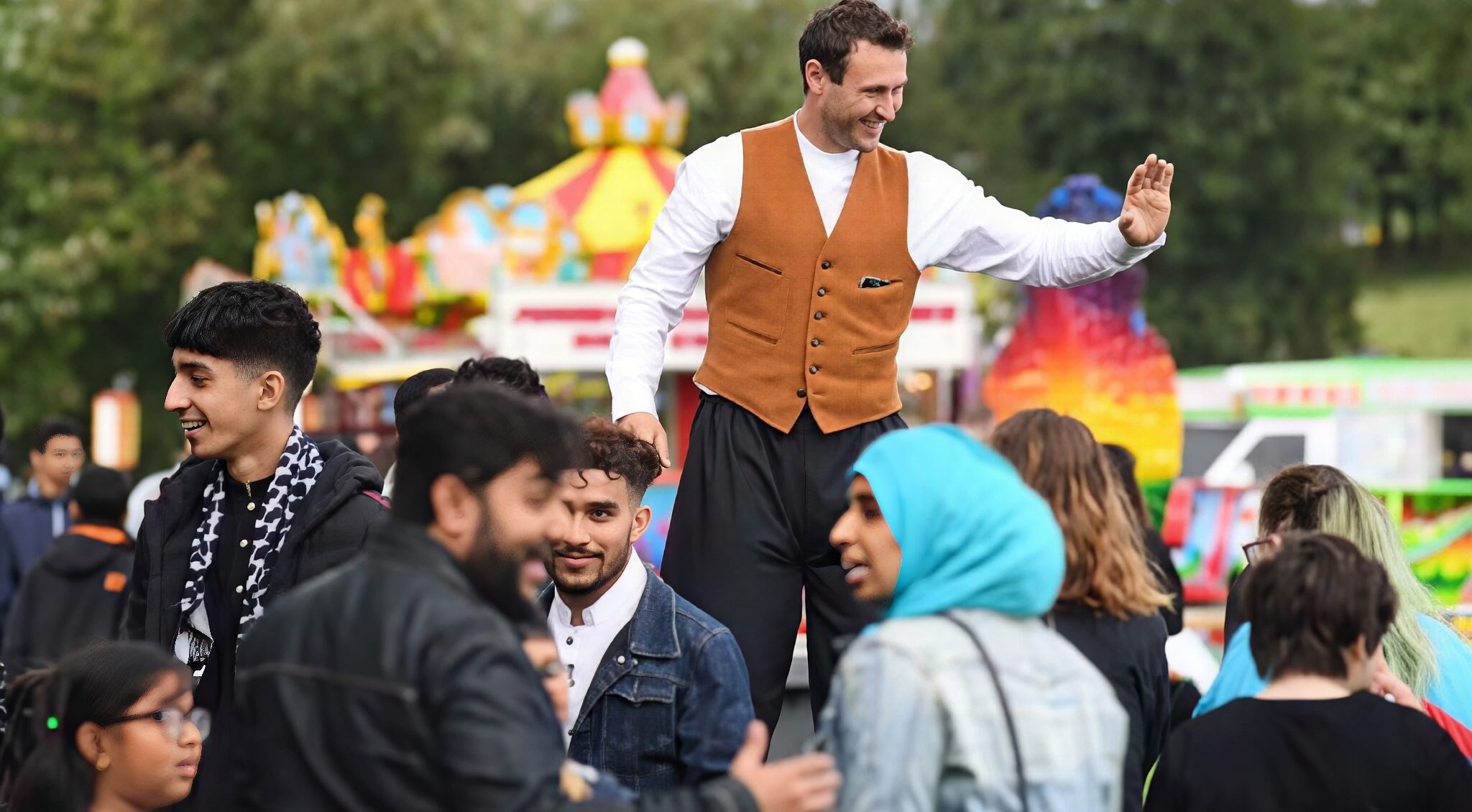
In Sydney’s south-west, civic leaders sought to counter the climate of hostility. Imam Shadi Alsuleiman of the Australian National Imams Council welcomed visits by non-Muslim politicians to the Lakemba Ramadan night markets, describing the gatherings as a rebuttal to divisive rhetoric and a “powerful affirmation” of multicultural values in action.
Hanson, one of Australia’s most recognisable far-right figures, has a long record of anti-Islam rhetoric, including a 2016 Senate suspension after wearing a burka on the chamber floor to dramatise her call for a ban on face coverings.
While One Nation has never held significant national power, it has influenced public debate around immigration and national identity. Polling suggests the party has surged in support, at times overtaking the main centre-right Coalition. The upcoming by-election in the rural New South Wales electorate of Farrer, triggered by the resignation of Sussan Ley, former deputy leader of the Liberal Party of Australia, will test whether that momentum translates into votes.
Former Nationals leader Barnaby Joyce, who recently joined One Nation, declined to distance himself from Hanson’s remarks. Speaking to the Nine Network, he said: “I do agree 100 per cent with Pauline. People come into this country completely at odds… with what Australia is.”
Mamouri and Mansouri argue that the stakes extend beyond Hanson alone. “When anti-Muslim rhetoric becomes normalised, it does more than harm one group,” they wrote. “It erodes trust in institutions, weakens the credibility of anti-racism frameworks, and signals that equality before the law is unevenly applied.”
They conclude that the health of Australia’s multicultural democracy will ultimately be judged by its treatment of minority communities. “Australian multicultural democracy cannot selectively defend some communities while leaving others to navigate hate and hostility on their own,” they wrote.
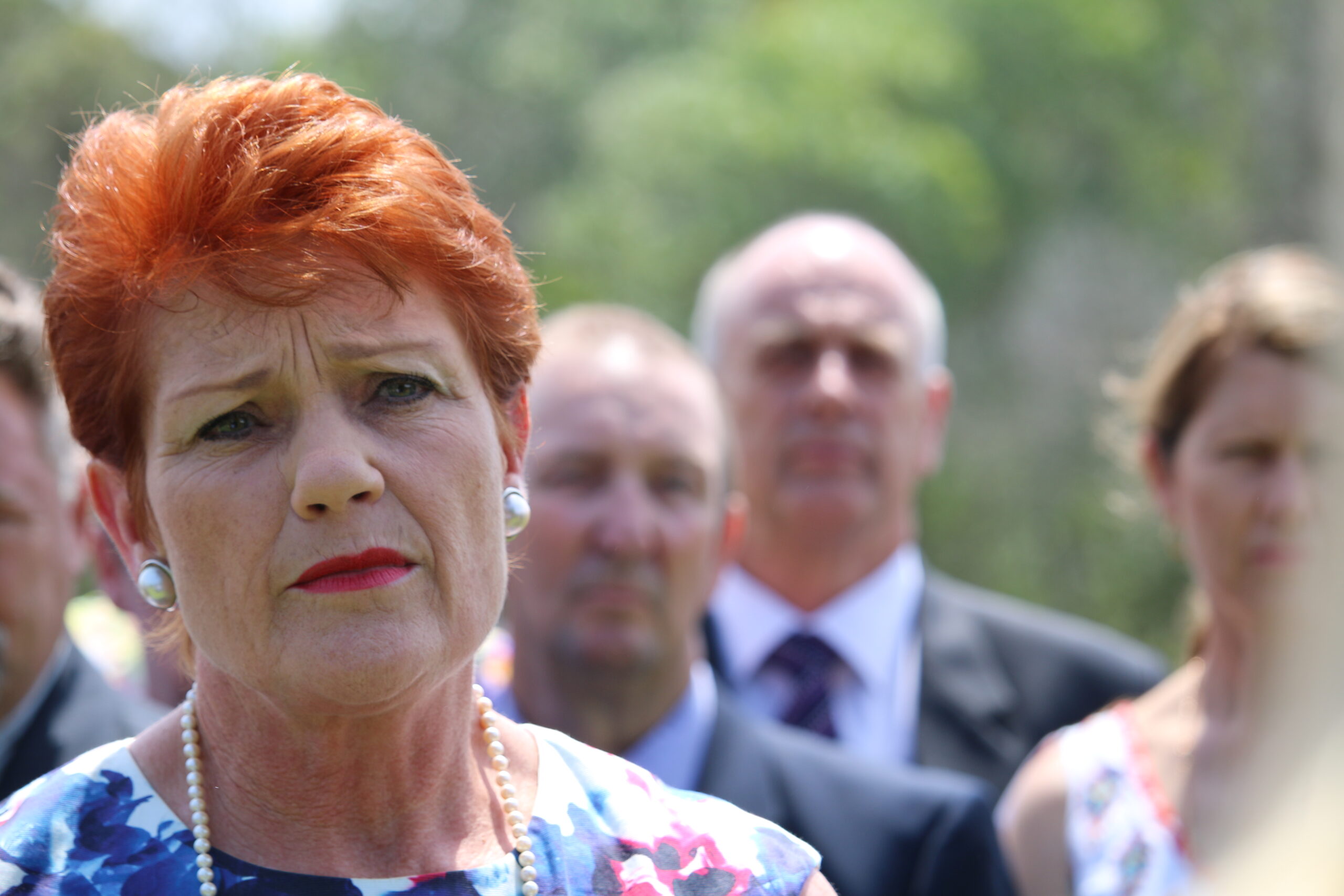
Feature photo: Pauline Hanson, leader of One Nation, sparked national condemnation after claiming there are no “good” Muslims, as scholars and community leaders warned her remarks reflect the growing normalisation of Islamophobia in Australian political discourse. (Credit: WikiCommons)