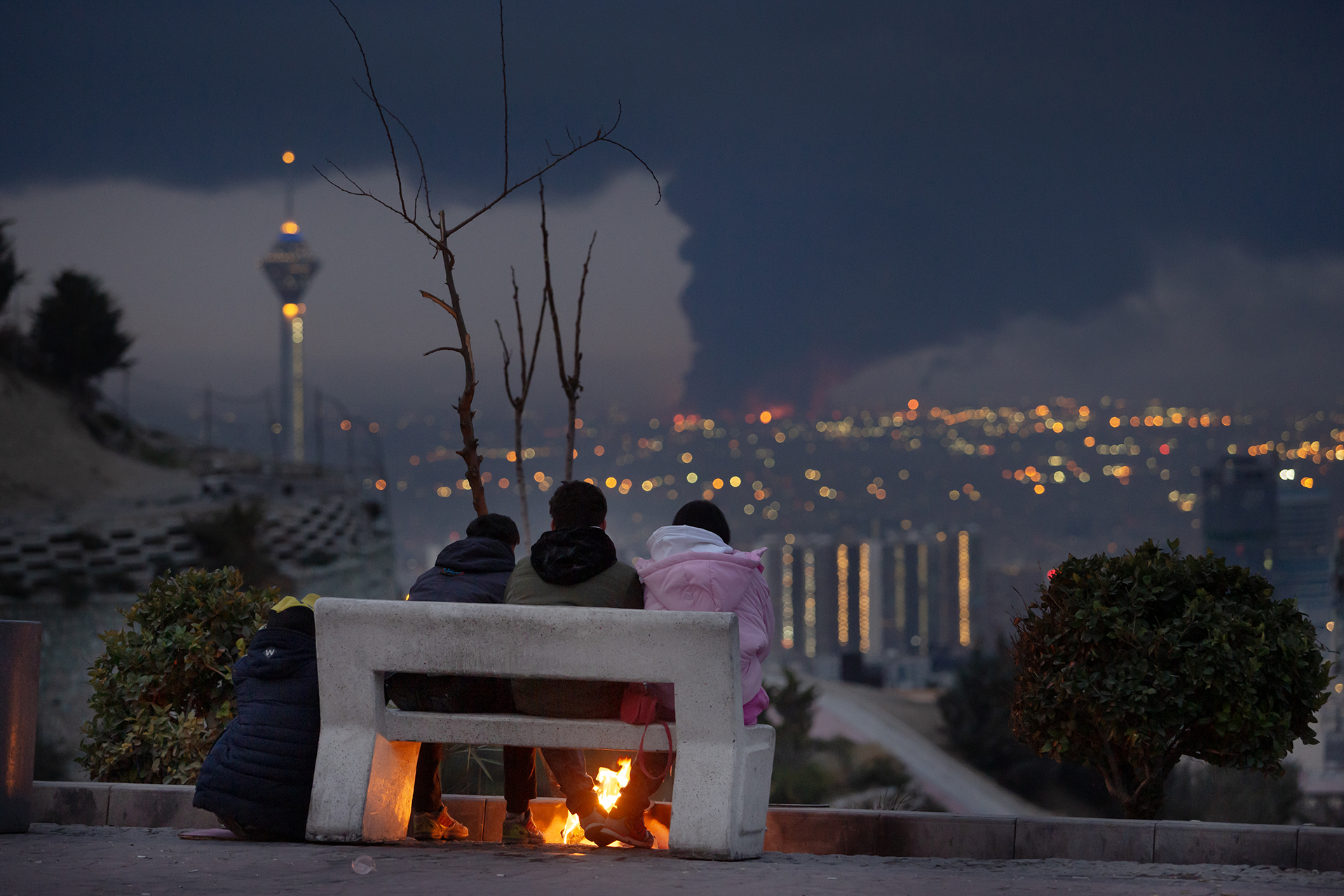
The initial explosions lit up the night sky, and then vast plumes of toxic black smoke kept residents from seeing the sun the following day.
The strikes targeted several fuel storage complexes in the city, according to the Israel Defense Forces, which announced on March 7 that it had carried out the initial attack. By the next day, the smoke was so dense that many residents reported being unable to see the sun, while others complained of immediate respiratory problems. Burning large amounts of oil releases toxic hydrocarbons into the atmosphere, causing exposure to chemicals like benzene, nitrous compounds and sulfur oxides, formaldehyde, and metallic compounds.
Human exposure to pollutants at such extreme concentrations is akin to experiencing a major chemical disaster. Given Tehran’s population density—comparable to that of New York City, with nearly 10 million residents living across an urban area of roughly 700 square kilometres, about half the size of Greater London, experts have already warned of long-term health consequences for affected residents.
In the days following the weekend bombing campaign of the country’s oil infrastructure, soot-filled black rain fell from the skies, and the government warned residents of acid rain, encouraging them to stay indoors.
The Conflict and Environment Observatory describes toxic acid rain, as “caused by the combustion of sulphur rich “sour” crude oil when sulphur dioxide gas is emitted into the atmosphere, turning into sulphuric acid in raindrops.” Sulphuric acid is what constitutes the “battery acid” in automotive lead-acid batteries and can be highly hazardous to humans, particularly for eyes, skin, and the respiratory system.
In the 1970s and ‘80s when scientists sounded the alarm on industrial pollution contributing to rain much more acidic than normal, which began eroding historical sites, governments sought to curb sulphur dioxide and nitrous oxide emissions through pollution control measures, which largely reversed the problem.
The public fears significant contamination of waterways. Iran had already been experiencing a severe drought, with last year’s conditions recorded as some of the driest on record for 20 years. Strikes have also hit desalination plants, furthering fears around water access. Iranian officials accused the US of striking a desalination plant in Qeshm that provided water to 30 villages, while Bahrain accused Iran of striking its desalination infrastructure. Targeting civilian infrastructure violates international humanitarian law, and striking infrastructure so vital in the region could set a dangerous precedent. According to Responsible Statecraft, “About 42% of the UAE’s drinking water comes from desalination plants, compared to 90% in Kuwait, 86% in Oman, 70% in Saudi Arabia and about 80% in Israel.” Iran receives a smaller percentage of its water from desalination, but the drought, coupled with historic water mismanagement, increases the technology’s value to the country’s residents.
The conflict–and accompanying pollution–is sprawling throughout the region. At least five oil tankers have been targeted, one in Omani waters, and another off the coast of Kuwait, resulting in some oil spills. Shipping vessel traffic has severely declined in the Strait of Hormuz, causing oil prices to skyrocket and a disruption to the export of fertilizer inputs such as ammonia and urea. These supply chain interruptions are already contributing to higher consumer prices on necessities. In the US, the war in Iran has little public support, but electric vehicle manufacturers are excited for the natural boost in support, as EV owners are not hit as hard by price spikes.
Experts have demonstrated how natural disasters can eventually lead to civil unrest and political upheaval. When water infrastructure collapses, crops are wiped out, and populations are left struggling to survive, people lose faith in the institutions meant to stabilize societies. War may have similar calamitous effects, as aggressors target vital infrastructure and make refugees of civilians in a region unequipped or unwilling to welcome them. Meanwhile, the health effects of such disasters can have lasting consequences. Experts have linked chemical pollution at the level residents in Iran are experiencing, to cancer, birth defects, and respiratory issues years into the future.
The full scope of environmental damage from the war has yet to be quantified, but wind-blown air pollutants have reached China, Afghanistan, and Russia. Large-scale environmental damage, whether natural or human-caused, unavoidably effects people’s health, as the systems supporting life’s basics–air, food, and water–are all adversely effected by the advanced military capabilities that world’s great powers are willing to use to an undefined end.
Feature photo: Smoke and flames rise at the Shahran oil depot in Tehran after US and Israeli strikes on fuel storage facilities, March 8. (Credit: Hassan Ghaedi/Anadolu Agency)Sarah Sakeena Marshall,
Consultant, Writer, Editor, Climate Change, National Security
I