Elham Asaad Buaras
Muslim footballers in Europe have experienced contrasting challenges while observing Ramadan, highlighting the difficulties of balancing religious obligations with the demands of professional sport under different league regulations.
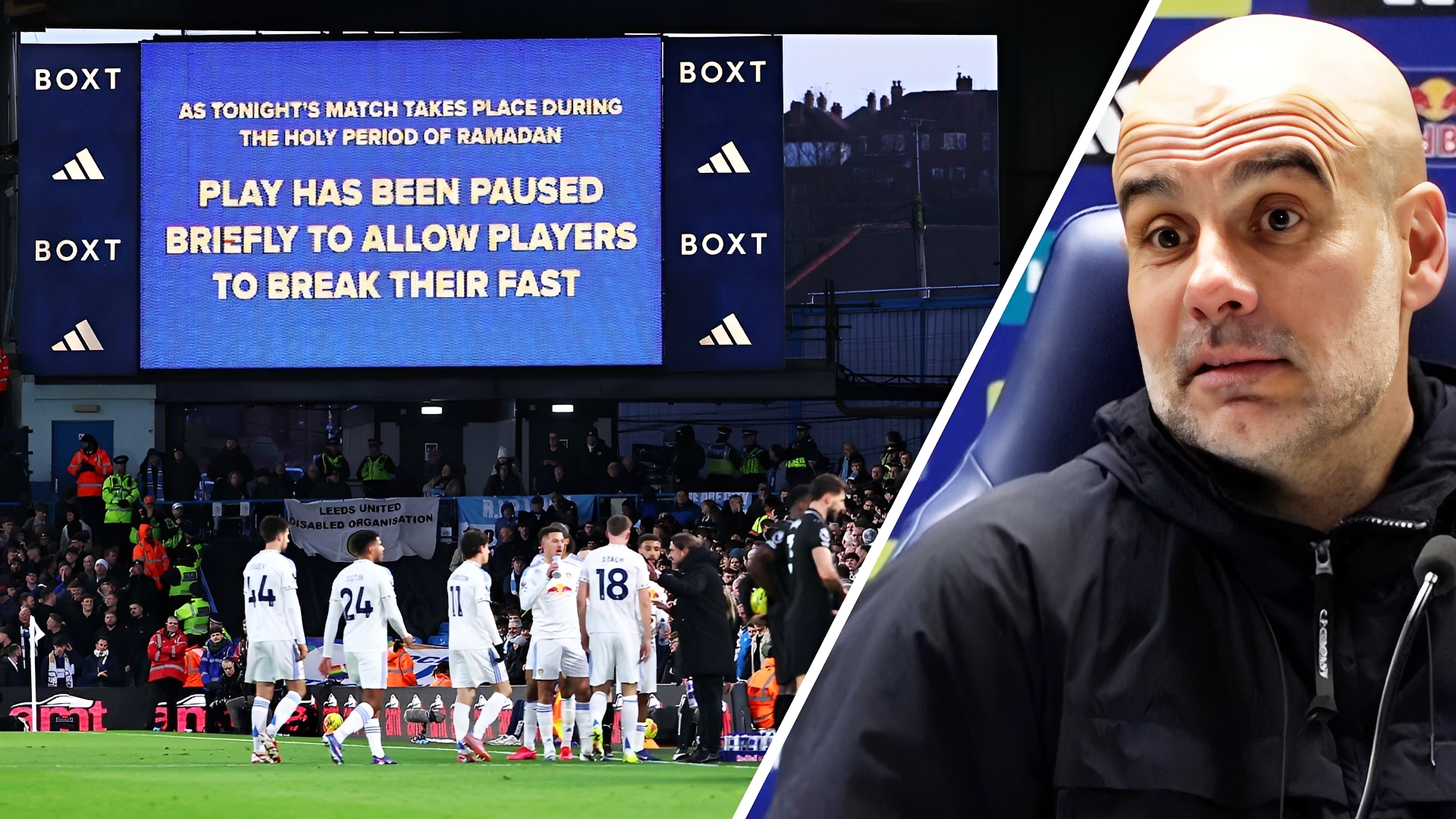
In England, Manchester City’s 1‑0 win over Leeds United on February 28 was briefly paused in the 13th minute to allow Rayan Cherki, Rayan Aït‑Nouri, Omar Marmoush, and Abdukodir Khusanov to break their fast after sunset. A message explaining the stoppage appeared on the big screen at Elland Road, but some sections of the crowd responded with audible jeers.
City manager Pep Guardiola called on supporters to show respect. “It is a modern world, right? … Respect religion, diversity, that is the point. The Premier League says you can have one or two minutes; you can have for the [fasting] players to do it [break their fast]. It is what it is, unfortunately,” he said.
Leeds United’s assistant head coach, Edmund Riemer, described the reaction from supporters as “disappointing.” The anti-discrimination charity Kick It Out also criticised the jeering, noting that Ramadan breaks have been an agreed protocol in English football since 2021. Under the Premier League’s rules, referees may pause a match at the next natural stoppage, such as a throw-in or free kick, allowing Muslim players to hydrate or consume light nourishment without disrupting the game.
In France, Muslim players face a far stricter framework. On February 22, during Nantes’ 2‑0 Ligue 1 win over Le Havre, goalkeeper Anthony Lopes went to ground with what appeared to be an injury, giving five Muslim teammates the opportunity to leave the pitch and eat or drink. Outfield players must normally leave the field for treatment if injured, but goalkeepers are exempt, allowing Lopes’ brief pause.
The Nantes incident reflects the wider approach of the French Football Federation (FFF), grounded in laïcité, the country’s principle of secularism. In 2024, the FFF introduced rules forbidding players from fasting while training with any national team, from U16 to senior level, at the Clairefontaine base. Midfielder Mahamadou Diawara left France’s under-19 squad after refusing to comply with the rules, returning to his club side Lyon. The FFF confirmed his departure and called up Nantes’ Dehmaine Tabibou Assoumani as his replacement.
FFF President Philippe Diallo defended the policy, citing the organisation’s founding statute, which enshrines a “principle of neutrality” and forbids religious or political expression during team activities. Players observing Ramadan are instructed to make up any missed fasts after the training period or international matches’ end. Critics, including some players and agents, have described the rules as restrictive, with reports noting that “they believe that their religion is not respected and that they are not respected either.”
Feature photo: Pep Guardiola urges Elland Road supporters to respect Muslim players’ Ramadan fasts during Manchester City’s 1–0 victory over Leeds United on February 28, following audible jeers as players paused to break their fast. (Credit: Hayter TV/CC)