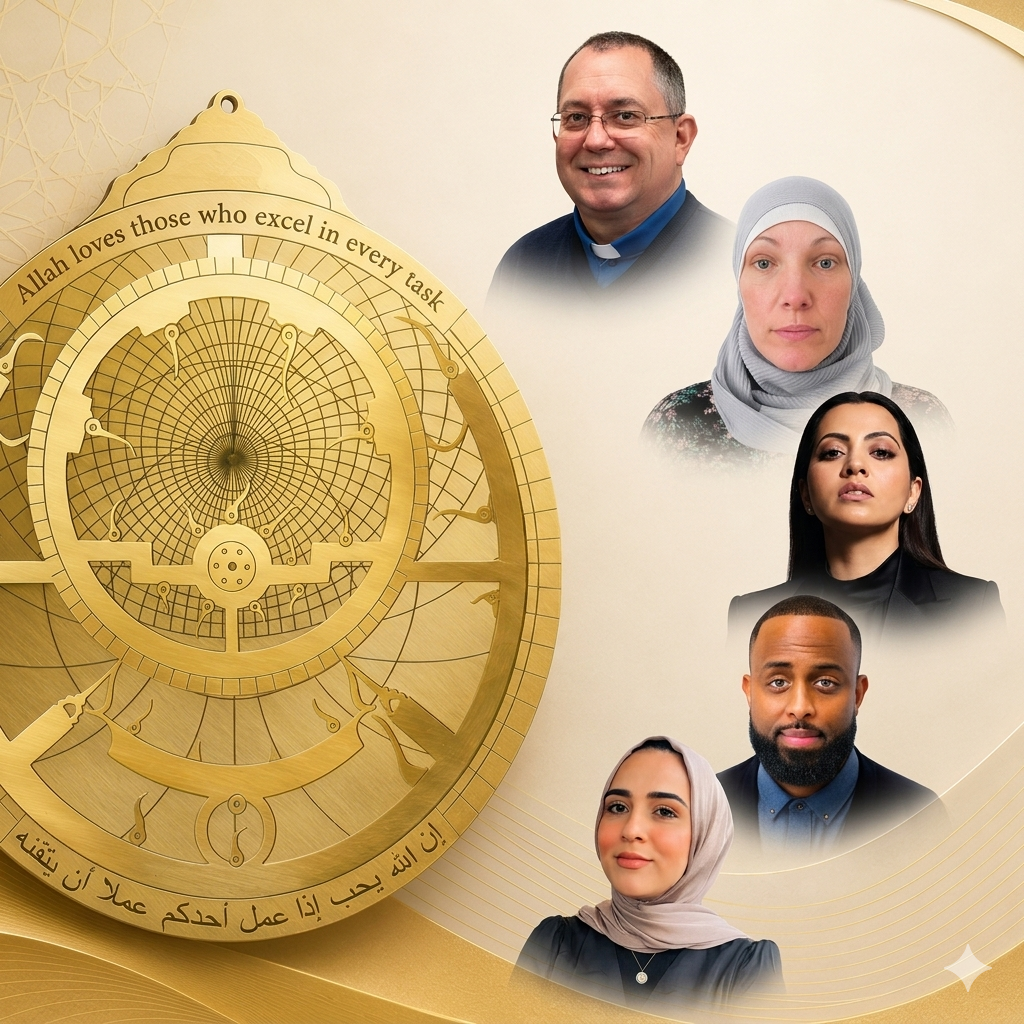
An estimated 2,075 Muslim candidates contested England’s local elections, with a record 466 winning seats across dozens of local authorities, according to analysis by The Muslim News. The results point to a significant shift in voting patterns across many urban areas, with Labour suffering losses in several traditional strongholds as independent and smaller-party candidates gained ground.
The elections, which covered district councils, London boroughs, metropolitan boroughs and unitary authorities, saw Muslim representation spread across the political spectrum.
Labour remained the largest single party among elected Muslim councillors, returning 199 representatives, 42.7 per cent of the total. However, the party lost support in several urban authorities where independent candidates and smaller parties made substantial gains.
Independent candidates recorded some of the strongest performances of the election cycle, with 91 Muslim independents elected, accounting for 19.5 per cent of all successful Muslim candidates. Many of these victories were driven by locally organised grassroots campaigns. The Green Party also made gains, electing 60 Muslim councillors, or 12.8 per cent of the total, particularly in areas where progressive and anti-war sentiment appeared to influence voting behaviour.
The Liberal Democrats secured Muslim councillors, while 39 candidates were elected under regional or smaller-party banners, including local groups such as Aspire. The Conservatives returned 26 Muslim councillors, maintaining support in several suburban wards, while Reform UK elected 12 Muslim councillors.
Several councils with large Muslim populations experienced significant political realignment, with traditional party structures weakened and a growing number of authorities moving into no overall control.
Outside London, similar trends emerged across northern England and the Midlands.
In some suburban and unitary authorities, voting patterns differed from those seen in major urban centres.
Political analysts and campaigners pointed to a combination of local grievances, national political issues and increasingly organised grassroots networks as factors behind the results. Groups such as The Muslim Vote were credited with helping independent and smaller-party campaigns strengthen voter outreach operations, particularly through digitally coordinated campaigning and local mobilisation efforts.
Voting patterns also varied significantly between areas. In some authorities, support shifted toward Green and left-leaning independent candidates, often driven by concerns over international conflicts, climate policy and local austerity measures. In other areas, particularly suburban councils, voters favoured candidates campaigning on issues such as council tax, business policy and local services.
One of the more unexpected developments was the election of 12 Muslim councillors representing Reform UK.
The victories were concentrated in economically challenged areas including Barking and Dagenham, Birmingham, Bury, Calderdale, Dudley, Havering, Sandwell, Sunderland, Wakefield and Walsall.
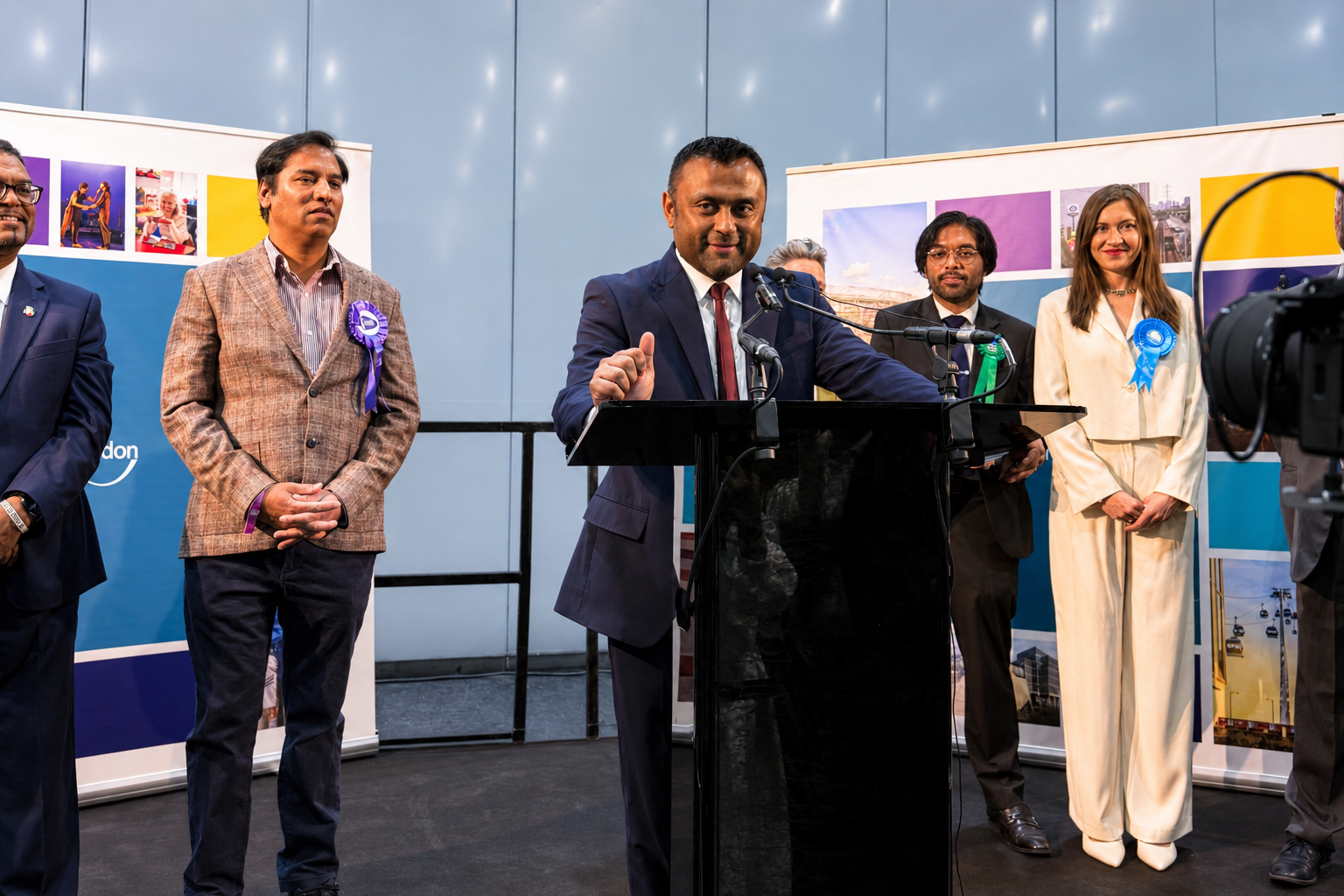
Several Muslim candidates also featured prominently in the six mayoral elections across England. In Tower Hamlets, Lutfur Rahman of Aspire won the mayoralty with 35,679 votes, securing 38.8 per cent of the vote. In Newham, Labour’s Forhad Hussain was elected mayor with 25,538 votes, defeating independent candidate Mehmood Mirza.
Green Party candidates Hirra Khan Adeogun in Tower Hamlets and Areeq Chowdhury in Newham both secured third-place finishes in their respective contests.
| Candidate | Borough | Party | Votes | % | Elected | Position |
|---|---|---|---|---|---|---|
| Lutfur Rahman | Tower Hamlets | Aspire | 35679 | 38.8 | Yes | 1st of 9 |
| Forhad Hussain | Newham | Labour | 25538 | 30.4 | Yes | 1st of 8 |
| Mehmood Mirza | Newham | Independent | 20234 | 24.1 | No | 2nd of 8 |
| Sirajul Islam | Tower Hamlets | Labour | 19454 | 21.1 | No | 2nd of 9 |
| Hirra Khan Adeogun | Tower Hamlets | Green | 19223 | 20.9 | No | 3rd of 9 |
| Areeq Chowdhury | Newham | Green | 18999 | 22.6 | No | 3rd of 8 |
| Vahid Almasi | Hackney | Reform UK | 4013 | 5.3 | No | 3rd of 5 |
| Abdul Laskar | Watford | Conservative | 1915 | 6.9 | No | 5th of 7 |
EXCLUSIVE ENGLISH LOCAL ELECTION: Full list of newly elected Muslim councillors
EXCLUSIVE: England Local Elections – Muslim Councillors: Representation & Share
Elections day study finds one in three Britons fail to identify deepfakes