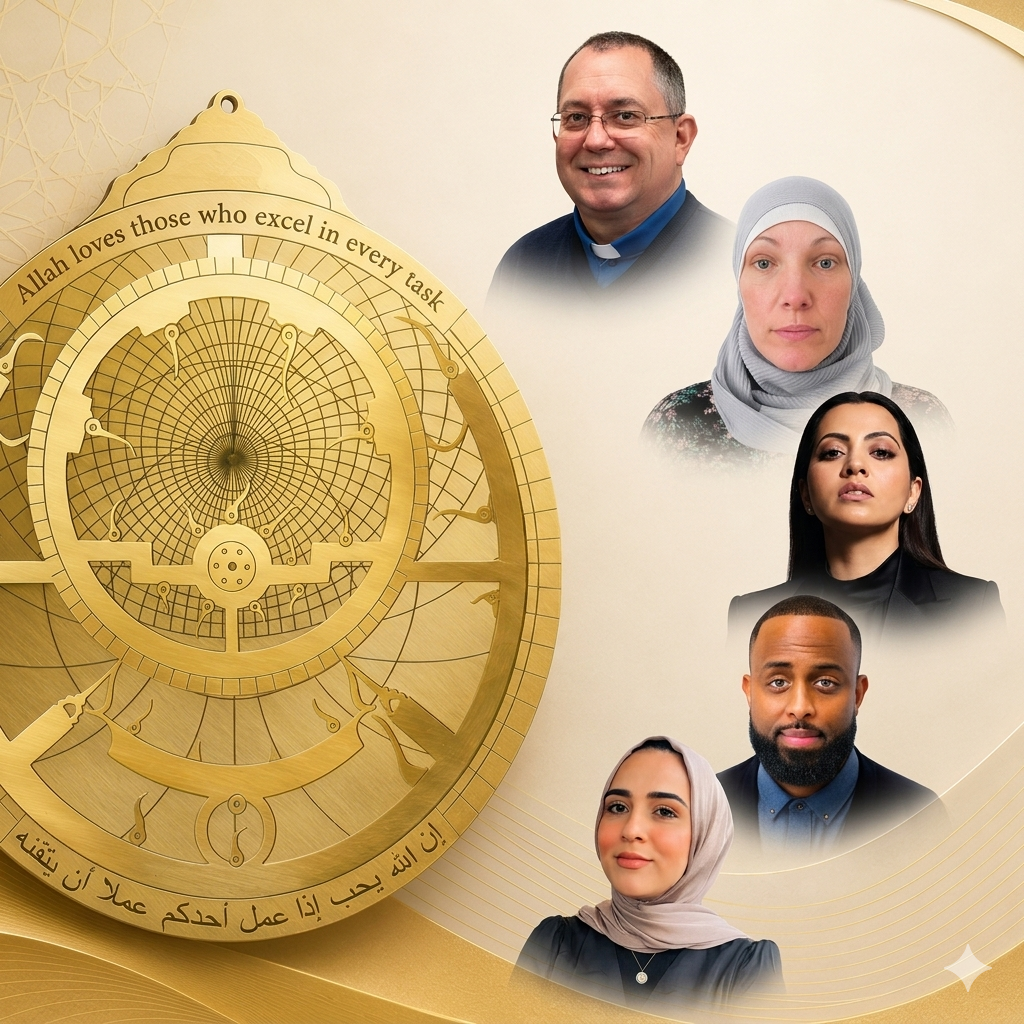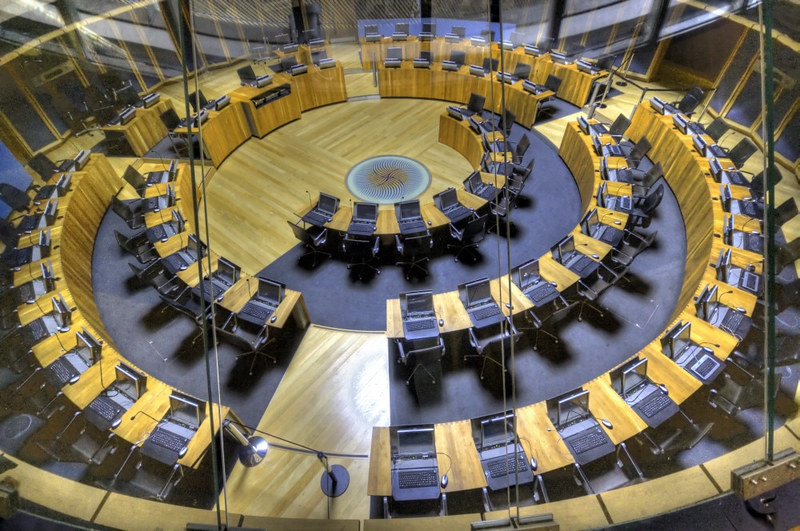
Home Affairs CorrespondentFrom NHS consultants to trade union leaders and elite athletes, diverse new intake reflects the changing face of Wales
The 2026 Senedd election, held on May 7, marked a watershed moment for Muslim representation in Welsh politics, with the largest-ever number of Muslim-background politicians elected to the Welsh Parliament during a period of dramatic political upheaval across the country.
Five candidates from Muslim backgrounds secured election to the Senedd (formerly the Welsh Assembly) across Plaid Cymru, Labour and Conservative benches, reflecting both the growing diversity of modern Wales and the increasingly prominent role played by ethnic minority communities in Welsh public life.
Their victories came amid one of the most significant political realignments in modern Welsh history.
For the first time since devolution began in 1999, and indeed for the first time in more than a century of Welsh electoral politics, Labour failed to emerge as the dominant political force in Wales. Instead, Rhun ap Iorwerth’s Plaid Cymru surged to become the largest party in the newly expanded 96-member Senedd, winning 43 seats and positioning itself to form a minority government.
The result represented a historic breakthrough for Plaid Cymru after decades spent operating in Labour’s shadow. Ap Iorwerth described the outcome as “a new dawn” for Wales as the nationalist party came within six seats of an outright majority.
Equally striking was the rise of Reform UK, which secured 34 seats to become the official opposition in Cardiff Bay, an extraordinary advance for a party that had previously held only a marginal presence in Welsh politics.
By contrast, Welsh Labour suffered its worst result since devolution, collapsing to just nine seats after dominating Welsh political life for generations. Analysts pointed to growing frustration over NHS waiting times, economic pressures and fatigue after years of Labour-led government in Wales.
The Welsh Conservatives were reduced to seven seats, while the Wales Green Party entered the Senedd for the first time with two members. The Welsh Liberal Democrats retained a single seat.
The election was also the first to be fought under a reformed electoral system following the expansion of the Senedd from 60 to 96 members. The more proportional voting system produced a chamber that was more fragmented, and politically unpredictable, than at any previous stage in Welsh devolution.
Against that backdrop, the election of the largest-ever group of Muslim-background Senedd members formed part of a wider story about a changing Wales: politically, socially and demographically.
Among the most striking victories was that of Zaynub Akbar, the Plaid Cymru candidate elected in Caerdydd Ffynnon Taf with 32,617 votes. Her journey to the Senedd has been shaped as much by adversity as by achievement.
Akbar’s grandfather emigrated to Wales from India, and she was raised by her father while experiencing periods of homelessness during her childhood, often moving between households and sofa surfing. Despite those challenges, she attended Howell’s School in Llandaff on a bursary before pursuing an elite sporting career that saw her represent Great Britain at the 2014 Summer Youth Olympics. Competing in trampoline gymnastics, she reached the final and finished eighth in the world.
Her academic and professional path later shifted towards politics and journalism. Akbar studied international relations and politics at Cardiff University while continuing her trampoline training in Northampton, completing part of her degree remotely. She later undertook journalism studies at the University of Nottingham before working as a journalist for ITV Cymru Wales and subsequently as a public affairs officer at Sport Wales.
Her election is viewed by supporters as emblematic of a younger, more diverse Plaid Cymru that has increasingly sought to broaden its appeal in urban Wales.
Plaid Cymru also celebrated another breakthrough in Gŵyr Abertawe, where consultant ophthalmologist Safa Elhassan secured election with 21,641 votes.
Born in Sudan, Safa Elhassan’s life has spanned three continents. After periods living in Texas and London, she eventually settled in Wales in 2012 and built a distinguished medical career specialising in cataract surgery, laser treatments and urgent ophthalmic care within the NHS. Most recently, she worked under Swansea Bay University Health Board.
Her political rise has also drawn attention because of her family’s unique place in Welsh politics. Elhassan’s husband, fellow Plaid Cymru politician Gwyn Williams, was elected alongside her in the same constituency, making them one of the few married couples to serve simultaneously in the Senedd.
Williams, originally from Neath, campaigned for Welsh devolution during the 1990s Yes for Wales movement before studying medicine at King’s College London. Like his wife, he pursued a career in ophthalmology, specialising in retinal care while serving as a consultant at Singleton Hospital in Swansea and as an honorary associate professor at Swansea University.
During the campaign, Williams made the future of the NHS central to his message, arguing that Wales needed to move beyond what he described as “sticking plaster solutions” and instead pursue long-term reform. Highlighting stark differences in waiting times for cataract operations between Wales and parts of England, he repeatedly criticised what he viewed as chronic under-resourcing within Welsh healthcare.
Elhassan herself entered politics after years spent supporting her husband’s political campaigning before becoming directly involved with Plaid Cymru. Her victory formed part of the party’s broader success in west Wales, where health services and public sector performance emerged as dominant electoral issues.
Labour’s Muslim representation was strengthened through the election of veteran trade union leader Shavanah Taj in Caerdydd Ffynnon Taf, where she secured 11,261 votes.
Taj arrives in the Senedd with one of the most prominent public profiles in Wales’s trade union movement. Born and raised in Cardiff, she is the daughter of Mohamed Taj Khan, who emigrated from Pakistan to Britain in 1958 and became active as a trade union shop steward and health and safety representative within the steel industry. Her mother later ran a fabric shop.
Political activism shaped Taj from an early age. She began campaigning against racism at just 14 years old before studying at Coleg Glan Hafren, the University of Glamorgan and the University of the West of England.
Before entering elected office, Taj rose through the ranks of organised Labour, becoming Welsh Secretary of the Public and Commercial Services Union in 2013 and later General Secretary of Wales TUC in 2020. Her appointment made her both the second woman and the first person from a Black and minority ethnic background to lead the organisation.
Throughout her public career, Taj became a familiar figure in Welsh civic life, appearing on BBC Question Time and holding senior positions within Welsh Labour, including vice-chair of the party’s BAME committee. Her move into frontline electoral politics came in 2025, when Labour selected her as its lead candidate for Caerdydd Ffynnon Taf ahead of this year’s Senedd contest.
Meanwhile, Natasha Asghar further cemented her position as one of the most recognisable figures in Welsh Conservative politics after winning Casnewydd Islwyn with 8,847 votes.
Born and raised in Newport, Asghar already occupies a historic place within the Senedd. In 2021, she became the first woman of colour elected to the Welsh Parliament, while also being widely recognised as the first Muslim and ethnic minority woman to serve there.
Her political legacy is closely tied to that of her father, Mohammad Asghar, who in 2007 became the first ethnic minority and first Muslim member of the then Welsh Assembly. Originally elected for Plaid Cymru before later defecting to the Conservatives, Mohammad Asghar remained a towering figure in Welsh public life until his death in 2020.
Educated at Rougemont School before studying politics, social policy and media-related subjects in London, Natasha Asghar worked across banking, broadcasting and the National Assembly for Wales before entering frontline politics herself. Prior to her initial election in 2021, she unsuccessfully contested Westminster, European Parliament and Welsh elections for the Conservatives.
Inside the Senedd, she rapidly became one of the party’s leading opposition voices, serving in several senior shadow cabinet roles, including transport and education. Following the latest election, Welsh Conservative leader Darren Millar appointed her Shadow Minister for Health and Social Care.
Asghar became nationally known for her vocal opposition to the Welsh Government’s controversial default 20mph speed limit policy and has consistently campaigned on transport, healthcare and education. Her profile has extended beyond politics, with recognition from both the BBC’s 100 Women list and British Vogue’s “Forces for Change”.
The election also saw a broader range of Muslim-background candidates contest seats across Wales, even where victory ultimately proved elusive.
Labour’s Mahaboob Basha polled 7,086 votes in Brycheiniog Tawe Nedd, while Conservative candidate Altaf Hussain — himself previously one of the earliest Muslim members of the Assembly — received 6,232 votes in Pen-y-bont Bro Morgannwg.
Among Liberal Democrat candidates, Irfan Latif secured 6,232 votes in Caerdydd Penarth, while Ruba Sivanangam received 5,453.5 votes. Imran Latif polled 4,518 votes in Caerdydd Ffynnon Taf, and Leena Farhat secured 1,591 votes in Bangor Conwy Môn. Reform UK candidate Nurul Islam stood in Casnewydd Islwyn as part of the party’s 5,898-vote tally there, while Harun Rashid, Abdul Khan, Mustapha Maohoub and Idin Ghotbi also contested seats across Wales.
The election results collectively underline how Muslim representation within Welsh politics, while still relatively limited compared with other parts of Britain, has evolved dramatically over the past two decades.
For much of the Senedd’s early history, Muslim political representation was almost non-existent. That changed in 2007 when Mohammad Asghar entered the Assembly, becoming not only its first Muslim member but also the first ethnic minority politician elected to the institution. Born in Peshawar in present-day Pakistan, he had earlier made history as Wales’s first Muslim councillor in Newport.
The second Muslim member of the Assembly was Altaf Hussain, the Conservative surgeon who entered the Senedd in 2015 representing South Wales West.
Since then, representation has steadily expanded, culminating in the diverse slate of candidates seen during the 2026 election campaign.
Yet the new intake reflects something broader than identity politics alone. Among the newly elected members are doctors, journalists, trade union leaders, campaigners and former elite athletes, individuals whose professional experiences mirror the changing face of Welsh society itself.
For Wales’s Muslim communities, the election marks another step towards greater political visibility within national life. For the Senedd, it signals an institution continuing — slowly but unmistakably, to become more reflective of the country it governs.
EXCLUSIVE ENGLISH LOCAL ELECTION: Full list of newly elected Muslim councillors
EXCLUSIVE: Over 450 Muslim councillors elected in England’s local polls as Labour bleeds urban seats
EXCLUSIVE: England Local Elections – Muslim Councillors: Representation & Share
Elections day study finds one in three Britons fail to identify deepfakes