For a nation that venerates Magna Carta, cherishes habeas corpus and presents itself to the world as a paragon of the rule of law, the treatment of Fatema Zainab Rajwani should serve as a profound warning. This is not merely a story about protest, the Middle East, or the cost of criminal damage. It is an unsettling illustration of how extraordinary state powers risk becoming normalised — and of the human toll when they are deployed against political dissent.
At just 20 years old, Rajwani was roused from her bed in the early hours of August 6, 2024, arrested after taking direct action at an Israeli-linked arms facility in Bristol. She and five others — later known as the “Filton 6” — admitted entering the site intending to disable drones. At trial in Woolwich Crown Court, she told the jury she had damaged equipment because she believed it was being used in the killing of children in Gaza.
After more than 36 hours of deliberation, the jury acquitted all six of aggravated burglary. Rajwani and two co-defendants were also cleared of violent disorder. The prosecution’s portrayal of them as violent extremists did not withstand scrutiny before a jury of ordinary citizens.
Yet by the time that verdict was delivered, Rajwani had already endured 16 months on remand in high-security conditions — a period of incarceration for offences of which she would ultimately be acquitted. The case raises serious questions about the proportionality of her detention and the safeguards intended to protect the right to liberty under Article 5 of the European Convention on Human Rights and the UK’s Human Rights Act.
Her account of the night of her arrest describes chaos and force. She alleges that a security guard lashed out at a co-defendant with a whip; that an activist was tasered without warning; that others were sprayed directly in the face with PAVA spray; and that a woman sustained a broken finger and was kicked in the ribs. Rajwani herself says she was pepper-sprayed. If substantiated, such conduct would engage Article 3 of the European Convention on Human Rights, which prohibits inhuman or degrading treatment, as well as the UN Basic Principles on the Use of Force and Firearms by Law Enforcement Officials.
The state’s response extended beyond criminal damage. Rajwani was reportedly informed she was being investigated under Section 5 of the Terrorism Act 2006, which concerns the preparation of terrorist acts. No terrorism charges were ultimately brought. The group Palestine Action was not proscribed at the time of the incident.
For several days following her transfer to a specialist counter-terrorism suite in Hammersmith, her family say they were unaware of her whereabouts. Her mother has described those days as paralysing and surreal. It was her daughter’s birthday; she expected her home. Instead, she was detained under counter-terror legislation. Such circumstances engage Article 5 protections and Article 9 of the International Covenant on Civil and Political Rights, which guards against arbitrary arrest or detention.
What followed was 16 months in custody awaiting trial. Classified as a Category A prisoner at HMP Bronzefield, Rajwani says her phone calls — including to her mother and solicitor — were blocked for weeks. She was subject to constant escort.
She further alleges that male prison officers entered her cell without knocking, including while she was changing. For a any woman, such intrusions carry particular weight. The right to bodily privacy and personal dignity is not extinguished by imprisonment; it is protected under Article 8 of the European Convention on Human Rights and reflected in established custodial standards requiring gender-sensitive supervision. Where privacy safeguards are disregarded, especially in circumstances engaging religious modesty norms, serious questions arise about proportionality and respect for fundamental rights.
Religious accommodations were, she says, inconsistent: her keffiyeh was confiscated and reading material scrutinised for “terrorist” content. If accurate, such treatment would also engage Article 9 of the European Convention on Human Rights, which protects freedom of thought, conscience and religion, alongside the Equality Act 2010 and the UN’s Nelson Mandela Rules governing the treatment of prisoners.
All of this occurred before a jury cleared her of violent offences.
Nine days after the acquittals, the High Court ruled that the government’s proscription of Palestine Action was unlawful. Amnesty International UK, which intervened in the judicial review, described the ruling as “a crucial defence of the right to protest.” Human Rights Watch has warned more broadly of a growing “crackdown on protest rights,” particularly where counter-terror powers intersect with non-violent political activism.
The courts pushing back against executive overreach show that constitutional guardrails remain in place. But the Rajwani case illustrates how readily extraordinary powers can be deployed in ways that test those limits. When counter-terrorism frameworks designed for mass-casualty threats are applied to political property damage; when activists spend more than a year on remand before acquittal; when families are left uncertain of their loved ones’ whereabouts — the distinction between necessary security measures and excessive state response becomes blurred.
One need not endorse Rajwani’s actions to recognise the stakes. The health of a democracy is measured not by how it treats the compliant, but by how it handles dissent.
Rajwani now faces a remaining trial for criminal damage, and that process must run its course. But her case poses a broader question: how expansively should counter-terror powers be interpreted in a democratic society? The jury has spoken. The High Court has spoken. Whether those guardrails hold may depend on how seriously such cases are examined — and on whether extraordinary powers are allowed to become ordinary tools of governance.
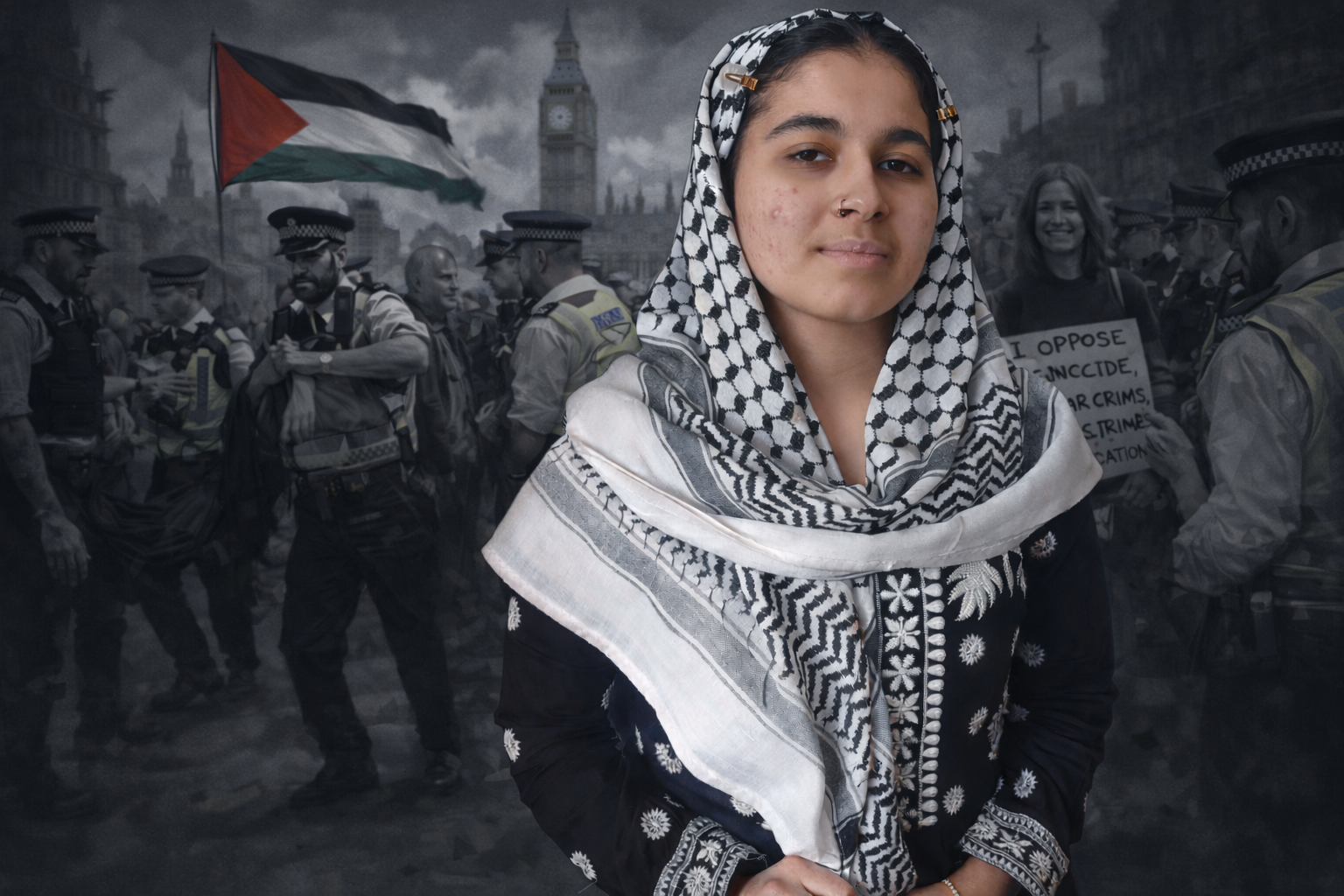
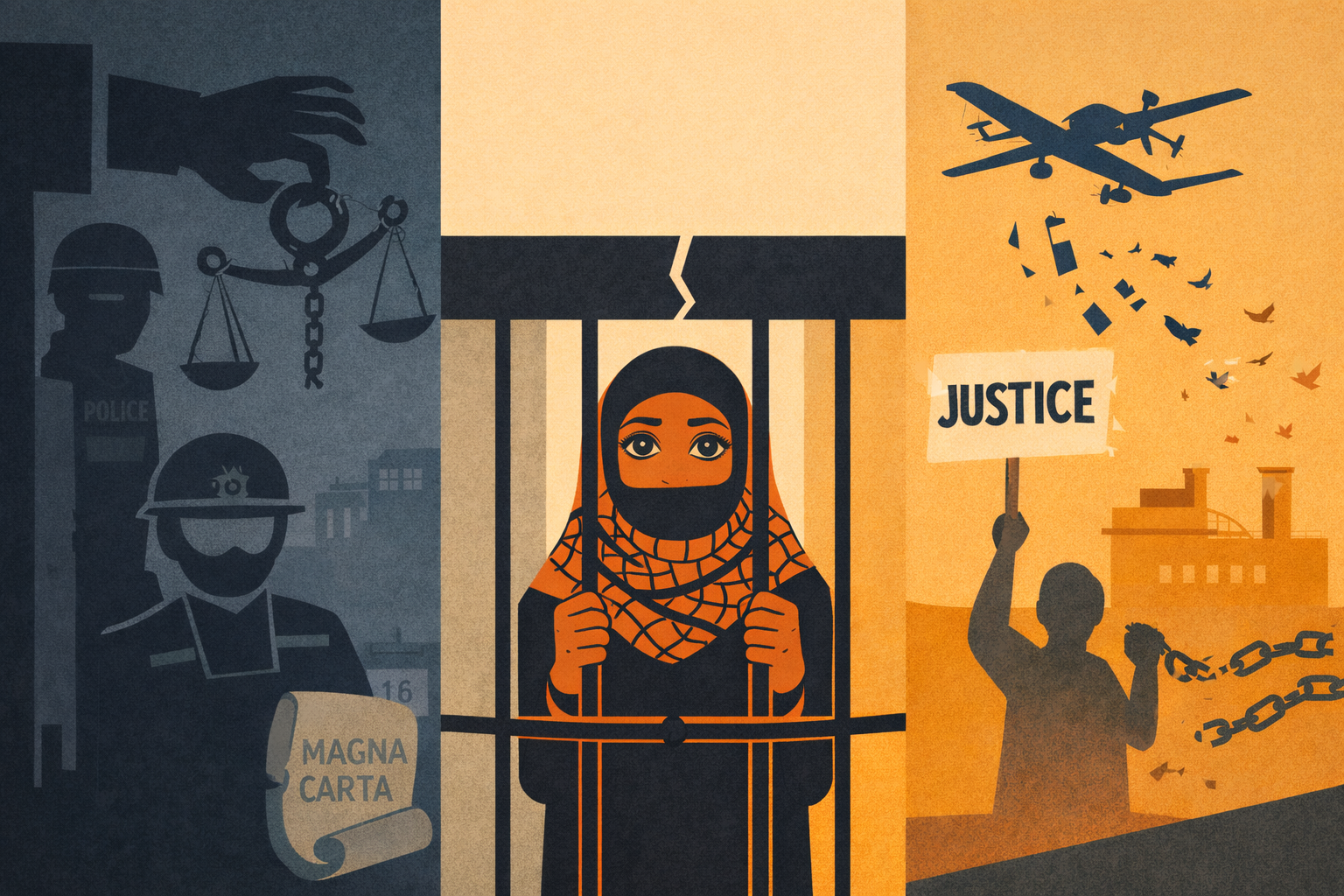
Editorial image: Created using AI (ChatGPT).