The scenes in Westminster on May 16 have reignited a question many British Muslims and anti-racism campaigners have been asking for years: why are far-right demonstrations treated differently from pro-Palestinian protests?
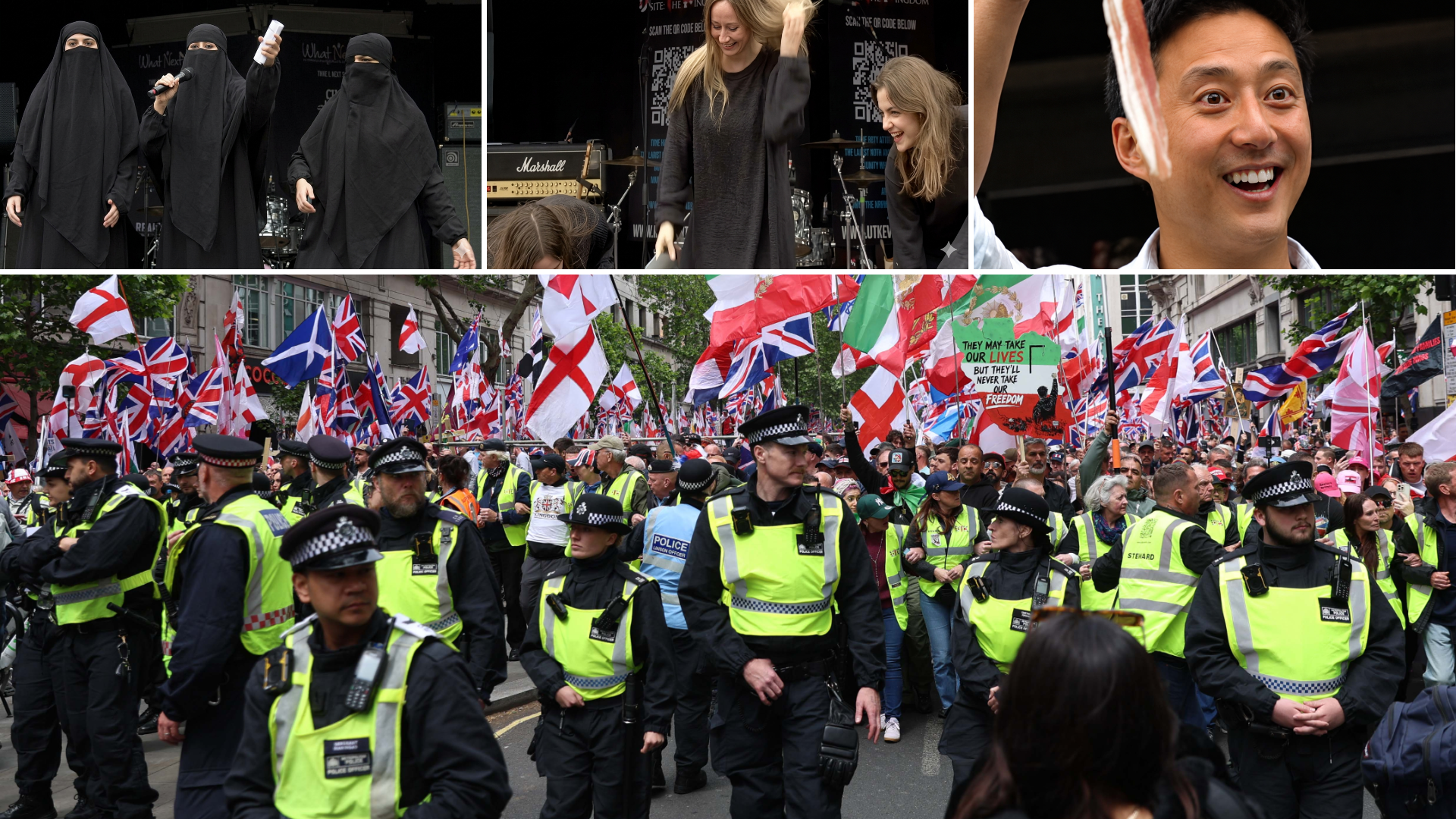
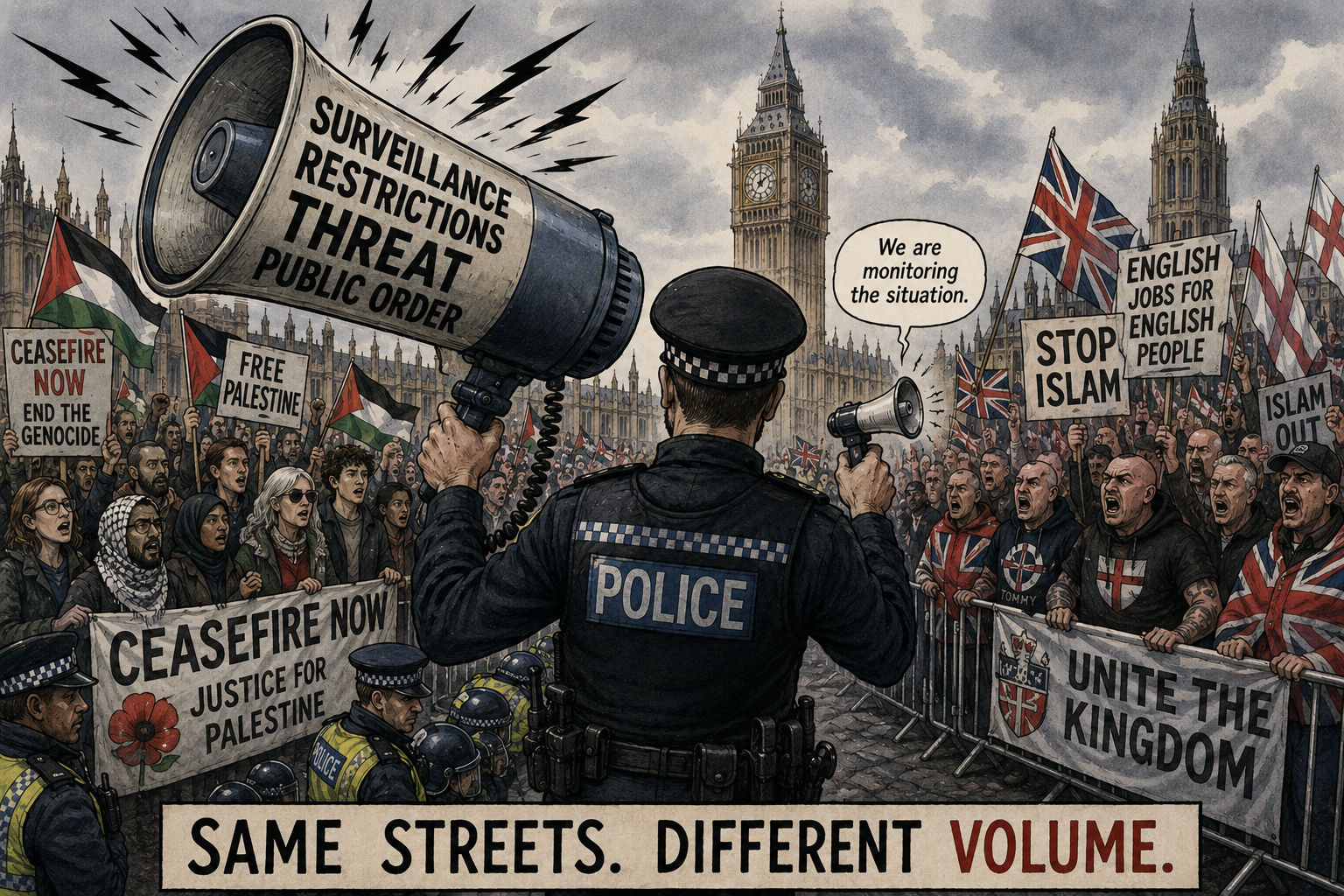
The “Unite the Kingdom” rally, organised around supporters of far-right activist Tommy Robinson, brought tens of thousands to central London. The event featured inflammatory speeches, anti-Muslim rhetoric, provocative symbolism, and performances widely condemned by faith groups and human rights advocates. Yet despite the scale and visibility of the rhetoric on display, the response from political leaders and law enforcement has appeared hesitant, cautious, and noticeably restrained.
The contrast with the treatment of pro-Palestinian demonstrations could not be more stark.
For months, ministers and sections of the media have routinely described pro-Palestinian marches as “hate marches.” Politicians demanded tighter restrictions, increased police powers, facial recognition surveillance, and aggressive enforcement. Peaceful demonstrators calling for a ceasefire in Gaza were often framed as threats to public order before they had even assembled.
Yet at the Westminster rally, speakers reportedly called for Islam to be “removed from every single place of authority,” suggested Muslims should “leave this country,” and pledged to “stop Islam.” Such statements go far beyond robust political debate. To many observers, they resemble open collective hostility directed at an entire religious minority.
If similar language had been directed at Jewish people, Black communities, or other minority groups, there is little doubt the political and media reaction would have been immediate and overwhelming. Ministers would likely have rushed to condemn the event. Police action would have been demanded within hours. Instead, Britain witnessed equivocation, silence, and procedural caution.
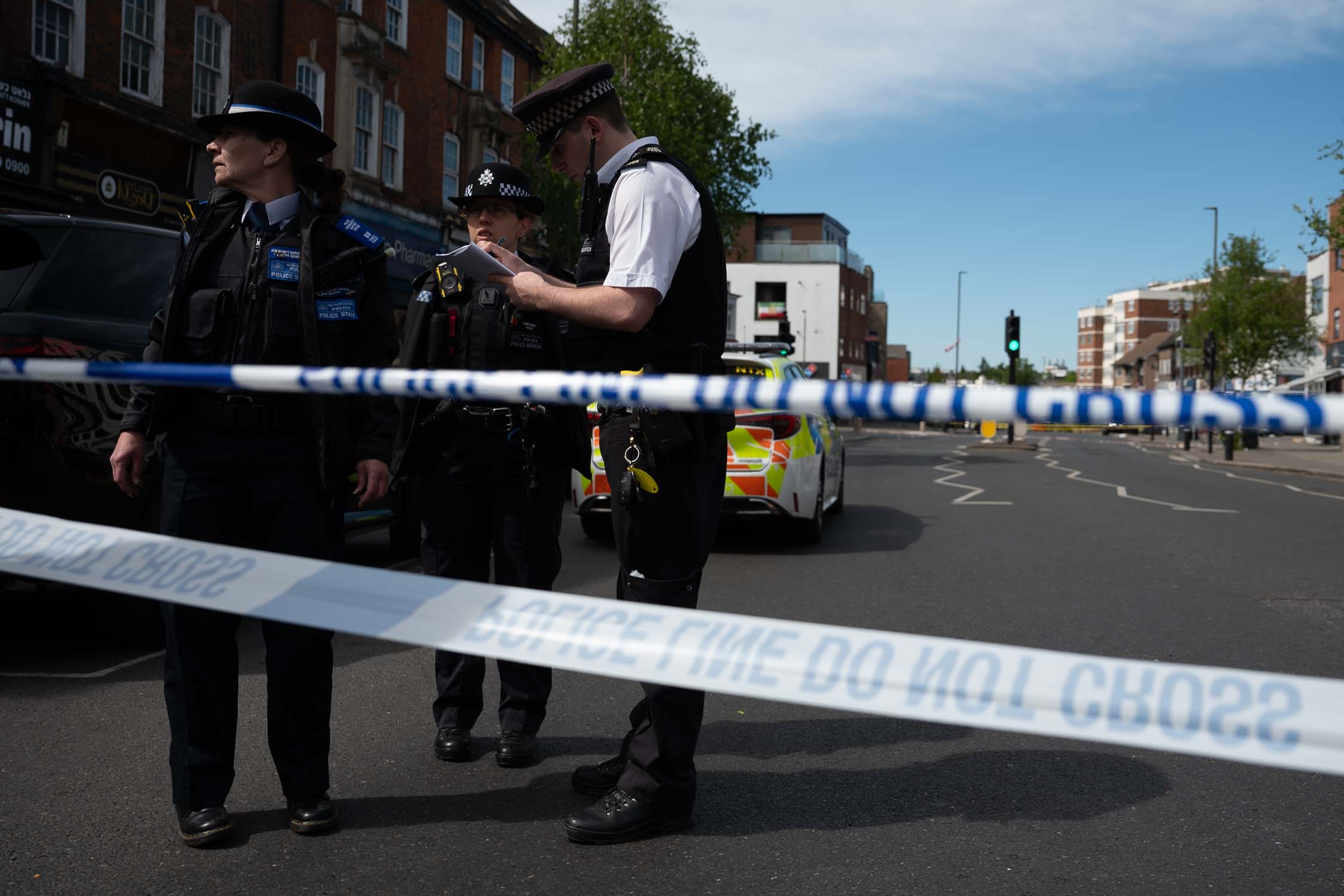
The Metropolitan Police Service insists it takes anti-Muslim hate crime as seriously as all other forms of hatred. Officers point to arrests already made and ongoing investigations. Yet critics are right to ask an uncomfortable question: if the law exists to prevent incitement and protect communities from collective intimidation, what exactly is the threshold?
For many British Muslims, the issue is not simply whether arrests were made. It is whether the authorities instinctively perceive anti-Muslim hatred as dangerous in the same way they recognise other forms of extremism.
That perception gap matters because language has consequences. History repeatedly shows that campaigns portraying minorities as civilisational threats rarely remain confined to rhetoric. Calls to “remove” a religious group from positions of influence are not politically neutral observations; they are exclusionary demands rooted in fear and scapegoating.
The symbolism on display at the rally deepened those concerns. Crosses carried through Westminster, chants of “Christ is king,” mockery of Muslim women wearing niqabs, and stunts involving raw bacon were not isolated acts of provocation.
Together, they projected a message of cultural confrontation: that British identity belongs to one group alone and that Muslims exist outside it.
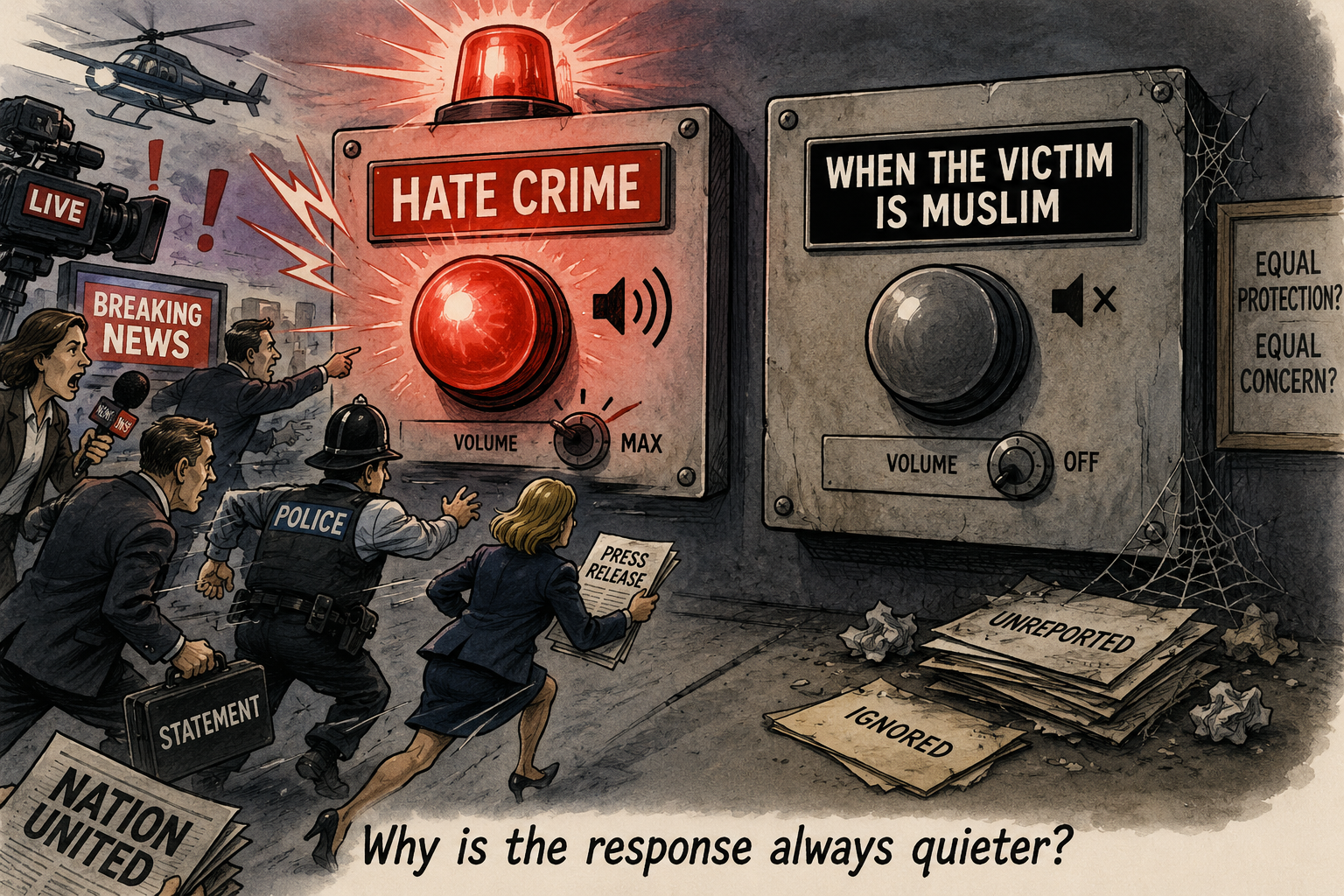
This is precisely why accusations of double standards have gained traction.When minority of pro-Palestinian demonstrators chant controversial slogans, authorities frequently argue that public safety and community cohesion require immediate scrutiny. But when anti-Muslim rhetoric emerges from a far-right platform, officials suddenly become cautious defenders of free expression and legal nuance.
Consistency is the foundation of public trust. If hate speech laws are enforced selectively — robustly in some contexts, cautiously in others — confidence in policing and democratic institutions inevitably erodes.
The political response has only intensified that perception. Conservative Party leader Kemi Badenoch suggested many attending the rally had “good reasons” for being there, even as she has previously supported tougher restrictions on pro-Palestinian marches. Critics do not argue that every attendee at the Westminster demonstration was extremist. But they do question why inflammatory rhetoric directed at Muslims appears to generate less political urgency than controversial speech elsewhere.
Meanwhile, senior Conservative figures openly supported surveillance measures against Nakba Day demonstrators while remaining comparatively silent about the anti-Muslim hostility reported at the “Unite the Kingdom” rally.
The result is a growing belief among many Muslims that there are effectively two standards in modern Britain: one for protests associated with minorities, especially Muslims, and another for demonstrations linked to nationalist or far-right causes. That perception is dangerous for social cohesion.
Britain rightly prides itself on defending free speech and peaceful protest. Those principles must apply equally to all citizens. But equality before the law also means that incitement, intimidation, and collective demonisation should be treated consistently regardless of who the target is.
The challenge facing Britain is therefore larger than one rally or one controversial figure. It is whether the country’s institutions are prepared to confront anti-Muslim hatred with the same seriousness, political courage, and moral clarity applied to other forms of extremism.
Until that happens, accusations of double standards will not disappear — because too many people can already see them in plain sight.