“Equal citizenship cannot exist if some communities consistently feel their pain is less visible, their fears less urgent, or their safety less politically important.”
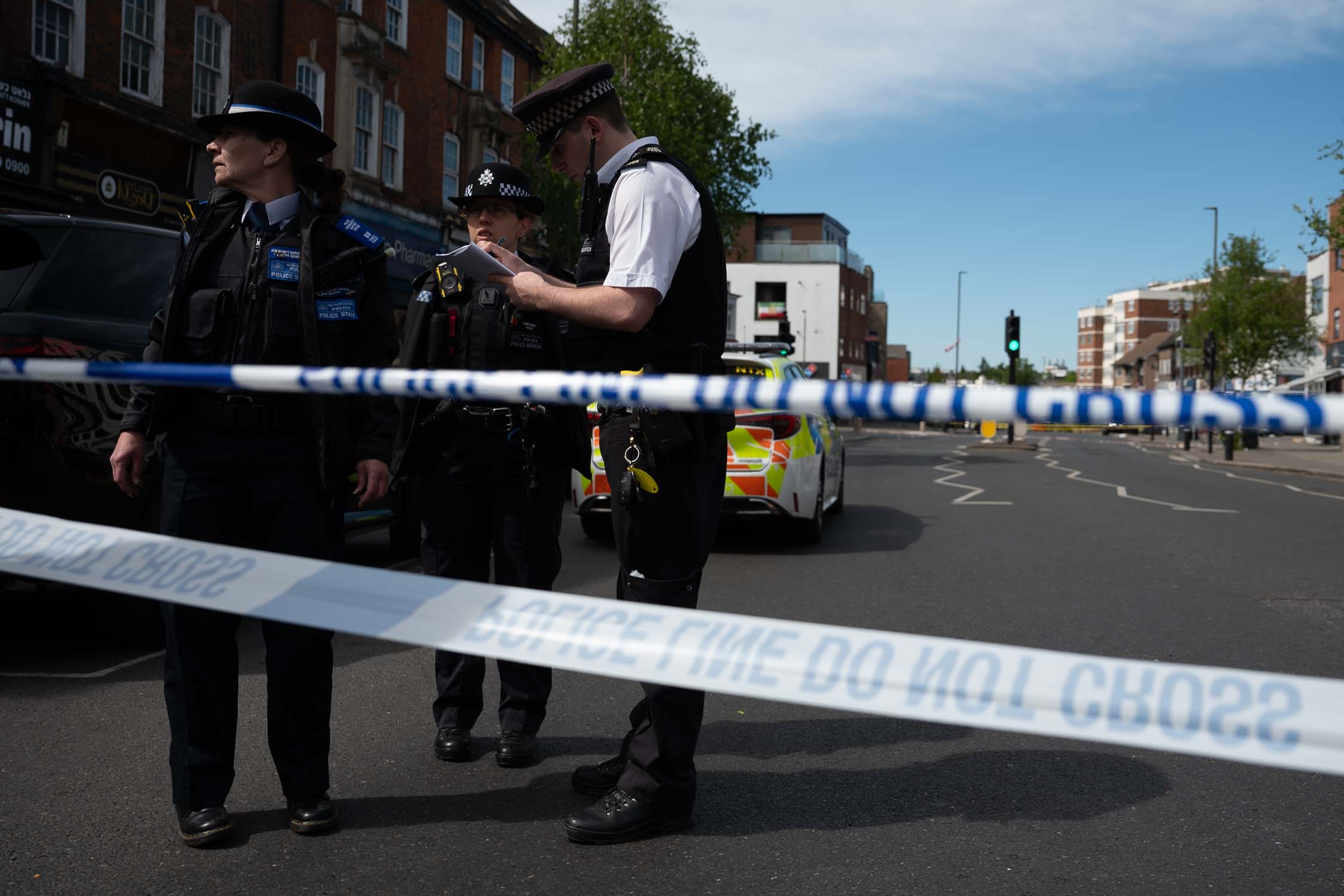
The disturbing events of April 29 should have united Britain in condemnation. Three men were allegedly stabbed across London in what police later treated as a serious violent incident involving antisemitic and Islamophobic elements. Yet almost immediately, a troubling pattern emerged: one victim appeared to vanish from public conversation.
That victim was Ishmail Hussein, a Muslim man allegedly attacked in Southwark hours before two Jewish men were stabbed in Golders Green.
The suspect, Essa Suleiman, was ultimately charged with three counts of attempted murder — not two. Yet much of the early and until now political messaging, media coverage, and even police communication focused overwhelmingly on the attack in Golders Green while barely mentioning Hussein at all.
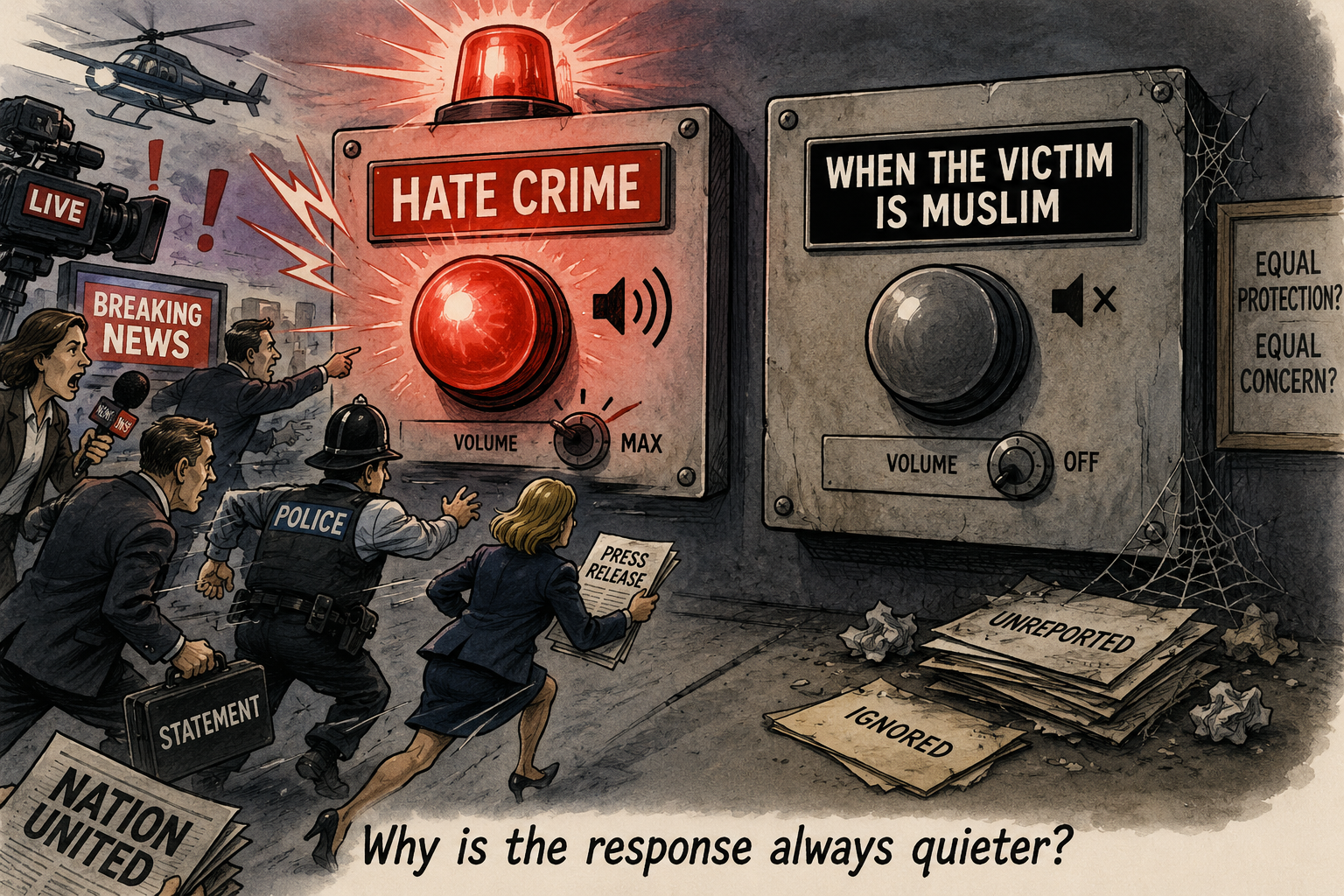
The question many British Muslims are asking is painfully simple: why are attacks on Muslims treated differently?
This is not about diminishing the seriousness of antisemitism. The attacks on the Jewish victims were horrific and deserved unequivocal condemnation. Jewish communities have every right to expect protection, solidarity, and reassurance from political leaders.
But so do Muslims.
What shocked many observers was not that politicians spoke strongly against antisemitism, but that there appeared to be little equivalent concern for the Muslim victim stabbed earlier that same morning.
Prime Minister Keir Starmer publicly described the Golders Green attack as “the latest attack on the Jewish community for being Jewish” and reassured Jewish citizens: “You belong here, and we will do everything we can to keep you safe.”
Those words mattered. But critics immediately noticed what was missing: no mention of Ishmail Hussein. No direct acknowledgment that a Muslim man had also allegedly been targeted by the same perpetrator just hours earlier.
That omission is precisely why accusations of a “hierarchy of racism” continue to resonate.
The disparity extended beyond political statements. Several media outlets initially framed the story almost exclusively around the Jewish victims. Some headlines referred only to “two attempted murders” despite the suspect being charged with three. Others failed to mention Hussein altogether.
Even the Metropolitan Police Service faced criticism for language that appeared inconsistent. The Golders Green stabbings were rapidly described as a “terrorist incident,” while the earlier attack on Hussein was initially referred to merely as an “altercation.”
Words matter. Framing matters. Public attention matters.
When violence affects Muslims, there is too often a tendency to minimise, depoliticise, or quietly move on. Attacks against Muslim communities rarely trigger the same national mobilization, sustained headlines, or political urgency routinely seen when other communities are targeted.
This perception did not emerge in isolation. British Muslims have watched mosques vandalised, Muslim women assaulted in the street, and anti-Muslim rhetoric normalised in parts of political and media discourse with comparatively muted responses. Many increasingly feel that hostility directed at Muslims is becoming socially and politically tolerated in ways that would never be accepted if aimed elsewhere.
The consequences are profound.
Equal citizenship cannot exist if some communities consistently feel their pain is less visible, their fears less urgent, or their safety less politically important.
The issue is not competition between minorities. It is consistency of principle.If governments rightly convene emergency responses when Jewish communities are attacked, then Muslims deserve the same seriousness when they are targeted. If politicians issue immediate statements defending one minority’s right to belong in Britain, then that reassurance must extend equally to all communities.Anything less creates the impression that some victims matter more than others.The danger of selective empathy is that it corrodes trust in public institutions. It sends a message — even unintentionally — that anti-Muslim hatred is somehow less alarming, less exceptional, or less deserving of national outrage.
No democratic society can afford to normalise that perception.
Britain prides itself on fairness, equality, and justice under the law. Those values mean little if compassion and political urgency are distributed unevenly depending on who the victims are.
The stabbing of Ishmail Hussein should never have been treated as a footnote to somebody else’s tragedy. His life mattered equally. The fear experienced by British Muslims matters equally. And the public response should reflect that reality.
Until Britain confronts the unequal visibility of anti-Muslim hatred in politics, policing, and media coverage, many Muslims will continue asking a painful question: when we are attacked, why does the country so often look away?