Nadine Osman
The East London Mosque Trust has received a £7,800 grant to conserve a rare personal scrapbook belonging to Abdullah Yusuf Ali, the influential Qur’an translator whose work has shaped Muslim scholarship in Britain and beyond.
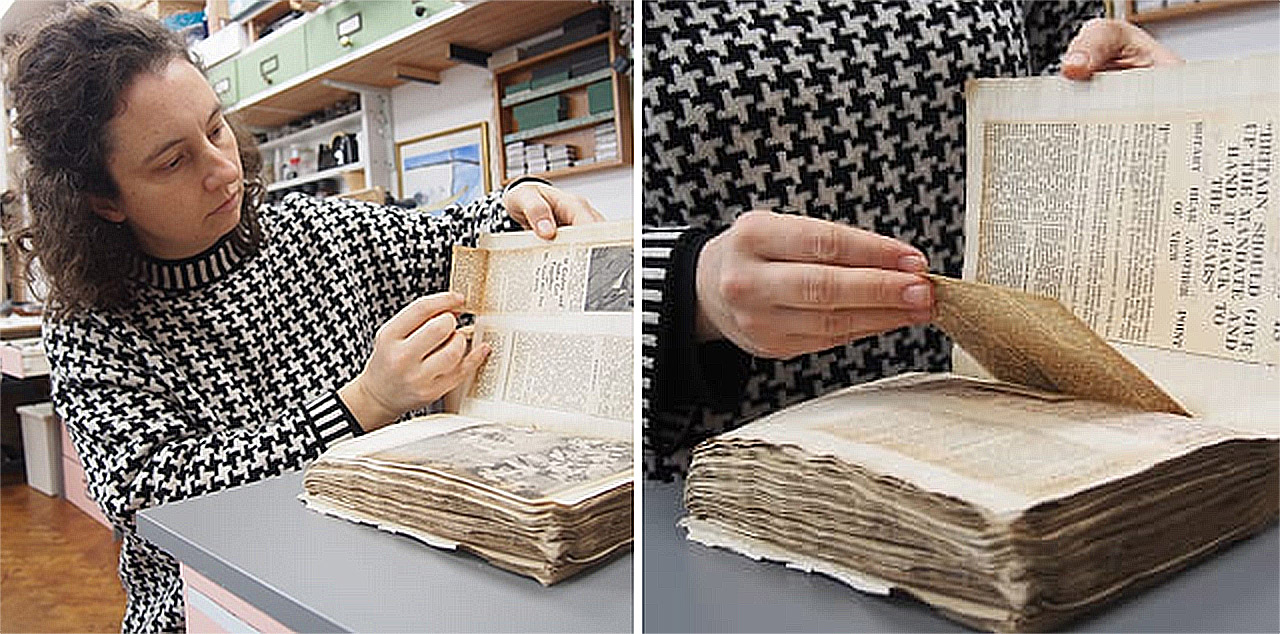
The funding, awarded by the National Manuscripts Conservation Trust (NMCT), will cover the full cost of preserving a fragile memory book compiled by Yusuf Ali between the 1920s and 1940s. The document, which has suffered significant wear and tear, is considered a unique record of Muslim religious, civic and intellectual life in inter-war Britain.
Yusuf Ali (1872–1953) was closely associated with the East London Mosque during a formative period in its history. His scrapbook brings together newspaper cuttings, correspondence, speeches, poetry and religious writings, offering a rare first-hand account of Muslim engagement in British public life.
Sufia Alam, Head of the East London Mosque Archives, said the Trust was “once again grateful” to the NMCT, which previously supported the preservation of the London Mosque Fund Minutes Book in 2013.” She added, “This project will help ensure that young Muslims in particular can access a primary source documenting the life and work of one of our pioneering elders. The book is currently in urgent need of conservation.”
The work will be carried out by Abigail Bainbridge ACR, an accredited book and paper conservator. In addition to stabilising and repairing the original volume, the project will produce a digital copy, enabling wider public access while reducing the need to handle the fragile original.
Archivists say the scrapbook is of national significance. Its contents include records of Yusuf Ali’s public engagements, transcripts of ‘Eid sermons and speeches, personal correspondence and poetry, and material relating to his work with the Ministry of Information during the Second World War.
The survival of the book is itself remarkable. It was recovered from rubble around 1973, after the London Islamic Cultural Centre mosque was demolished for redevelopment, and remained in private ownership until its recent donation to the East London Mosque Archives.
The conservation project comes as the Muslim community approaches Ramadan, the month in which the Qur’an is believed to have been revealed. Yusuf Ali is best known internationally for his English translation and commentary of the Qur’an, a work that continues to be widely read.
Archivists say preserving the scrapbook not only safeguards an important chapter in British Muslim history, but also honours a legacy closely tied to Qur’anic study and reflection, particularly during Ramadan.
“NMCT first supported us in 2013 with the preservation of the London Mosque Fund Minutes Book. We are once again grateful for their support, which will help ensure that young Muslims in particular have access to a primary source documenting the life and work of one of our pioneering elders,” Alam said.
The project highlights the ongoing importance of preserving British Muslim heritage, offering rare first-hand perspectives on civic engagement, intellectual life, and religious expression in a period rarely documented elsewhere.
Feature photo: Abigail Bainbridge, accredited book and paper conservator, begins the delicate disbinding process on Abdullah Yusuf Ali’s scrapbook to prepare it for preservation and digitisation. (Credit: East London Mosque)