Elham Asaad Buaras
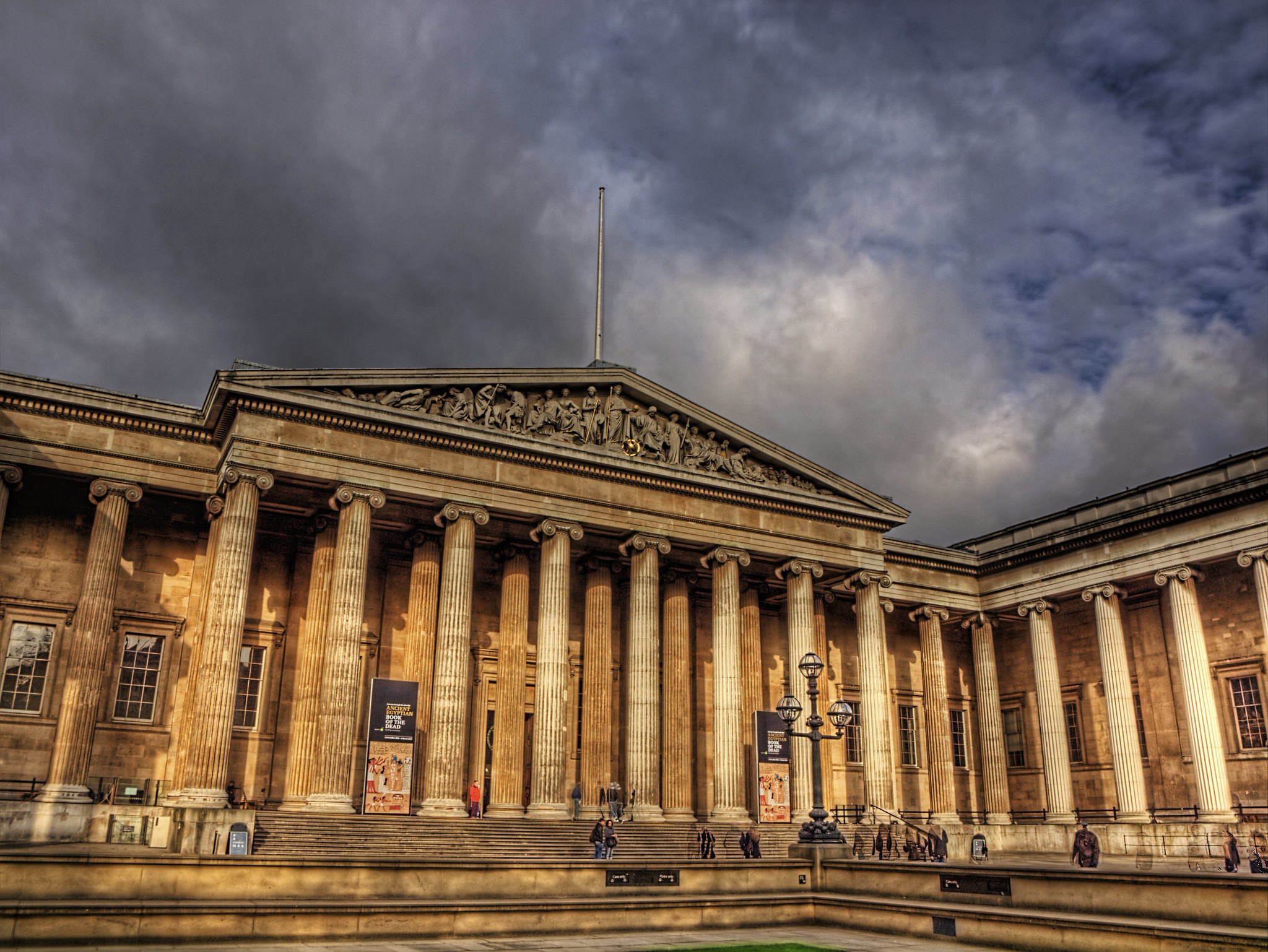
The British Museum has come under fierce criticism after removing references to “Palestine” from its ancient Middle East displays, a decision critics say amounts to historical erasure carried out under pressure from a controversial lobbying group.
The changes followed representations from UK Lawyers for Israel (UKLFI), an organisation long accused by campaigners and legal observers of deploying aggressive legal correspondence to challenge pro-Palestinian advocacy and public events. Maps and gallery panels that had previously labelled parts of the eastern Mediterranean coastline as “Palestine” — and in some cases referred to individuals as being “of Palestinian descent” — have reportedly been amended. Further revisions are understood to be planned.
In a letter to museum director Nicholas Cullinan, UKLFI argued, “Applying a single name – Palestine – retrospectively to the entire region, across thousands of years, erases historical changes and creates a false impression of continuity.” Following the complaint, references to “Palestinian descent” on a Hyksos display were reportedly replaced with “Canaanite descent.”
A museum spokesperson said the institution uses “Canaan” for the southern Levant in the later second millennium BC and applies UN terminology for modern boundaries such as Gaza, the West Bank, Israel and Jordan. The museum added that it refers to “Palestinian” as a cultural or ethnographic identifier where appropriate.
However, historians, academics and political figures have accused the publicly funded institution of capitulating to lobbying pressure at the expense of historical accuracy.
Scottish historian and art historian William Dalrymple said, “Ridiculous of the British Museum to remove the word ‘Palestine’ from its displays, when it has a greater antiquity than the word ‘British’. The first reference to Palestine is on the Egyptian monument of Medinet Habu in 1186BCE. The first reference to Britain is the 4th century BC when it appears in the work of the Greek traveller Pytheas of Massalia.”
Former Liberal Democrat peer Meral Hussein-Ece added, “The publicly funded @britishmuseum should not be erasing history to satisfy lobbyists.”
The publicly funded @britishmuseum should not be erasing history to satisfy lobbyists. https://t.co/OTgrVwVg2t
— Meral Hussein-Ece (@meralhece) February 15, 2026
Political activist and Middle East analyst Taghrid Al-Mawed said: “The British Museum has removed the word ‘Palestine’ from its Ancient Middle East displays, despite the term appearing in Herodotus, Roman records, medieval maps, Ottoman sources, and even Shakespeare. Erasing a word erases a people.”
Historian Lorenzo Kamel, Associate Professor of Global History and History of the Middle East and North Africa at the University of Turin and a former Harvard University postdoctoral fellow, was equally scathing. Kamel, whose award-winning book Imperial Perceptions of Palestine won the 2016 Palestine Book Award and is based on primary sources from 17 international archives, has written extensively on how Western powers historically simplified the region’s identity.
Reacting to the museum’s decision, he wrote: “The #Brutish Museum & the cancel culture of the suprematists. Starting from c.1150 BCE the word Peleset was mentioned in numerous Egyptian documents. Assyrian king Sargon II called the same area Palashtu. ‘..but there was never a State of Palestine!'”
The #Brutish Museum & the cancel culture of the suprematists.
— Lorenzo Kamel (@lorenzokamel) February 15, 2026
Starting from c.1150 BCE the word Peleset was mentioned in numerous Egyptian documents. Assyrian king Sargon II called the same area Palashtu.
"..but there was never a State of Palestine!":https://t.co/ug0v4jqfli pic.twitter.com/60wfXBk4TN
The controversy has reignited wider debate about UKLFI’s methods and influence. Founded in 2011, the group has repeatedly targeted academics, charities and cultural institutions it believes misrepresent Israel or promote narratives critical of Israeli policy. Human rights lawyers and campaigners have previously described its approach as having a “chilling effect” on free expression.
Paul Heron, solicitor at the Public Interest Law Centre, has described the group’s interventions as a “pattern of vexatious and legally baseless correspondence aimed at silencing and intimidating Palestine solidarity efforts.” Ben Jamal, Director of the Palestine Solidarity Campaign, has characterised remarks by UKLFI leadership on Gaza as “utterly sickening,” while Chris Doyle of the Council for Arab-British Understanding called them “atrocious.”
The museum has previously faced criticism over Palestine-related controversies, including hosting an Israeli Independence Day event during Nakba week in May 2025, prompting accusations from activists of a lack of transparency and an overly close relationship with Israeli officials.
Critics now argue that the removal of “Palestine” from ancient displays marks a deeper concern: that political pressure is reshaping the language of history in one of Britain’s most prominent cultural institutions. Supporters of the decision, however, maintain that terminology must reflect historical specificity rather than modern political identity.
The dispute underscores how even the vocabulary of antiquity has become contested ground in contemporary cultural politics — and raises fresh questions about whether national institutions can withstand organised lobbying when historical narratives collide with present-day sensitivities.
(Credit: Neil Howard/Flickr CC)