Harun Nasrullah
Australian cricketer Usman Khawaja has said Islamophobia remains “still very rife” within society and criticised his sport for being “still very white” as he announced his retirement from international cricket.
The 39 year old, Australia’s first Muslim Test cricketer, made the remarks on January 2 during a press conference at the Sydney Cricket Ground, confirming his decision to retire at the conclusion of the fifth Ashes Test in Sydney, his hometown and the final match of a 15 year international career.
Born in Pakistan, Khawaja has scored more than 6,000 Test runs in 87 appearances and has been one of the most prominent Muslim figures in elite international cricket. Speaking at the SCG, he said retirement had given him the freedom to speak candidly about experiences he felt had shaped his career.
He told reporters he felt “off the leash now” as he reflected on what he described as unequal treatment and lingering prejudice within the game.
Khawaja said, “I’ve always felt a little bit different, even to now. Different in the way I’ve been treated, different in how things have happened.”
While some of his concerns related to earlier periods of his career, Khawaja highlighted the reaction to a back injury he suffered during the opening Test of the Ashes series against England, suggesting it revealed underlying biases.
He said, “When I did my back, I had back spasms, it was something I couldn’t control. The way the media and the past players came out and attacked me….I copped it for about five days straight. Everyone was piling in.”
Khawaja said criticism intensified once racial stereotypes entered public commentary, stereotypes he said he had encountered throughout his life.
He said, “Once the racial stereotypes came in, of me being lazy, it was things I’ve dealt with my whole life. Pakistani, West Indian, coloured players…we’re selfish, we only care about ourselves, we don’t care about the team, we don’t train hard enough.
“I just thought the media and old players and everyone else had moved past them, but we obviously haven’t moved past them. All these things came back and made me realise we’re not quite there.”
The opening batter contrasted his experience with the treatment of other players, arguing that similar situations were often framed very differently depending on who was involved.
He said, “I can give you countless number of guys who have played golf the day before and been injured and you guys (media) haven’t said a thing.
“I can give you even more guys who have had 15 schooners (beer) the night before, then got injured, and no one’s said a word. That’s alright, they’re just being Aussie larrikins, just being lads.”
He added, “When I get injured, everyone went at my credibility and who I am as a person. Normally when someone gets injured, you feel sorry for them as a person. ‘Poor Josh Hazlewood’ or ‘poor Nathan Lyon’. We feel sorry for them and we don’t attack what happened to them.”
Khawaja acknowledged that Australian society and cricket had become more inclusive over time but said structural issues remained.
He said, “We’re a lot better and inclusive society than we’ve been before but there’s still a way to go because Australian cricket is still very white in a lot of respects.”
Anticipating criticism for raising issues of race and faith, Khawaja said he was aware of how his comments might be received but rejected accusations that he was exaggerating or seeking attention.
He said, “I know I’m here talking about topics and people will say, ‘Uzzie’s here, he’s playing the race card again’. I know people are trying to nail me. But don’t gaslight me.”
Addressing religious discrimination directly, Khawaja added, “Where we are at today, Islamophobia is still very rife. I speak about it.
“I didn’t want to talk about this, but I just want the journey for the next Usman Khawaja to be different.”
He said his aim was to ensure future generations of cricketers — regardless of background — were judged solely on merit.
He said, “I’m hoping the journey for the next Usman Khawaja is a bit easier and we get to a line, however many generations in, where that Usman Khawaja is the same as John Smith.
“That’s what I’ve been trying to champion to the whole time.”
Khawaja described his advocacy as rooted in speaking for those who often feel unable to do so. He said, “I call myself the people’s champ.
“Not because I think everyone loves me, but because I speak about things for the people that other people don’t want to speak about.”
Khawaja will retire as one of Australia’s most accomplished batters of the modern era and a trailblazer for Muslim representation in international cricket, having consistently used his platform to challenge prejudice and call for greater inclusion within the sport.
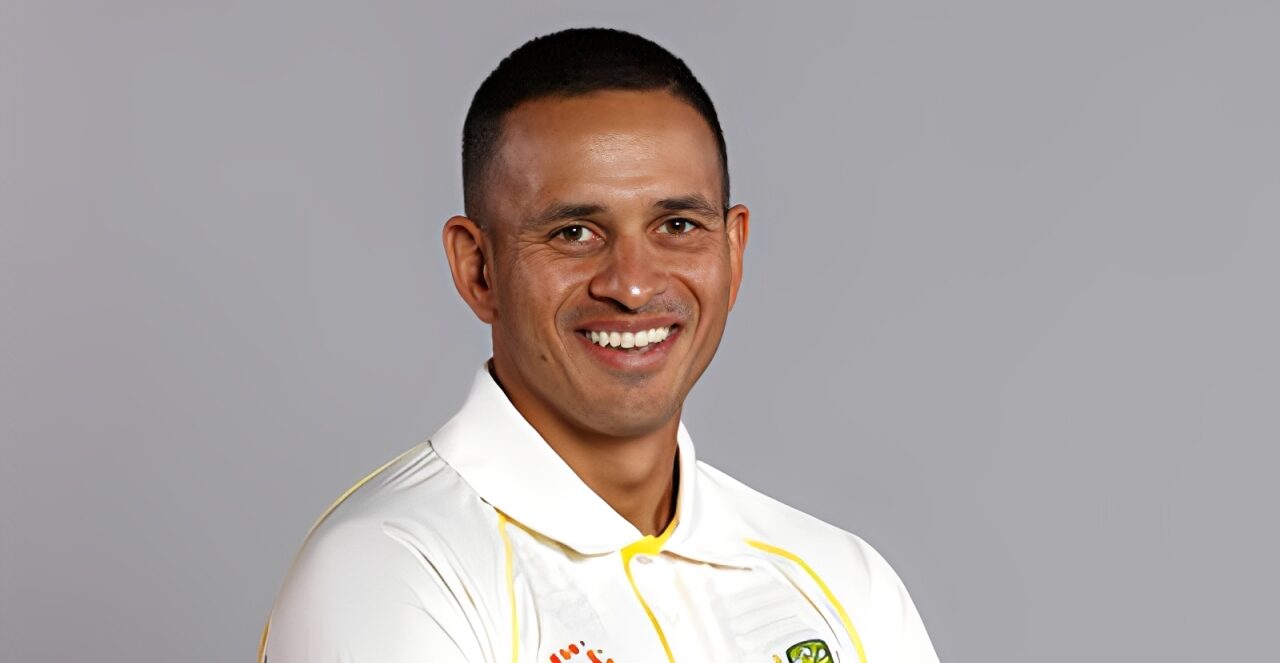
Photo: Usman Khawaja (Credit: Cricket Australia)