Harun Nasrullah
Adelaide Writers’ Week has been cancelled after an unprecedented escalation of a boycott by writers, journalists and commentators protesting the removal of Palestinian-Australian academic and author Dr Randa Abdel-Fattah from the programme.
What began with nearly 50 withdrawals has since grown into a mass walkout involving around 180 participants, rendering the literary event unviable and triggering resignations, an official apology, and a dramatic reversal by the Adelaide Festival Corporation.
The controversy erupted after the festival board removed Abdel-Fattah from the 2026 programme, citing “cultural sensitivity” concerns following a recent terror attack in Bondi, a beachside suburb of Sydney. The board stressed that it was not suggesting Abdel-Fattah or her work had any connection to the attack but pointed to her past statements on Israel and Palestine as the basis for its decision.
Adelaide Writers’ Week, the literary strand of the long-running Adelaide Festival of Arts, was due to take place from February 28 to March 5 in the Pioneer Women’s Memorial Garden, featuring free public panels and discussions with writers from Australia and abroad.
On January 9, the festival temporarily removed its online programme, stating it was responding to withdrawals from the Writers’ Week 2026 line-up. By that afternoon, 47 writers had confirmed they were boycotting, with many more signalling they would follow unless Abdel-Fattah was reinstated.
Among the first wave of withdrawals were some of Australia’s most prominent literary figures, including Helen Garner, Chloe Hooper, Sarah Krasnostein, Michelle de Kretser, Drusilla Modjeska, Melissa Lucashenko, and Stella Prize-winning poet Evelyn Araluen. Best-selling novelist Trent Dalton, who had been scheduled to deliver a keynote address at Adelaide Town Hall, also withdrew.
Senior journalists from Australia’s public broadcaster, the ABC, including David Marr and Jonathan Green, confirmed they would no longer participate. Other withdrawals included commentators Jane Caro and Peter FitzSimons, Cheek Media co-founder Hannah Ferguson, journalist and academic Peter Greste, First Nations academic Prof Chelsea Watego, political analyst Amy Remeikis, and economist and author Yanis Varoufakis.
Authors Bri Lee and Madeleine Gray said they would only take part if Abdel-Fattah was reinstated.
Abdel-Fattah, a lecturer at Macquarie University in Sydney, had been scheduled to appear at the festival for the second time, having hosted panels and sessions in 2023. In a statement issued on January 8, the festival board said it had decided that “it would not be culturally sensitive to continue to programme her at this unprecedented time so soon after Bondi.”
The board acknowledged that Abdel-Fattah was not linked to the attack but referenced her previous comments on Zionism and Israel.
Abdel-Fattah has long faced criticism from Australian political parties, Jewish organisations and some media outlets for outspoken views on Palestine, including remarks that Zionists had “no claim or right to cultural safety.”
The decision drew fierce condemnation from across the literary community. Hannah Ferguson described it as “censorship”, while Amy Remeikis accused the board of making a “deliberate choice to silence a prominent Palestinian-Australian academic without offering any clear or convincing rationale”.
Former New South Wales premier and foreign affairs minister Bob Carr, however, defended the board’s decision.
While critical of Israel’s invasion of Gaza, Carr argued that some of Abdel-Fattah’s past statements had been counterproductive to the Palestinian cause and said the board should be supported.
Iranian-Australian Booker Prize nominee Shokoofeh Azar said she understood the board’s reasoning and initially confirmed she would still participate, arguing that cultural spaces should allow for dialogue rather than a single dominant voice.
As the boycott intensified, the fallout widened. The Australia Institute, a public policy think tank, withdrew its sponsorship of the festival, saying Adelaide Writers’ Week had historically stood for “bravery, freedom of expression and the exchange of ideas”.
By mid-January, the number of withdrawals had swelled to around 180 writers and speakers, leaving only a handful of sessions with confirmed participants. The Adelaide Festival Corporation subsequently announced that Adelaide Writers’ Week 2026 would be cancelled.
In the days that followed, senior figures associated with the festival resigned, and a newly constituted board issued a formal public apology to Abdel-Fattah. The board retracted its earlier statement, acknowledging that the way the decision had been communicated caused significant harm, and invited Abdel-Fattah to participate in a future Writers’ Week, tentatively in 2027.
Speaking earlier to Australia’s ABC Radio, Abdel-Fattah described her removal as “egregious and unabashedly anti-Palestinian”, calling it “an obscene attempt to associate me with an atrocity that I had nothing to do with”.
While welcoming the solidarity shown by fellow writers, she said the damage caused by the decision could not be undone easily. She has since issued a defamation concerns notice against South Australian premier Peter Malinauskas, alleging that public comments made during the controversy falsely linked her to extremism and harmed her reputation.
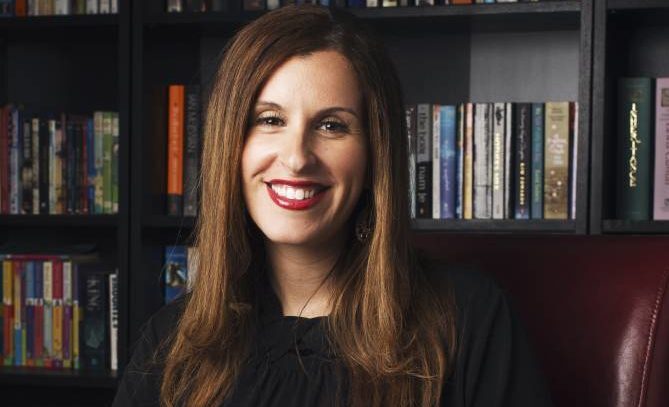
Photo: Dr Randa Abdel-Fattah (Credit: Speaking Out/CC)
GAZA-RELATED NEWS: British-Palestinian surgeon cleared in landmark ‘lawfare’ tribunal ruling
Escalating arrests and abuse of Palestinian women in Israeli detention, warns rights group
Israel ranks bottom of global nation brand index for second year running
Pro-Palestinian activists acquitted over alleged damage to Israeli-made products