By Nadine Osman
LONDON, (The Muslim News): Israeli forces used white phosphorus munitions while shelling towns in southern Lebanon on Friday, while the number of Israeli military checkpoints, gates and other barriers restricting Palestinian movement across the occupied West Bank has reached 942, according to Lebanon’s news agency NNA and Palestinian and UN data respectively.
NNA reported that Israeli artillery struck the outskirts of Zawtar al-Sharqiyah, Mayfadoun and Nabatieh al-Fawqa in the Nabatieh district, with phosphorus shells used in Nabatieh al-Fawqa before similar munitions were used in renewed attacks on Zawtar al-Sharqiyah.
Artillery also targeted Wadi Zibqin and the outskirts of Haris and Haddatha in the Tyre district.
Lebanese army specialists meanwhile dismantled two unexploded Israeli aerial bombs in Majdal Selm and Al-Ghandouriyah in the Marjayoun and Bint Jbeil districts and moved them to a safe location.
Lebanese authorities say Israeli attacks have killed at least 4,386 people, wounded 12,407 and displaced more than one million since early March.
The attacks have continued despite a June framework agreement providing for a gradual Israeli withdrawal from occupied Lebanese territory in return for the deployment of the Lebanese army there and the disarmament of Hezbollah.
Two Palestinians killed by Israeli forces in Gaza
Meanwhile, in Gaza, two Palestinians were killed and several others wounded in separate Israeli attacks on Friday, according to medical and local sources.
In central Gaza, an Israeli drone killed Ibrahim Fawzi Ismail Mohsen, 36, while he was visiting his brother Khalil’s grave at Al-Sawarha cemetery, sources told Anadolu.
Khalil was killed in Deir al-Balah on May 11, 2024, aged 37.
Three other brothers were also killed by Israeli forces during the war. Ismail, 40, was killed on October 7, 2023; Mohammed, 32, on November 12 that year; and Youssef, 28, on July 6, 2024, when Israeli forces struck Al-Jaouni School in the Nuseirat refugee camp, which was sheltering displaced people.
Separately, another Palestinian was killed in a drone strike west of Khan Younis, a medical source told Anadolu.
A young man and a girl were also injured by shrapnel from Israeli artillery fire in the Batn al-Samin area south of Khan Younis.
Witnesses said Israeli forces shelled Palestinian homes and tents sheltering displaced families and opened heavy fire towards eastern and southern parts of the city.
Two further Palestinians were injured, one seriously, when a drone struck a tent sheltering displaced people in Al-Zawayda, according to a medical source at Al-Aqsa Martyrs Hospital.
Israeli military vehicles also opened fire towards areas east of the Shujaiya and Tuffah neighbourhoods in Gaza City.
Gaza health authorities say nearly 74,000 Palestinians have been killed and around 175,000 wounded since October 2023.
Israel has increased checkpoints in occupied West Bank to 942
The violence comes alongside expanding movement restrictions in the occupied West Bank.
The network of Israeli military checkpoints, closure points and other barriers across the territory has reached 942, according to updated data from the Palestinian Colonization and Wall Resistance Commission and the UN Office for the Coordination of Humanitarian Affairs (OCHA).
The network comprises 824 fixed checkpoints and closure points and 118 linear barriers, including earth mounds, trenches and roadblocks, spanning a combined 107.7 kilometres.
Hebron has the highest number of fixed checkpoints and closure points, with 221, followed by Ramallah and Al-Bireh with 160 and Nablus with 120.
Bethlehem has 78, Jerusalem 62, Qalqilya 41 and Salfit 40, while Jericho and the Jordan Valley have 27. Jenin and Tulkarem each have 26, and Tubas has 23.
Thirteen new fixed checkpoints and gates were added in the past two months, including 10 in Jenin, raising the number of fixed closure points there from 16 to 26.
The new locations include gates and checkpoints at Al-Jalama, Arrana, the industrial zone, Deir Abu Daif, the entrance to Jenin city, Qabatiya, Umm al-Tut, the area surrounding the Arab American University and the Zababdeh junction.
A new gate was also installed on Al-Jariyout road west of Ramallah, alongside gates on rural roads west and northwest of the governorate.
The network extends beyond permanent checkpoints to include iron gates blocking entrances to towns and villages and agricultural roads, as well as earth mounds, trenches and roadblocks cutting across major and secondary routes.
The Palestinian Colonization and Wall Resistance Commission said the barriers allow Israeli forces to control movement between Palestinian cities, towns, workplaces, agricultural land and service centres.
The closure of individual gates can force residents to take longer alternative routes or isolate communities from surrounding areas for hours or days.
The number of documented barriers has increased from around 757 across the West Bank in 2003 to 630 in 2008 and 705 in 2018. OCHA recorded 793 in March 2024, before the figure rose to 925 in December 2025 and 942 in the latest data.
The restrictions affect Palestinians’ access to agricultural land and livelihoods and can impede students, patients and workers travelling to schools, hospitals and workplaces, depending on the location and duration of closures.
Ansar Allah positions attacked by govt in Yemen
Meanwhile, in Yemen, government forces said they had struck Ansar Allah [Houthi] positions and supply lines in the southwestern province of Taiz.
Military spokesman Majid Abdullah al-Nazili released footage on X that he said showed strikes against Houthi fighters and supply routes in Dhubab and other parts of Taiz.
Dhubab is a coastal town overlooking the Red Sea near the northern entrance to the Bab el-Mandeb Strait.
Al-Nazili did not provide details of casualties or damage.
Ansar Allah military spokesman Yahya Saree separately claimed that Saudi warplanes had carried out 14 airstrikes and a missile attack during the previous 24 hours in Taiz, Amran, Marib and Saada provinces.
Yemen has been engulfed in conflict since the Ansar Allah seized Sana’a and several provinces in 2014, prompting a Saudi-led Arab coalition to intervene in 2015 in support of the internationally recognised government.
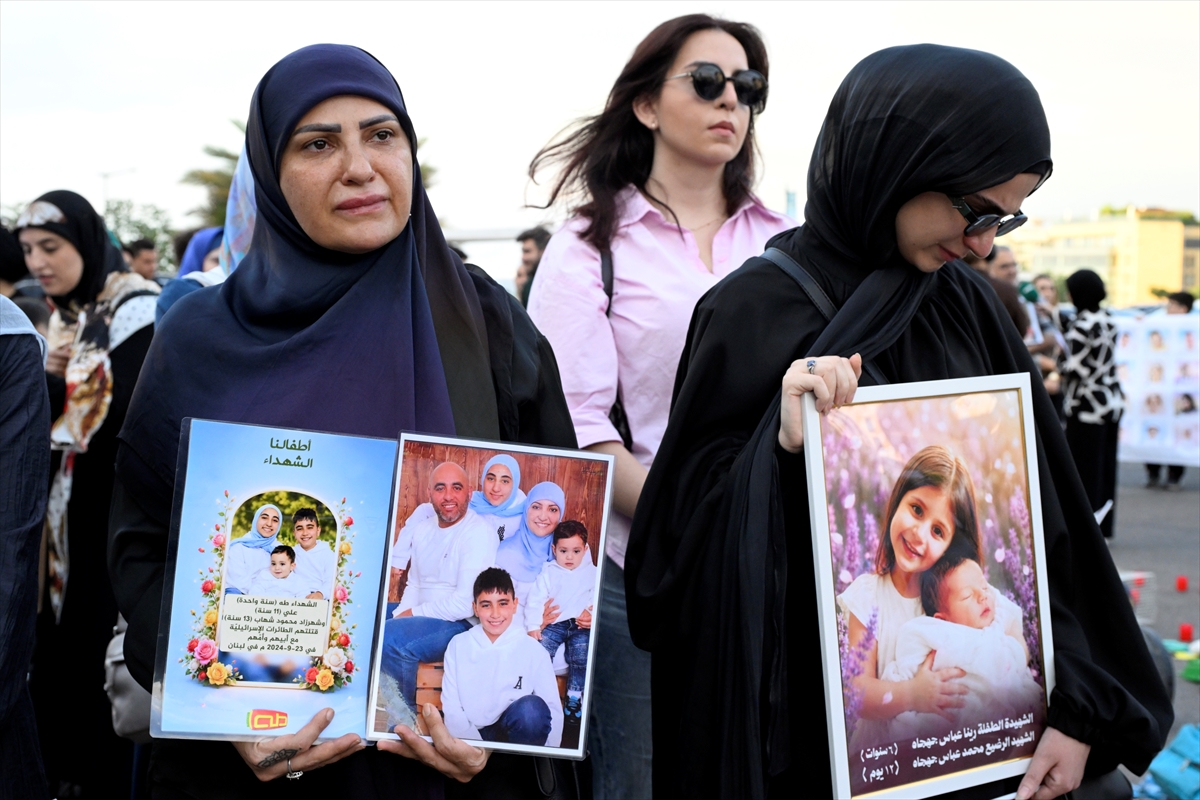
[Photo: Families commemorate children who lost their lives in Israeli illegal attacks during an event titled “The bloodiest September for children in Lebanon” at Martyrs’ Square in downtown Beirut, Lebanon, on September 23, 2026. Participants held photographs of the children who lost their lives in the attacks. Photojournalist: Houssam Shbaro/AA]