By Middle East Correspondent
London, (The Muslim News): The White House has announced the creation of a new Palestinian “technocratic” body to oversee Gaza’s post-war transition, under President Donald Trump’s controversial 20-point plan aimed at ending Israel’s genocidal assault on the besieged enclave.
In a statement released on Friday, the administration confirmed the formation of the National Committee for the Administration of Gaza (NCAG), which is expected to take responsibility for day-to-day governance during a transitional period. The committee will be headed by Dr Ali Sha’ath, a former deputy minister in the Palestinian Authority.
The White House described Sha’ath as “a widely respected technocratic leader who will oversee the restoration of public services, rebuild civil institutions, and stabilize daily life in Gaza, while laying the foundation for long-term governance.”
Washington also announced the establishment of a Gaza Executive Board, tasked with supporting governance, reconstruction, and security coordination. The board includes Turkish Foreign Minister Hakan Fidan; Trump’s Middle East envoy Steve Witkoff; Trump’s son-in-law Jared Kushner; former UK Prime Minister, Tony Blair; UAE Minister of State for International Cooperation Reem Al-Hashimy; senior Qatari diplomat Ali Al-Thawadi; and Egypt’s intelligence chief Hassan Rashad.
In addition, a founding Executive Board has been named to guide the newly created Board of Peace, which will be chaired by Trump. Its members include US Secretary of State Marco Rubio, Witkoff, Kushner, Blair, financier Marc Rowan, World Bank Group president Ajay Banga, and US political adviser Robert Gabriel.
The announcement follows Witkoff’s confirmation earlier this week that the second phase of the Gaza ceasefire agreement had formally begun, shifting focus towards demilitarisation, technocratic governance and reconstruction.
The ceasefire, which came into effect in October, ended months of sustained Israeli bombardment and ground operations. Its first phase included a partial Israeli military withdrawal, the exchange of Israeli captives for hundreds of Palestinians held in Israeli prisons, and the limited entry of humanitarian aid into Gaza, though the agreement stipulates full humanitarian access, which has yet to be implemented.
The second phase is expected to involve a full Israeli withdrawal from Gaza, the disarmament of Hamas, the deployment of an International Stabilisation Force (ISF), and the establishment of a temporary Palestinian technocratic authority to govern the territory.
In Friday’s statement, the White House confirmed that Sha’ath would lead the interim administration, effectively replacing Hamas, which has previously indicated its willingness to relinquish governance responsibilities under the Trump plan.
There was no immediate response from Hamas or other Palestinian political factions regarding the composition of the Board of Peace or its executive structures.
The appointment of Blair has reignited criticism, months after his name was first raised as a potential candidate. Blair, who served as UK Prime Minister between 1997 and 2007, was a key architect of the US-led “War on Terror” and a strong supporter of the 2003 invasion of Iraq under then-president George W Bush.
The inclusion of Jared Kushner has also drawn scrutiny. A staunch supporter of Israel, Kushner has previously questioned Palestinians’ ability to govern themselves and maintains close family ties with Israeli Prime Minister Benjamin Netanyahu, who is wanted by the International Criminal Court for alleged war crimes committed in Gaza.
In 2024, Kushner described Gaza as “very valuable” waterfront property, stating that Israel should “move the people out and then clean it up”.
The White House announcement came as Israeli military operations continued, despite the ceasefire.
On Friday, Israeli attacks killed a 10-year-old girl, a 16-year-old boy and an elderly woman in Gaza, as members of the newly formed technocratic committee met in Cairo for the first time to prepare for the rollout of phase two.
According to the official Palestinian news agency WAFA, Israeli forces shot and killed Mohammad Raed al-Barawi, 16, in the town of Beit Lahia in northern Gaza. He was struck in the head and killed instantly.
Medical sources say the death toll in Gaza has now reached 71,455, with 171,347 people injured, since the start of Israel’s assault on October 7, 2023.
Palestinian officials say Israel has repeatedly violated the ceasefire. Since the truce came into effect, nearly 450 Palestinians have been killed and more than 1,200 injured, according to Gaza’s Health Ministry.
Israel forces kill Palestinian child in West Bank
In the occupied West Bank, violence has also intensified.
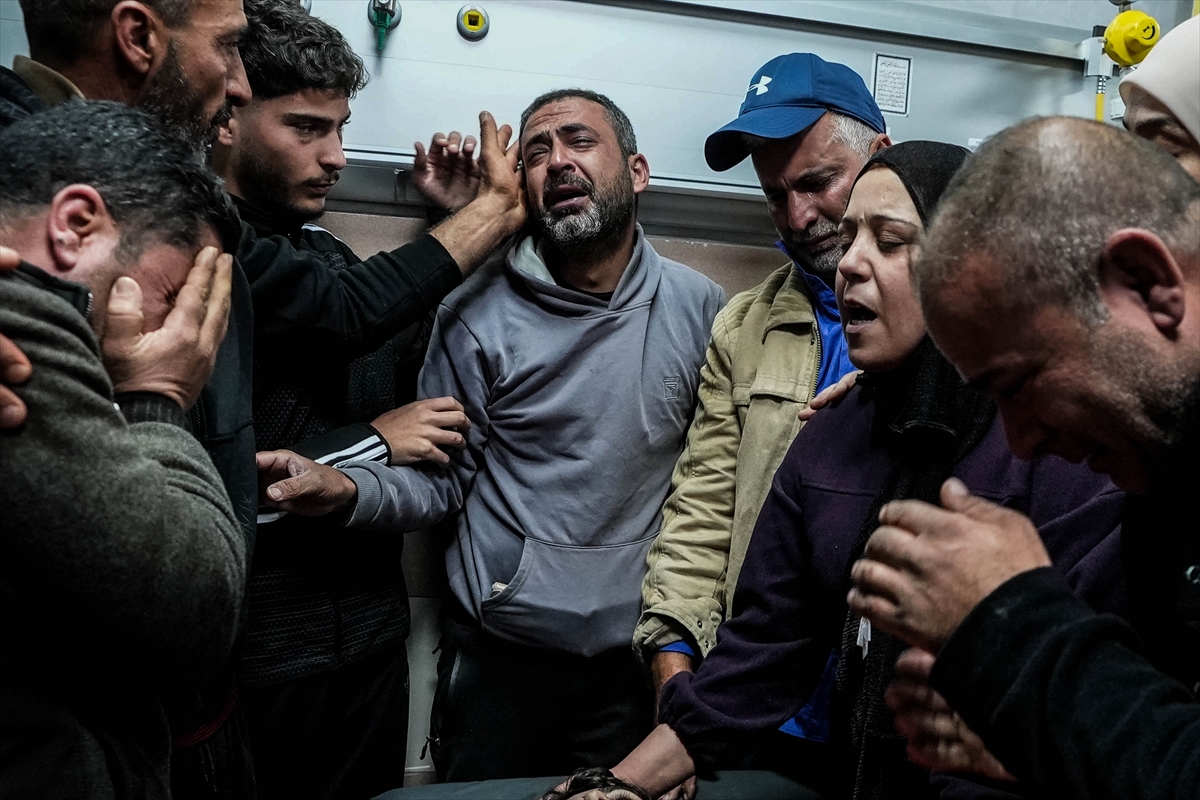
On Friday, Israeli forces killed a 13-year-old Palestinian child during a raid on the village of Al-Mughayyir, east of Ramallah. WAFA reported that Israeli troops entered the village from the al-Khalayel area and opened heavy live fire at residents.
Later the same day, Israeli forces assaulted worshippers leaving the western Al-Mughayyir mosque after Friday prayers, firing stun grenades and tear gas canisters.
The village has been subjected to repeated attacks by illegal Jewish settlers operating under the protection of Israeli forces. Earlier on Friday, settlers stormed the al-Khalayel area south of the village, firing live ammunition and carrying out assaults on residents and their property.
Since October 2023, Israeli forces and settlers have killed at least 1,107 Palestinians in the West Bank, including East Jerusalem, injured nearly 11,000, and detained around 21,000, according to Palestinian figures.
In July, the International Court of Justice issued a landmark advisory opinion declaring Israel’s occupation of Palestinian territory illegal and calling for the evacuation of all settlements in the West Bank and East Jerusalem.
UN peacekeeping official criticises Israeli forces attacks in Lebanon
Beyond the occupied Palestinian territories, concerns are also mounting over Israeli military conduct in southern Lebanon. On Friday, the UN’s most senior peacekeeping official warned that Israeli actions are increasingly placing UN personnel at risk.
Speaking during a virtual briefing, Jean-Pierre Lacroix, UN under-secretary-general for peace operations, said cooperation with Lebanese authorities and the Lebanese Armed Forces remained strong, but warned that the behaviour of Israeli forces was “more worrying”.
“The relations with the Lebanese authorities are excellent. UNIFIL benefits from very strong support from the Lebanese authorities. We’re extremely grateful for them,” Lacroix said, adding that the mission also enjoys “very good cooperation with the Lebanese Armed Forces”.
He warned that “the number of aggressive incidents, or hostile incidents, or at least the incidents that have been really putting our colleagues in danger, coming from the Israel Defense Forces,” had increased significantly. “The frequency of these incidents has been quite high and has been increasing.”
Lacroix said he raised the issue directly with Israeli officials during a recent visit, warning that some incidents “could have had very tragic consequences on our peacekeepers”.
Describing southern Lebanon as “a landscape of devastation”, he said widespread destruction had prevented civilians from returning home and severely undermined future reconstruction.
The UN Interim Force in Lebanon (UNIFIL) was established in 1978 following Israel’s invasion of southern Lebanon. Its mandate was significantly expanded after the 2006 war between Israel and Hezbollah under UN Security Council Resolution 1701, which calls for a cessation of hostilities and a weapons-free zone south of the Litani River.
In August, the Security Council voted to terminate UNIFIL’s mandate on December 31, 2026, to be followed by a one-year phased drawdown of forces.
[Photo: Relatives mourn as the body of a 13-year-old Palestinian boy, who was killed during an Israeli army raid in the village of al-Mughayyir near Ramallah, is brought to a hospital ahead of funeral procedures, in Ramallah, West Bank, on January 16, 2026. Photojournalist: Issam Rimawi/AA]