By Middle East Correspondent
LONDON, (The Muslim News): US and Israeli forces have launched a fresh wave of strikes on Iran, hitting some of the country’s most strategic industrial and nuclear-linked sites in a dramatic escalation of hostilities across the region.
Among the targets were major steel facilities in Khuzestan and Mobarakeh, two of Iran’s largest industrial hubs, as well as a power plant and what Tehran described as civilian nuclear infrastructure. Emergency units rushed to the scenes following the attacks, according to Iran’s Fars News Agency.
Casualties were reported in Isfahan, where one person was killed and 15 others injured, Iran’s IRIB News Agency said, citing provincial governor Mehdi Jamalinejad.
Iranian Foreign Minister Abbas Araghchi condemned the strikes, saying: “Israel has hit 2 of Iran’s largest steel factories, a power plant and civilian nuclear sites among other infrastructure. Israel claims it acted in coordination with the U.S.”
He added: “Attack contradicts POTUS (US President Donald Trump) extended deadline for diplomacy.”
Araghchi warned Tehran would impose a “HEAVY price for Israeli crimes.”
Further strikes reportedly hit a facility in Ardakan, in Yazd province, which produces yellowcake – a concentrated uranium powder used in nuclear fuel. Despite the sensitive nature of the site, Iran’s Atomic Energy Organization said there had been no radioactive leakage.
“There was no risk to citizens or surrounding areas,” the organisation said.
In a separate development, Iranian authorities confirmed that a missile struck the Bushehr Nuclear Power Plant site during the attacks, though the extent of damage remains unclear.
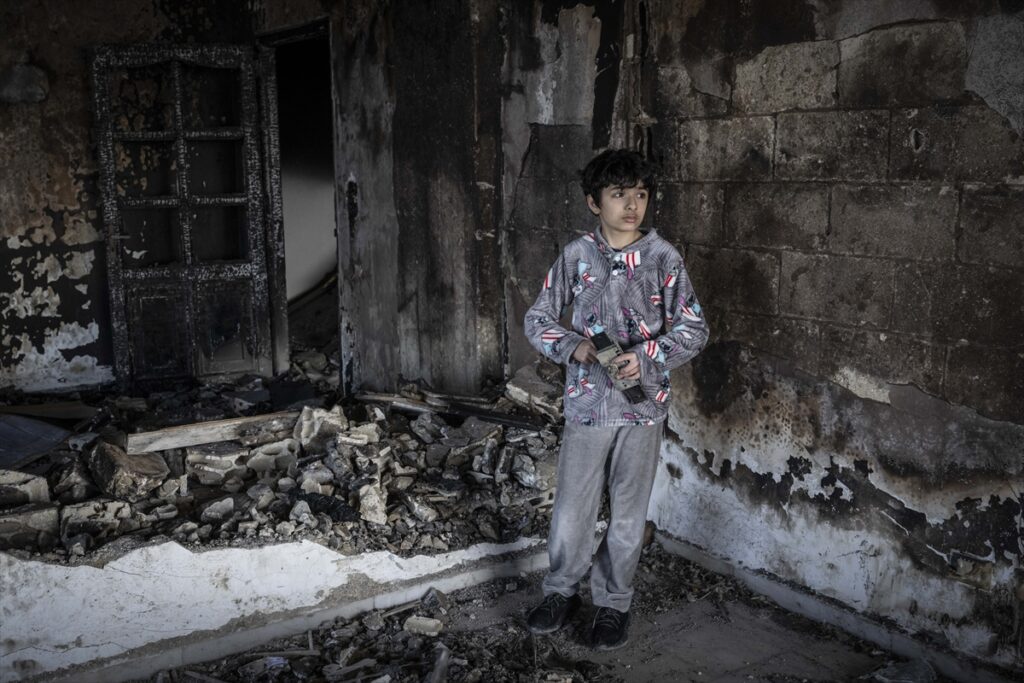
[Photo: 12-year-old boy Ahmed stands among debris after airstrike carried out by the Israeli military on the town of Sharhabil left one person dead and three others injured in Beirut, Lebanon on March 16, 2026. Ahmed, who was living on the upper floor at the time of the attack, is walking through his neighbors’ collapsed home. He says he was asleep during the attack and woke up in fear due to the intensity of the blast, then ran away. Photojournalist: Murat Şengül/AA]
The latest bombardment comes amid an ongoing joint US-Israeli offensive that began on February 28, which Iranian sources say has already killed more than 1,340 people, including the country’s Supreme Leader Ali Khamenei.
As tensions intensify, Tehran signalled cooperation on humanitarian grounds, agreeing to a United Nations request to allow the safe passage of aid shipments through the Strait of Hormuz.
“Iran agrees to the UN request for safe transit of ships carrying humanitarian goods through the Strait of Hormuz,” the Times of Tehran reported, citing Iran’s ambassador to Geneva.
Meanwhile, global powers have called for restraint. Meeting in France between March 26 and 27, foreign ministers from the G7 nations and the EU issued a joint statement urging an immediate halt to attacks on civilians and critical infrastructure.
“We call upon an immediate cessation of attacks against civilians and civilian infrastructures. There can be no justification for the deliberate targeting of civilians in situations of armed conflict as well as attacks on diplomatic facilities,” the statement said.
They also stressed the need to protect global supply chains and maintain freedom of navigation in the Strait of Hormuz, warning of potential economic shocks.
The regional fallout has extended beyond Iran. In Lebanon, Israeli airstrikes and a ground offensive in the south have left at least 1,142 people dead and 3,315 injured since March 2, according to the Lebanese Health Ministry.
The toll includes 122 children and 83 women among those killed by Israeli forces, with hundreds more women and children wounded.
Healthcare infrastructure has been severely affected. The World Health Organization reported 64 attacks on healthcare facilities, killing at least 53 medical workers and injuring 91 others.
Nine hospitals have been damaged, while 50 primary healthcare centres have been forced to close. Five hospitals – including Bahman Hospital, Al-Sahel Hospital, Bint Jbeil Public Hospital, Mays al-Jabal Public Hospital and Al-Burj Hospital – have shut down entirely.
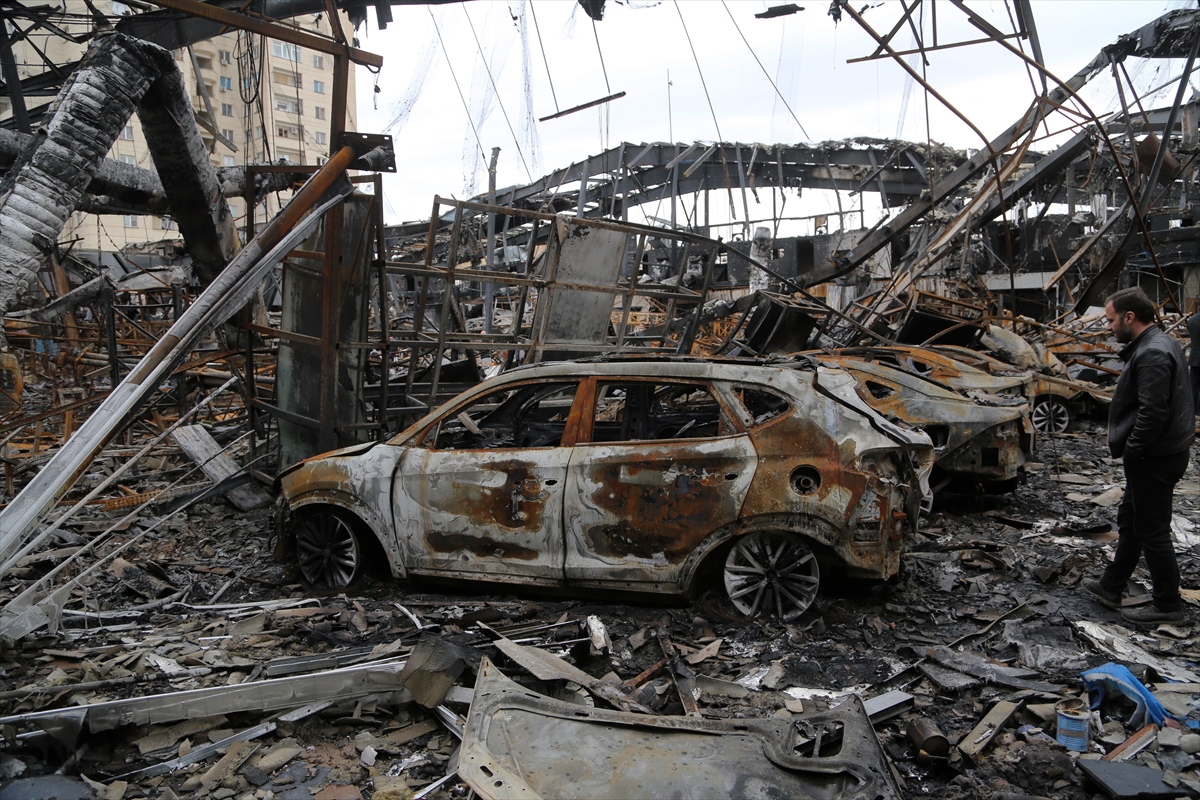
[Photo: Civilian targets by US-Israel bombing in Iran: A view of charred remains of luxury vehicles after a car dealership was targeted during the initial days of U.S.-Israeli strikes in eastern Tehran, Iran, on March 28, 2026. The attack resulted in the total destruction of 70 cars, with the extensive damage at the high-end showroom following the escalation of military tensions in the region.
Photojournalist: Fatemeh Bahrami/AA]