By Zainab Gulamhusein
The Budget got off to a dramatic start last week when the Office for Budget Responsibility (the “OBR”) leaked the details before the Chancellor even began her speech. Now, a week later, with the dust starting to settle, a clearer picture of Chancellor Rachel Reeves’ plans is emerging. This Budget, she set out three main goals: help ease the cost of living, continue tackling NHS waiting times, and bring down debt levels and borrowing.
The semantics of “Not raising taxes”
One of the central revenue-raising measures in the Budget is the extension of the freeze on income tax and National Insurance thresholds until 2031. On paper, rates aren’t rising. In practice, fiscal drag will gradually push millions of workers into higher tax bands as wages increase, one of the largest stealth tax rises in modern British history. When the higher rate was introduced in the late 1980s, just 3% of taxpayers paid it. By 2015, it was 8–9%, and today it’s forecast to reach nearly 20%, despite stagnant real wages. A threshold once reserved for top earners is quietly becoming a charge borne increasingly by ordinary workers. When asked if this freeze effectively raises taxes on working people, Labour deputy leader Lucy Powell dodged the question, insisting it is part of a broader programme to create a “fairer” tax agenda.
Taxes on wealth, property, and investment returns
Dividends, savings, and property income will all face a 2% tax hike, hitting investors, landlords, and those with significant non-salary income. Reeves also confirmed a new “mansion tax,” a surcharge on homes worth more than £2 million from 2028. Treasury officials insist it ensures the wealthiest contribute amid fiscal pressures, but projected revenue is just £400 million. It’s politically safe, but economically trivial with London and the Southeast bearing the brunt. Critics say if the government really wanted to target wealth, it should go after multinationals shifting profits to low-tax havens like Dublin, rather than homeowners.
EV tax and farmers
The Chancellor introduced a new electric vehicle (EV) tax, requiring drivers of electric and plug-in hybrid cars to pay a mileage-based road charge. While it’s meant to raise revenue, it could put the brakes on people switching to greener cars. Critics say it risks slowing EV adoption and, more broadly, could throw a spanner in the UK’s plans to transition to cleaner, low-emission transport.
Farmers, meanwhile, were largely left out in the cold. After a year of climate-damaged harvests and volatile markets, the Budget offered little long-term clarity or strategic support for agriculture. Unlike other sectors, farming received no concrete measures to help with recovery or future investment, leaving many facing ongoing uncertainty. Critics warn that without clear, long-term support, the sector remains exposed to both climate and economic pressures, threatening food security and rural livelihoods. In a year of devastating crops, that lack of guidance is hard to ignore.
Pensions
The triple lock remains politically popular but fiscally costly. It guarantees state pensions rise by the higher of inflation, earnings growth, or 2.5%, protecting retirees today but adding tens of billions to government spending. With borrowing still high and productivity growth weak, maintaining it without reform risks squeezing other priorities, from education to health and exacerbating inter-generational strife. Meanwhile, pension-savvy workers face changes from 2029. Only the first £2,000 of annual pension contributions via salary sacrifice will escape National Insurance, undermining a familiar route for tax-efficient saving.
Support for families and low-income households
Reeves paired these tax measures with cost-of-living support. The two-child benefit cap will be abolished from April 2026, restoring full entitlements to larger families and expected to lift around 450,000 children out of poverty. The National Living Wage rises 6.7% while green levies on energy bills are removed, cutting the average bill by around £150. Fuel duty stays frozen until 2026, and rail fares and prescription charges are held steady for another year.
But the centrepiece, removing the two-child limit, raises questions. There’s no denying that lifting children out of poverty is a positive step. But while 84% of Labour members back raising the cap, only 37% of Labour voters do, raising questions about whether party priorities are taking precedence over the national interest. Some commentators, including veteran Labour politician David Blunkett, argue that investing in proven programmes like Sure Start (which combines early education, childcare, health, and family support in disadvantaged areas) could achieve longer-term reductions in child poverty. Addressing root causes, such as improving health outcomes and reducing reliance on food banks, might have a bigger impact than simply lifting the benefit cap.
Online gambling and cracking down on avoidance
The Budget raises the levy on online gambling and promises a crackdown on tax avoidance, hitting multinationals and promoters of aggressive schemes. The Chancellor says the extra revenue will help pay for the “fully costed” two-child benefit cap, but in reality the money isn’t ring-fenced and the sums are small. On paper, it looks tough. In practice, critics say it’s more about headlines than a serious boost to the public finances.
NHS reforms
The Budget includes a notable NHS funding boost. Day-to-day spending will rise by around 3% in real terms each year, adding roughly £29 billion. An extra £300 million is earmarked for digital and technology upgrades, while 250 new community “Neighbourhood Health Centres” are planned. The aim is to reduce waiting lists and expand care outside hospitals. But these outcomes aren’t guaranteed. Structural pressures, like social care, remain largely unaddressed, and benefits may only materialise years down the line.
A budget for growth?
Labour has insisted growth is its top priority, but this Budget does little to deliver it. It fails to address Brexit-related trade frictions, barely considers the impact of AI, overlooks the UK’s growing space sector, delays planning and infrastructure reforms, and raises taxes on business and investment. Meanwhile, welfare spending increases and the cost of hiring rises. The result is redistribution without expansion, slicing up the same pie rather than making it bigger. The OBR has stated that there is “next to nothing” in this budget that will generate growth. Productivity forecasts have been downgraded from 1.3% to 1% per year and the IFS expects GDP growth under 0.5% between 2024 and 2029. Business leaders say it’s a Budget aimed at stability, not growth, though even that claim is shaky.
A budget built on a hole that wasn’t there
After the Budget, the OBR reported that the UK government’s headroom under its “current budget” fiscal rule is expected to reach around £22 billion, or 0.6% of GDP, by 2029/30. While this is a larger buffer than in recent years, it remains modest relative to the size of the economy and depends on optimistic forecasts. Controversy has arisen over what the Treasury knew before the Budget. The OBR had informed Reeves that an additional £4.2 billion of fiscal headroom was available, yet during the now comical, unprecedented pre-Budget breakfast briefing on 4 November she described the nation’s finances as dire, implying that tax increases were unavoidable. Critics argue that this blurred the line between genuine fiscal necessity and political messaging.
Many commentators view Reeves’ tax rises as a way to fund welfare expansion rather than to plug a real fiscal gap. The Budget was presented as a response to a looming “black hole” in public finances, yet the OBR’s figures suggest the tax increases were not strictly necessary for stability. Instead, the additional revenue appears to be directed toward measures such as maintaining the triple lock on pensions, lifting the two-child benefit cap from April 2026, increasing the National Living Wage by 6.7%, and removing green levies from household energy bills. Critics say presenting these tax rises as a fiscal necessity hides their real political and social purpose.
The OBR now warns that the welfare bill could exceed £100 billion by the end of the decade, up from £65 billion ten years ago. Yet backbench MPs have shown little appetite for broader welfare reform, even as the number of people on Universal Credit has risen by one million since the last Budget.
Economists warn that funding welfare through higher taxes risks redistribution without growth, potentially dampening investment and productivity. It echoes a classic Old Labour tax-and-spend approach, nudging Britain toward a high-tax, high-welfare model more commonly seen in Europe, all without the government openly owning that choice.
Is this the Labour we voted for?
In 2024, Labour ran on a promise of real economic growth, offering a break from years of drift and assuring working people that their taxes would not go up. People voted expecting that, but what they got again was a Budget full of stealth taxes, expanded welfare with no reform, and little in the way of a genuine growth plan. Last year’s Budget hit small businesses with higher National Insurance contributions and offered little to inspire growth, suggesting this isn’t just a one-off. Critics argue that many measures appear designed to manage Labour backbenchers with little regard for the country’s economic challenges. This year’s Budget has a distinct identity. It is not bold or visionary, but familiar Old Labour in modern packaging. With 71% of voters now dissatisfied with Reeves, the question is clear: is this the Labour Party of growth the public thought they were electing?
Beyond the numbers, the Budget also raises questions about trust in politics. Voters were promised growth and low taxes on working people, yet they got a plan heavy on redistribution and stealth tax rises. With pre-Budget leaks, warnings of a “black hole” that didn’t really exist, and a clear gap between promises and delivery, public confidence in the government’s honesty and transparency risks taking a hit.
As Harold Wilson once said, “A week is a long time in politics.” One week after this Budget, the question isn’t whether the government has changed direction, it’s whether it has the courage to admit the direction it has chosen.
Download Official Reports:
Zainab Gulamhusein is a lawyer
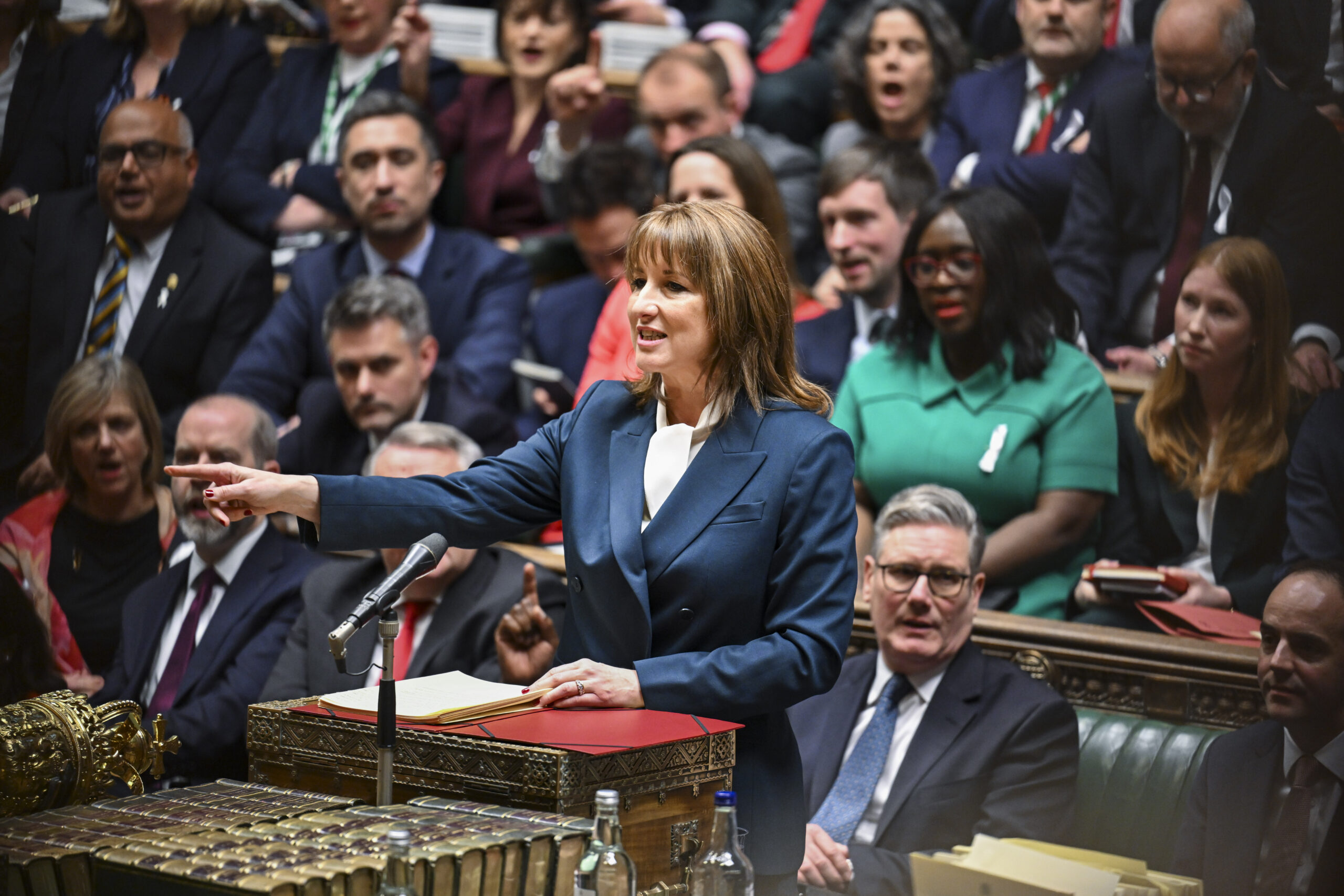
Feature photo: Rachel Reeves MP, The Chancellor of the Exchequer, presenting Financial Statement and Budget Report in the House of Commons on 26 November. (Credit ©House of Commons)