By Ahmed J Versi
London, (The Muslim News): Andy Burnham chose an issue that has become one of Britain’s most visible social failures to define his first hours as Prime Minister.
Standing outside 10 Downing Street after being invited by the King to form a government, Burnham used his inaugural address not to focus on economic growth, immigration or Britain’s place in the world, but on the thousands of people sleeping on the nation’s streets. His message was clear: rough sleeping is not inevitable, it is political.
The announcement of an immediate £340 million investment to tackle long-term rough sleeping was more than a policy launch. It was a statement of intent about the kind of government Burnham intends to lead — one that places prevention, social justice and partnership with local leaders at the centre of national policy.
“For too long, we’ve been told that ending rough sleeping will take decades or even that it’s impossible. I’m not having that,” the Prime Minister declared.
The words reflected a theme that has defined much of Burnham’s political career. As Mayor of Greater Manchester, he frequently argued that local leaders understand social problems better than Westminster and should be trusted with the powers and resources needed to solve them. Now, as Prime Minister, he appears determined to apply that philosophy nationally.
A different political tone
There was symbolism in Burnham’s choice of opening policy.
Most incoming prime ministers seek to reassure financial markets, outline their economic priorities or address geopolitical challenges. Burnham instead spoke about people who are often overlooked entirely — those sleeping in doorways, under bridges and in temporary shelters.
The speech suggested a deliberate shift in tone. Rather than presenting rough sleeping as an unfortunate consequence of wider economic pressures, Burnham argued that it represents a failure of government.
He rejected the view that homelessness on Britain’s streets is simply too complex to solve, pointing instead to the “Everyone In” programme during the COVID-19 pandemic, when emergency action dramatically reduced rough sleeping almost overnight. For Burnham, that experience demonstrated that political will, rather than practical impossibility, is the missing ingredient.
Investing in prevention
Central to the Prime Minister’s argument is the idea that government should spend more preventing crises instead of paying for their consequences.
Research cited by the government estimates that one year of rough sleeping costs public services more than £20,000 per person through emergency healthcare, policing and other interventions. By comparison, successful preventative support costs a fraction of that amount.
It is an argument that combines moral purpose with economic pragmatism. Helping vulnerable people before they reach crisis, Burnham contends, is not only the compassionate choice but also the financially responsible one.
The initial £340 million package will fund around 1,200 homes and provide intensive support for at least 3,000 people experiencing long-term rough sleeping. Ministers describe it as the opening phase of a wider five-year programme that will eventually deliver thousands more homes alongside specialist mental health, addiction and employment support.
Local leaders at the heart of delivery
Another notable feature of the announcement is who will be responsible for delivering it.
Rather than relying solely on Whitehall departments, Burnham has placed mayors, councils, the NHS and local public services at the heart of the programme. That reflects his long-standing belief that communities are often better placed than central government to respond to complex social challenges.
For many local authorities, however, success will depend on whether future funding matches today’s ambition. Delivering permanent housing alongside long-term support for people with multiple and complex needs is resource-intensive, particularly after years of financial pressure on local government.
Expectations will be high
Launching such an ambitious pledge on his first day inevitably raises expectations.
Burnham has promised not simply to reduce rough sleeping but to end long-term rough sleeping “at the earliest opportunity”. That is among the most ambitious social policy commitments made by any incoming British Prime Minister in recent years.
Supporters will argue that setting bold goals is necessary if entrenched problems are ever to be solved. Critics are likely to question whether housing shortages, stretched public services and rising demand can be overcome quickly enough to fulfil the promise.
The Prime Minister has little room for delay. His decision to make homelessness the defining issue of his first speech means progress will be closely scrutinised from the outset.
Bringing back hope
The closing words of Burnham’s address may ultimately prove the most significant.
“This is the kind of Britain I want us to be – a country where everyone has the security of a roof over their head, and where no one is left behind or written off. Let’s bring back hope.”
It was both a political slogan and a governing philosophy.
Whether history remembers the speech as the beginning of a genuine transformation or simply an ambitious aspiration will depend not on the rhetoric delivered outside Number 10, but on whether those still sleeping on Britain’s streets find themselves with somewhere safe to call home in the months and years ahead.
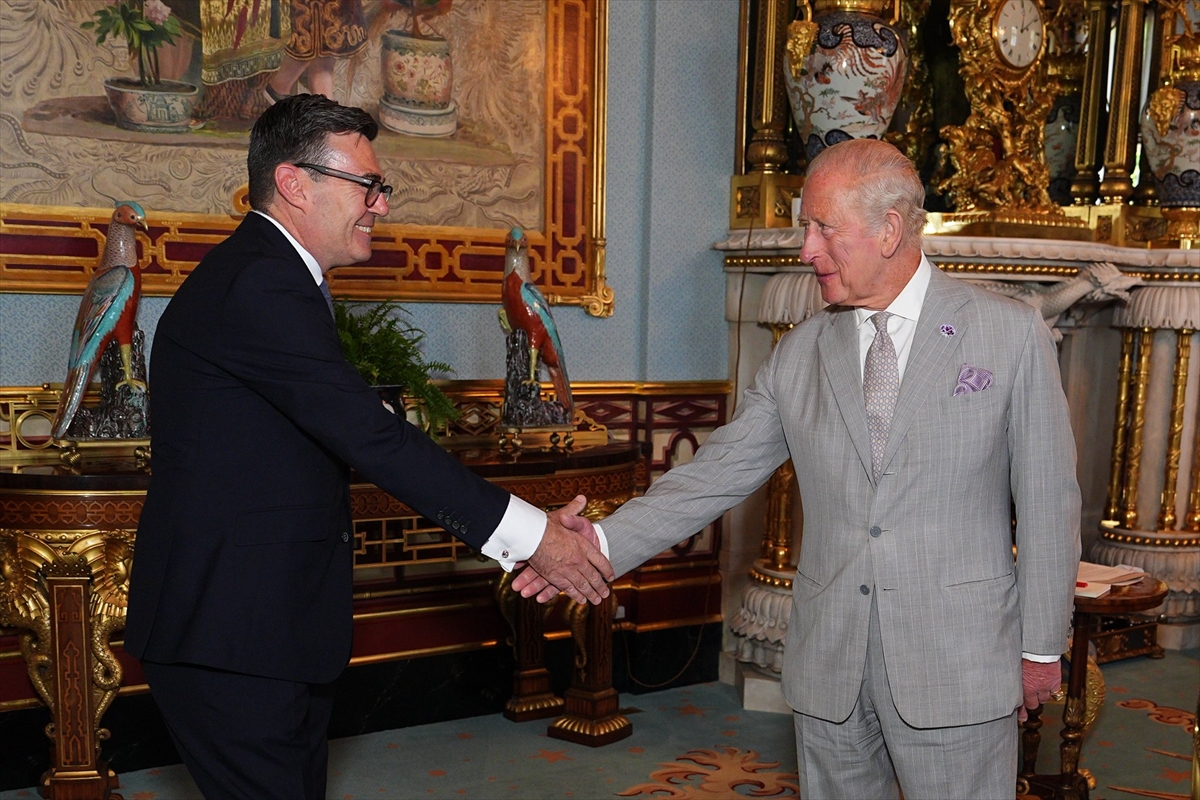
[Photo: King Charles III receives Rt. Hon. Andrew Burnham MP (L) in audience at Buckingham Palace and invited him to form a new government following the resignation of former Prime Minister Keir Starmer on July 20, 2026. Rt. Hon. Andrew Burnham accepted the King’s invitation and was formally appointed Prime Minister and First Lord of the Treasury after kissing hands during the constitutional appointment ceremony. Photojournalist: Royal Family X Account/AA]