Opinion article on policing far-right anti-Islam and Nakba marches
London is home to more than a million Muslims. Yet there is growing anti‑Muslim hatred being voiced openly on our streets, particularly in connection with protests. No community in this city should have to factor intimidation or abuse into everyday decisions about where they go or how they live.
Over the last eight weeks we have made 90 arrests for hate crimes, including 20 motivated by anti‑Muslim hatred. Those figures underline the scale of the challenge we are policing in London right now.
Over the last year, we have seen repeated instances of intimidation linked to protests where anti‑Muslim hate speech has been used publicly. These concerns are raised with me by mosque leaders, community representatives and local organisations, and they are reflected in the crimes being reported and investigated.
Today will be a significant test for the capital. The Unite the Kingdom and Nakba Day marches are expected to draw large crowds and heightened tensions, requiring one of the largest policing operations in the last decade. Both protests are being policed on exactly the same basis, under the same legal framework, with similar conditions and timings and the same expectations.
We have seen the risks before. At a Unite the Kingdom protest last September, anti‑Muslim and racist chanting and violence occurred across multiple locations resulting in 24 arrests. Officers were attacked, and protesters attempted to reach counter‑demonstrators. Those incidents are directly informing our policing approach this weekend.
For the first time we have imposed specific conditions relating to speakers at these protests. These place a responsibility on organisers to ensure that those they invite do not use these events as a platform for unlawful extremism or hate speech. Where this happens, both the speaker and the organisers will face consequences.
We know from consistent feedback following previous protests by the two groups involved this weekend that many Londoners experience these events as intimidating, with some choosing to change their behaviour, including avoiding central London altogether. Which is why today’s routes have been conditioned to avoid mosques and places of worship, consistent with the approach we take in relation to synagogues.
Thousands of additional officers will be deployed across London, supported by specialist teams focused on preventing disorder, enforcing protest conditions and identifying hate crime. We will keep opposing groups apart and act swiftly wherever the law is broken. Every Londoner should be able to enjoy our brilliant capital city, and we are determined to be decisive in enforcing the law.
Our duty is clear: to protect communities, to uphold free speech and to police lawful protest without fear or favour. We will make arrests where we see anti-Muslim and antisemitic hate crimes.
We remain committed to protecting the right to peaceful protest. But anyone who abuses that right by spreading hatred, inciting violence or intimidating others should expect firm and decisive action. Today officers will take a robust, proactive and interventionist approach wherever hate crime is seen or heard, against any community. If a word, sign or symbol breaks the law and creates fear, intimidation or stirs up hatred, we will act. That includes situations where language may be debated in academic or historical terms but, in the real world, is clearly causing racial or religious hatred.
Trust is fundamental to policing. Sir Robert Peel’s principle that the police are the public and the public are the police matters most when communities are under pressure.
London is a city shaped by its diversity. Muslims are an integral part of this city’s fabric and history, and everyone should be able to live, work, travel and worship safely.
Today, as every day, the Met will police without fear or favour. We will stand against hate and protect the communities we are proud to serve.
To report an incident call 999 in an emergency. Non-emergency incidents can be reported to police on 101 and The British Muslim Trust helpline which provides emotional support and advocacy for victims of anti-Muslim hatred.
The British Muslim Trust’s helpline will be operating on Saturday (11am-5pm) and monitored by Muslim staff. Contact via 0808 172 3524 (Freephone and WhatsApp) or report online.
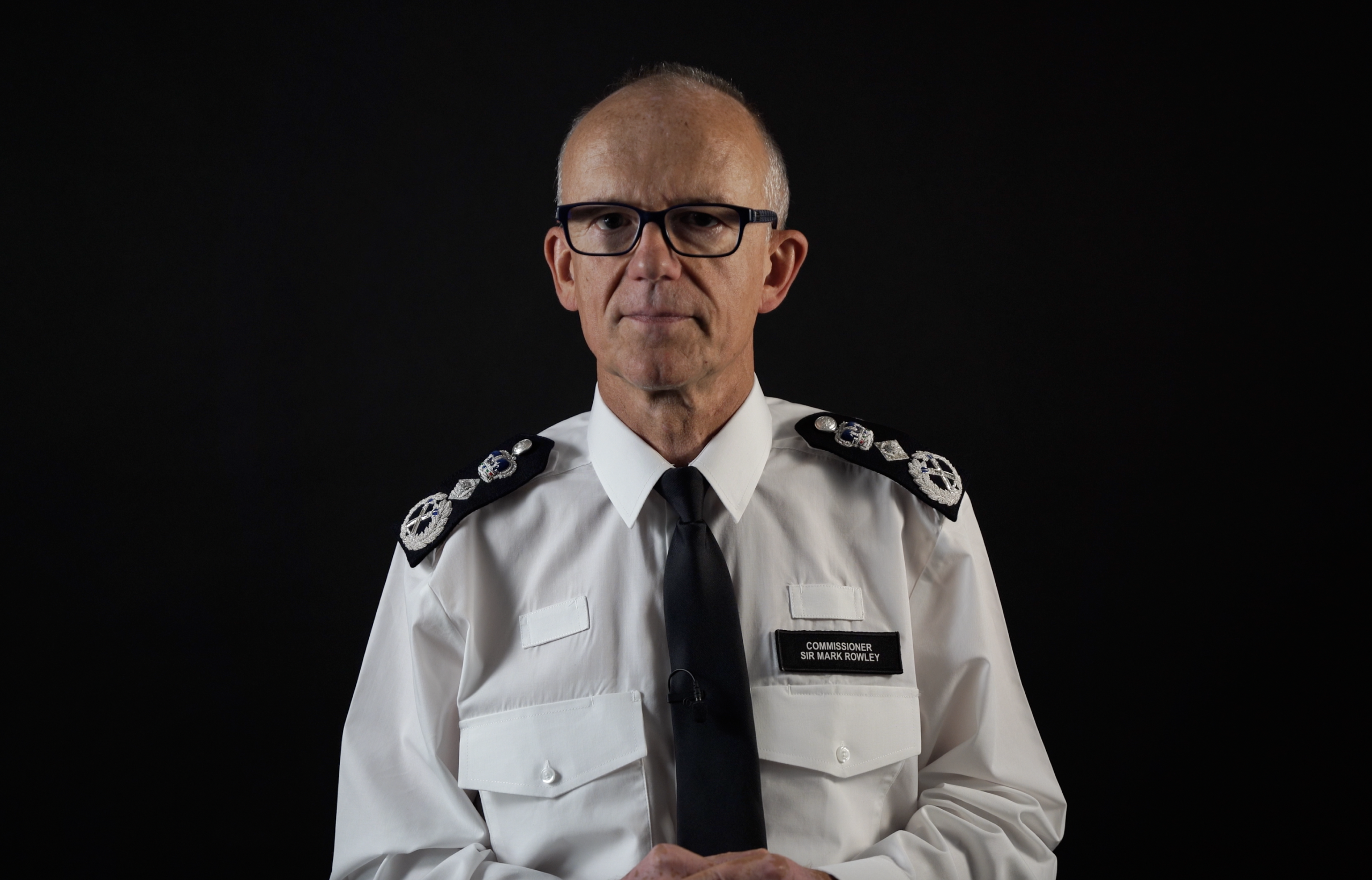
[Photo: Sir Mark Rowley, Commissioner of the Metropolitan Police. Photo provided by Met Police]