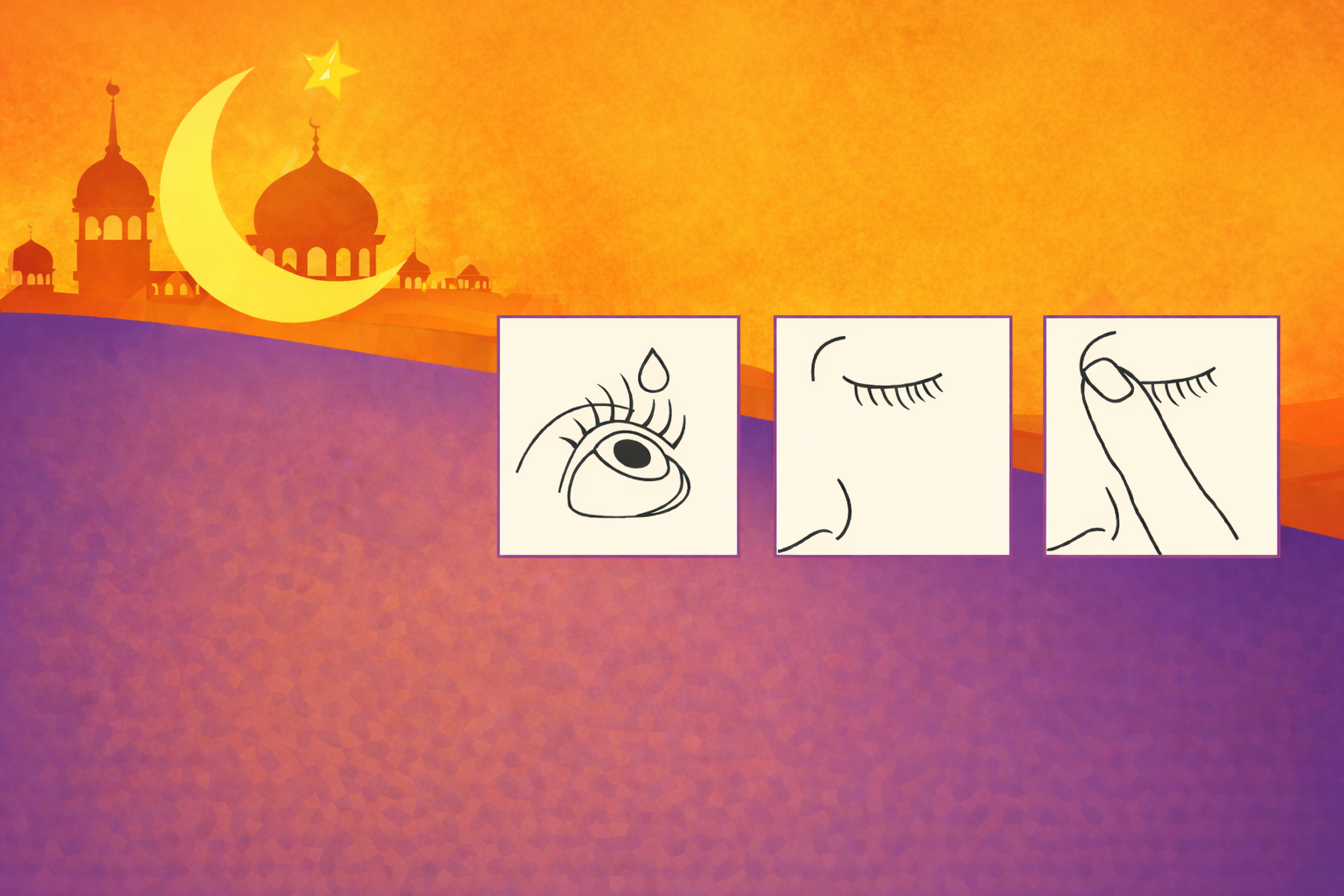
In 2026, Ramadan is expected to begin on the evening of Wednesday 18 February 2026 and will conclude on the evening of Thursday 19 March 2026, with the exact dates contingent upon the sighting of the moon.
Among the estimated population of 50,000 Muslims living with glaucoma in the UK, research from St Paul’s Eye Unit at the Royal Liverpool University Hospital has shown that almost half (45.5%) believe that using eye drops during Ramadan may break the fast, especially when the excess drop drains down the back of the throat and can be tasted. For people who rely on eye drops to manage their glaucoma, this concern can lead to uncertainty about whether using eye drops invalidates the fast. Therefore, they may stop using their drops or take them erratically during the month, risking permanent damage to their vision.
Glaucoma is the name of a group of eye diseases that damage the optic nerve. The optic nerve transfers visual information from the eye to the brain and if it’s damaged, it can result in sight loss and even blindness. Glaucoma is often caused by a build-up of fluid in the eye. This causes pressure in the eye (called intraocular pressure or IOP) to increase which damages the optic nerve. Eye drops are the most common treatment for glaucoma. They decrease the amount of fluid in the eye, either by increasing the drainage of fluid out of the eye, or by reducing the amount of fluid that is made.
Managing glaucoma eye drops while fasting during Ramadan can be challenging due to these concerns and uncertainties. However, according to the majority of Islamic scholars, eye drops are not considered to break the fast.
A practical way to ensure that eye drop medication stays in your eye and doesn’t reach your throat, is to use punctal occlusion. This involves putting finger pressure at the corner of the eye, next to the nose, immediately after putting in drops and holding this for up to two minutes. This is generally good practice for anyone with glaucoma as it will ensure the eye drop stays in the eye.
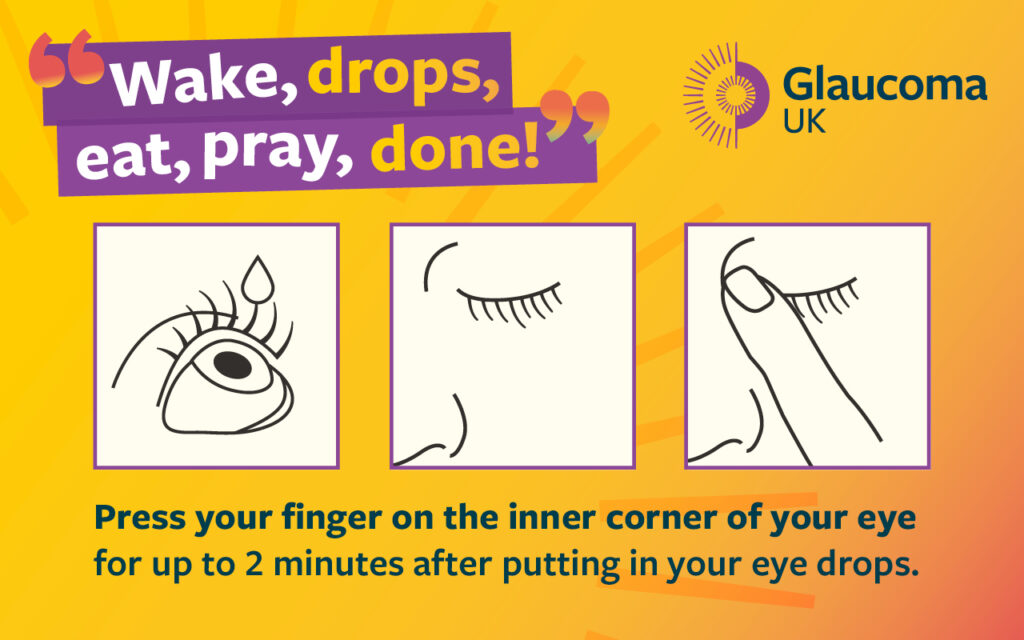
For anyone who is still worried about using their eye drops during fasting hours, Glaucoma UK and partner organisations are encouraging them to use their drops between Iftar and Suhoor.
For more information, advice and handy tips, visit: glaucoma.uk/ramadan