By Middle East Correspondent
LONDON, (The Muslim News): Tensions across the Middle East have surged after a US KC 135 refuelling aircraft crashed over western Iraq on Friday, killing all crew members and prompting ongoing rescue operations. While US officials attributed the crash to operational issues and confirmed it occurred in “friendly airspace,” Iranian state media and Iran-aligned armed groups in Iraq claimed the aircraft was shot down in a missile attack.
In a parallel escalation, Iran’s Islamic Revolutionary Guard Corps (IRGC) claimed it struck the USS Abraham Lincoln aircraft carrier with missiles and drones, though Washington has not confirmed any damage or casualties. Iranian officials described the action as a “precision operation” to counter US military pressure, with state media framing it as part of Tehran’s defence of its sovereignty.
US Central Command (CENTCOM) said two KC 135 aircraft were involved in operations linked to Operation Epic Fury. One aircraft was lost, while the second landed safely, reportedly in Israel. CENTCOM emphasised that the crash was “not due to hostile fire or friendly fire,” and rescue efforts remain ongoing. The USS Abraham Lincoln, a nuclear-powered Nimitz-class carrier, has a long history of deployments in the Middle East and Indo-Pacific.
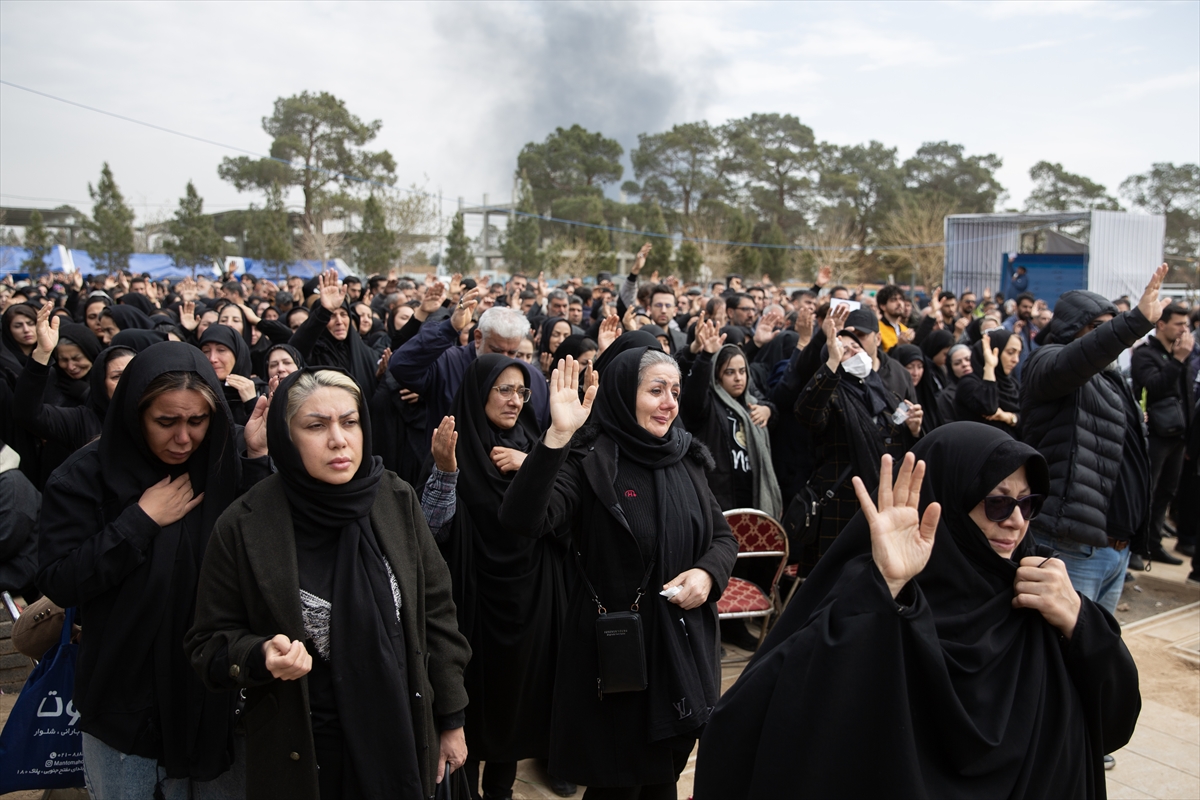
The latest incidents follow the US–Israel military campaign launched on 28 February 2026 against Iranian targets, which Tehran says has killed over 1,300 civilians and destroyed thousands of civilian sites. Iran has responded with missile and drone attacks targeting Israel, Iraq, and Gulf states hosting US forces, drawing multiple regional actors into the conflict and stoking fears of a broader regional war.
French and British forces targeted in Iraq
The conflict in Iraq has also directly affected European forces. A French soldier was killed and five others injured in a drone attack on a joint base in Iraqi Kurdistan, shared with Kurdish Peshmerga forces. The strike involved two drones and occurred in the Makhmour area near Erbil.
Earlier on Thursday, Iranian drones targeted a British Special Forces base in Erbil. While there were no British casualties, some US personnel were reportedly wounded.
Defence Secretary John Healey attributed some of the Iranian tactics to the “hidden hand” of Vladimir Putin, linking the attack to techniques used by Russia in Ukraine. British forces successfully repelled the assault using the Martlet missile system.
UK troops remain restricted to intercepting enemy rockets and are not authorised to engage rocket systems. RAF pilots have flown operational sorties over the UAE, Jordan, and Qatar, while HMS Dragon has been redeployed from NATO operations to the Middle East, and HMS Middleton temporarily returned to port for maintenance.
Iran’s new Supreme Leader and the strait of Hormuz
Iran’s new Supreme Leader, Mojtaba Khamenei, confirmed his leadership on 8 March following the US-Israeli strike that killed his father, former Supreme Leader Ali Khamenei. In his first public message, broadcast on state television, Khamenei warned that Tehran would continue to use the “lever of blocking the Strait of Hormuz,” one of the world’s busiest oil shipping channels, and urged neighbouring countries hosting US bases to reconsider their positions.
The statement came amid reports that Khamenei lost his wife and son in the US-Israeli strike on the supreme leader’s compound, while his mother was reportedly killed — though some outlets later suggested she survived. He was also reportedly lightly injured. Khamenei did not appear in person on television and has not been seen publicly since assuming leadership.
“Iran would avenge the blood of Iranians killed in the war with the US and Israel,” Khamenei said. “These countries must clarify their stance toward the aggressors against our homeland and the killers of our people.”
Israel’s Prime Minister Benjamin Netanyahu described the new leader as a “puppet” of the Islamic Revolutionary Guard Corps, criticising his absence from public appearances.
Iran has reiterated that it is not planning to lay mines in the Strait of Hormuz, amid heightened threats to shipping and cargo vessels. US Treasury Secretary Scott Bessent said the United States and its allies are considering forming an international coalition to escort oil tankers through the strategic waterway.
Oil prices have surged above $100 a barrel, prompting concern over global energy markets. Healey suggested that rising oil prices could indirectly benefit Russia due to the ongoing conflict in Ukraine.
Iran’s Ambassador to the United Nations, Amir Saeid Iravani, said that Tehran “is not going to close the Strait of Hormuz” but criticised the United States and Israel for destabilising the region.
“Iran fully respects and remains committed to the principles of freedom of navigation under the Law of the Sea… it is our inherent right to preserve the peace and security in this vital waterway,” Iravani said.
US President Donald Trump praised recent military operations against Iran, describing the country as “a nation of terror and hate” and asserting that it is “paying a big price right now.”
Israel attacks on Lebanon kills 31 civilians on Thursday
In Lebanon, Hezbollah [Hizbullah] launched multiple rocket and drone attacks targeting Israeli military sites, settlements, and troop positions across northern and central Israel, as well as near the southern Lebanese border. The attacks hit sites including the Yaara barracks, Meron air control base, and Shayetet 13 naval commando headquarters.
Israel responded with airstrikes across southern Lebanon and Beirut, targeting Hezbollah and civilian infrastructures. Reports indicate that at least 31 civilians were killed in Thursday’s strikes alone, including attacks on Arki, Aramoun, Ramleh Al-Bayda, Barish, Deir Antar, and Beirut’s Hadath district.
Since the escalation began on March 2, Lebanese authorities report 733 people killed, including 98 children, and 1,933 injuries. More than 822,000 people have been displaced, with 128,800 currently staying in shelters. Authorities have opened 596 centres to accommodate those forced to flee their homes.
[Photo: People mourn at funeral ceremony of those who were killed in the US-Israeli attacks on Iran, at Behesht-e Zahra cemetery in Tehran, Iran on March 12, 2026. Photojournalist: Hassan Ghaedi/AA]