By Middle East Correspondent
LONDON, (The Muslim News): Iran has accused the United States of derailing high-stakes negotiations in Islamabad, as tensions escalated following Washington’s announcement of a maritime blockade on Iranian ports. Meanwhile Israel continued to bomb Lebanon despite ceasefire agreement killing at least 12 civilians, including a paramedic on Sunday.
“We engaged with the US in good faith to end the war,” Iranian Foreign Minister Abbas Araghchi said, adding that the two sides had been “just inches away” from an “Islamabad MoU” before encountering “maximalism, shifting goalposts and a blockade” from the US side. “Good will begets good will. Enmity begets enmity,” he added.
Fox News said Vance’s final proposal to Iran in Islamabad included: Ending uranium enrichment, Dismantling nuclear facilities, Handing over HEU, Stopping financial support for Hamas, Hezbollah, & Yemen, Fully opening the Strait of Hormuz without tolls.
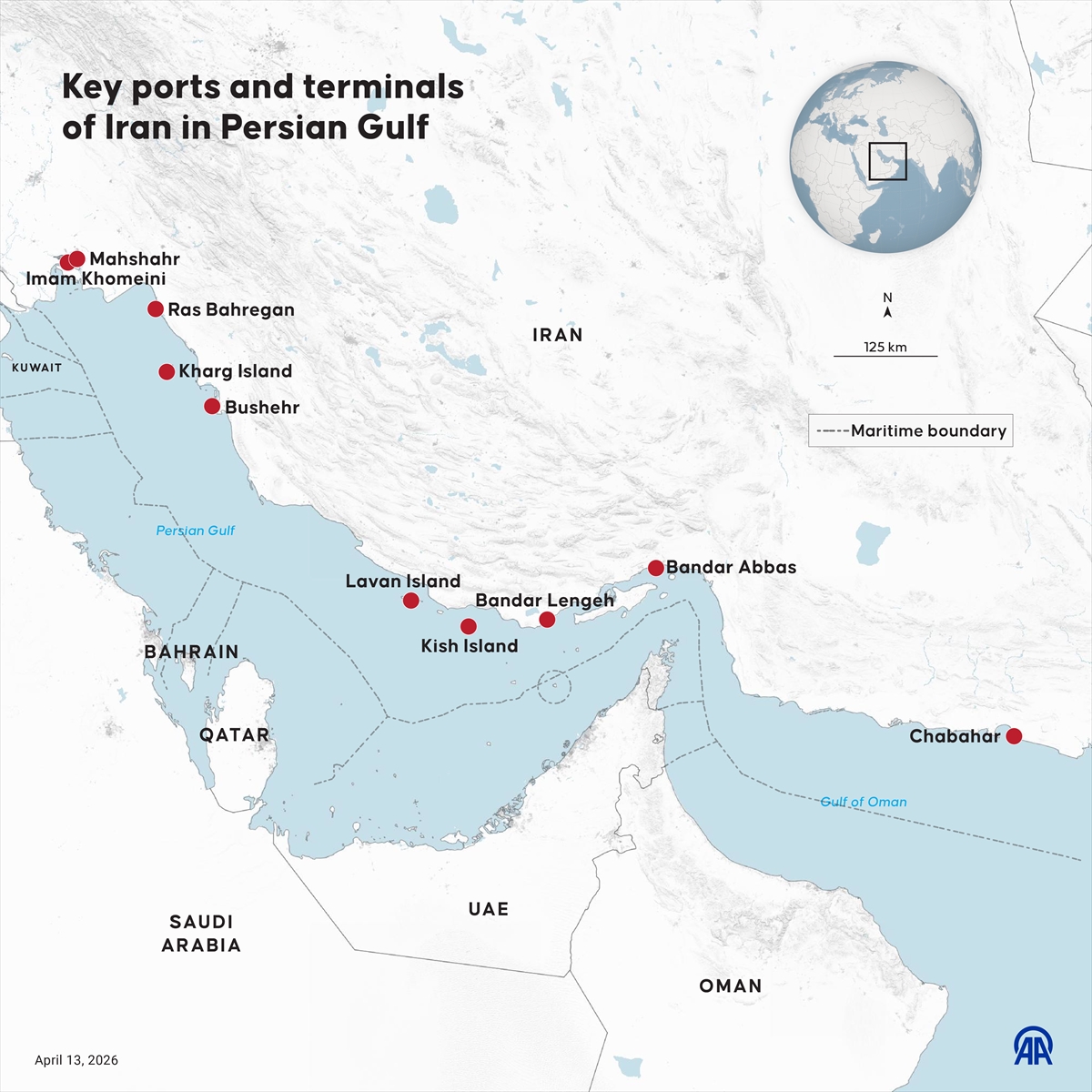
The remarks came after US Central Command confirmed it would begin enforcing a blockade on all maritime traffic entering and leaving Iranian ports from Monday, while allowing vessels to continue transiting the Strait of Hormuz to and from non-Iranian ports. The command said the blockade would apply to all vessels regardless of nationality and cover ports along the Arabian Gulf and Gulf of Oman, with commercial ships advised to monitor maritime broadcasts and contact US naval forces if needed.
“UK is not supporting the blockade by USA” of Strait of Hormuz,” UK Prime Minister’s Spokesperson told journalists Monday morning, adding “our consistent position has been we are not going to be dragged into this war.”
The escalation followed the latest round of Iranian-US talks in Islamabad, mediated by Pakistan, which ended without agreement despite more than 20 hours of negotiations. Described as “substantive” by US Vice President JD Vance, the discussions left key issues unresolved, including Iran’s nuclear programme, uranium enrichment, and the scale and timing of sanctions relief.
According to reports, Washington demanded that Tehran halt all uranium enrichment, dismantle key nuclear facilities, and surrender its stockpile of highly enriched uranium. The US also pressed Iran to end support for regional groups including Hamas, Hezbollah, and the Houthis, and to guarantee unrestricted access through the Strait of Hormuz. Disagreements over how much of Iran’s frozen assets would be released under any deal proved another major obstacle.
The talks, among the most significant between the two sides since the 2018 US withdrawal from the Joint Comprehensive Plan of Action under Donald Trump, were held under a fragile 14-day ceasefire brokered by Pakistan on April 8 following the unprovoked illegal attacks by the US-Israeli war on Iran on February 28.
Pakistan’s Deputy Prime Minister Ishaq Dar confirmed the negotiations had concluded, urging both sides to maintain their “commitment” to the ceasefire and continue engagement “with positive spirit” to achieve “durable peace and prosperity in the entire region and beyond.” He thanked both parties for recognising Pakistan’s mediatory role and said Islamabad would continue facilitating dialogue in the days ahead.
Meanwhile, the humanitarian toll of the conflict continues to mount. Iranian government spokesperson Fatemeh Mohajerani said 942 schools had been damaged in US-Israeli strikes since February 28, with reconstruction expected to take up to three months. She added that more than 125,000 civilian units—including homes, shops, and health centres—had been destroyed, with rebuilding projected to take between three and 24 months. More than 3,000 people have been killed in the airstrikes.
Regional tensions have also intensified in Lebanon, where at least 12 people, including a paramedic, were killed in Israeli airstrikes on Sunday. The Lebanese Health Ministry said a Red Cross ambulance team was targeted in Beit Yahoun, describing the attack as “the latest violation of international humanitarian law and norms,” while additional strikes in Marub and Qana left 11 more dead.
The Israeli military has expanded its offensive in southern Lebanon since early March, despite a ceasefire that came into effect in November 2024. According to Lebanese authorities, more than 2,000 people have been killed and nearly 6,600 injured.
The United Nations Interim Force in Lebanon also reported escalating incidents involving Israeli forces, including a tank striking UN vehicles and repeated restrictions on peacekeeper movement. The mission said Israeli troops had fired warning shots, some hitting clearly marked UN vehicles, and destroyed surveillance infrastructure along the Blue Line.
“These actions are inconsistent with Israel’s obligations under Security Council resolution 1701,” UNIFIL said, warning that such incidents hinder its ability to monitor violations on the ground.
Efforts to de-escalate continue. Lebanon and Israel are expected to hold talks in Washington on April 14, while Lebanese Prime Minister Nawaf Salam said his government remains committed to securing a full Israeli withdrawal and enabling displaced residents to return.
“The south will not be abandoned again to face fear, destruction, and anxiety about its future,” Salam said. “Its protection… can only be achieved through a single, strong, and just state.”
Iraqi Prime Minister Mohammed Shia al-Sudani also reaffirmed Baghdad’s support for Lebanon, condemning Israeli attacks and calling for greater international responsibility in addressing violations of sovereignty and civilian harm.
As diplomatic efforts stall and military measures intensify, the region faces growing uncertainty, with the fragile ceasefire between Iran and the United States under increasing strain.
[An infographic titled “Key ports and terminals of Iran in Persian Gulf” created in Ankara, Turkiye on April 13, 2026. Photojournalist: Yasin Demirci/AA]