By Middle East Correspondent
LONDON, (The Muslim News): The Middle East plunged further into a multi-front conflict on Monday as Iranian retaliatory strikes and coordinated US-Israeli attacks triggered widening military, diplomatic, economic and civilian consequences across the region.
Norwegian Prime Minister Jonas Gahr Store said on Monday that the attacks launched by US and Israel against Iran are not in line with international law. Stressing that the attacks are not compatible with international law, Store also denounced Iran’s retaliatory strikes against other neighboring countries, according to broadcaster NRK. “We strongly condemn these countries being targeted, and civilians being affected there. The economy, people, and civilians are being drawn into this,” he added.
Iran continues to strike US assets across the Gulf after the killing of Supreme Leader Ayatullah Ali Khamenei and up to 40 top Iranian officials. The attacks have killed one person in Bahrain, with Iraq and Kuwait reporting more Iranian raid
Kuwait’s Defense Ministry says “several” US warplanes have crashed in the country, all the crew survived.
In Iraq, two drones struck the US Victoria base near Baghdad International Airport, according to Iraqi satellite channels Al-Sumaria and Al-Rasheed, citing security sources. One drone fell inside the base’s special operations area, while another was intercepted by US air defences. A security source told Al-Rasheed that the logistics support centre within the base was among the intended targets. Details remain limited, but the incident underscored the growing vulnerability of US positions in the region.
At the same time, Gulf states reported extensive interceptions of Iranian missiles and drones. The United Arab Emirates said it had detected 541 drones, destroying 506, and tracked 165 ballistic missiles, of which 152 were intercepted while 13 fell into the sea. Bahrain said its air defence systems countered 61 missiles and 34 drones targeting the kingdom. The scale of the attempted strikes highlighted how Tehran’s response has extended well beyond Israel.
The conflict has also spread northward. In Lebanon, Hezbollah launched missiles into northern Israel in retaliation for the killing of Iran’s Supreme Leader. Israel responded with airstrikes on Hezbollah targets in Beirut’s southern suburbs, with explosions reported and evacuations ordered in surrounding areas, marking a significant widening of hostilities.
According to a report by Lebanon’s National News Agency, the Israeli air attacks hit the southern suburbs of Beirut and the south of the country.
20 people were killed and 91 wounded in the capital’s suburbs, 11 were killed and 58 wounded in the country’s south.
Inside Israel, Iranian missiles continued to hit Haifa, Jerusalem and Tel Aviv. Seven people were seriously injured in Jerusalem following an attack late Sunday, and explosions were reported in Tel Aviv and Haifa. Sirens sounded across southern, central and northern Israel, and debris from Iranian missiles damaged buildings near Tel Aviv. More than 500 people have been injured since the Iranian counteroffensive began. Early reports confirmed nine fatalities from a missile strike on a building in Beit Shemesh, bringing the Israeli death toll to at least 12, while authorities extended the nationwide state of emergency until March 12.
The crisis stems from a coordinated US-Israeli military operation launched on Saturday against Iran. The campaign targeted military and government infrastructure, including missile facilities and command centres across several Iranian cities, among them Tehran. Intelligence sources indicated simultaneous strikes on senior regime figures, reportedly killing Iran’s Supreme Leader Ayatullah Ali Khamenei along with other key commanders — a move that appears to have triggered Tehran’s sweeping retaliation.
The US military has confirmed its first battlefield casualties: three American service members killed and five seriously wounded during ongoing operations. President Donald Trump said the campaign, which he described as involving more than 1,000 strikes on Iranian targets, could last roughly four weeks or less.
US President Donald Trump has warned that attacks on Iran will continue until all of Washington’s objectives are achieved, and has promised to avenge the deaths of three US soldiers.
Iran’s response has included ballistic missiles, drones and strikes against US and Israeli military positions, as well as assets in several Gulf states that host American forces. Reports indicate that infrastructure in Bahrain, Kuwait, Qatar and the UAE has also been targeted, fuelling fears of a broader regional conflagration.
The expanding conflict has reverberated through global markets. Oil prices surged to multi-month highs amid concerns about potential instability in the Strait of Hormuz, a vital artery for global energy shipments. Safe-haven currencies strengthened while equities and other risk assets weakened as investors reacted to the uncertainty surrounding the duration and scale of the fighting.
Diplomatic reactions have been swift and sharply divided. At an emergency meeting of the UN Security Council, Russia’s permanent representative to the United Nations, Vassily Nebenzia, described the joint US-Israeli strikes as “yet another unprovoked act of armed aggression against a sovereign and independent Member State, in violation of the UN Charter and international law,” warning that the operation had severely undermined regional stability. China’s ambassador to the UN, Fu Cong, similarly condemned the use of force, stressing that Iran’s sovereignty, security and territorial integrity “must be respected” and opposing any action outside the framework of the UN Charter.
Separately, Chinese Foreign Minister Wang Yi said it was “unacceptable” for the United States and Israel to strike Iran — including targeting its leadership — during negotiations, arguing that such actions violate international law and the basic norms governing international relations.
In London, Prime Minister, Keir Starmer, accepted a US request to allow American forces to use British military bases for what he described as a “specific and limited defensive purpose” aimed at preventing further Iranian missile attacks. Starmer said: “The United States has requested permission to use British bases for that specific and limited defensive purpose. We have taken the decision to accept this request to prevent Iran firing missiles across the region, killing innocent civilians, putting British lives at risk, and hitting countries that have not been involved.” He emphasised that the UK was not involved in the initial strikes on Iran and would not join offensive operations, framing the decision as a protective measure to safeguard British and allied personnel. A British base in Cyprus was later reported to have been struck by a drone, though no casualties were recorded, further illustrating how rapidly the confrontation is spreading across the region.
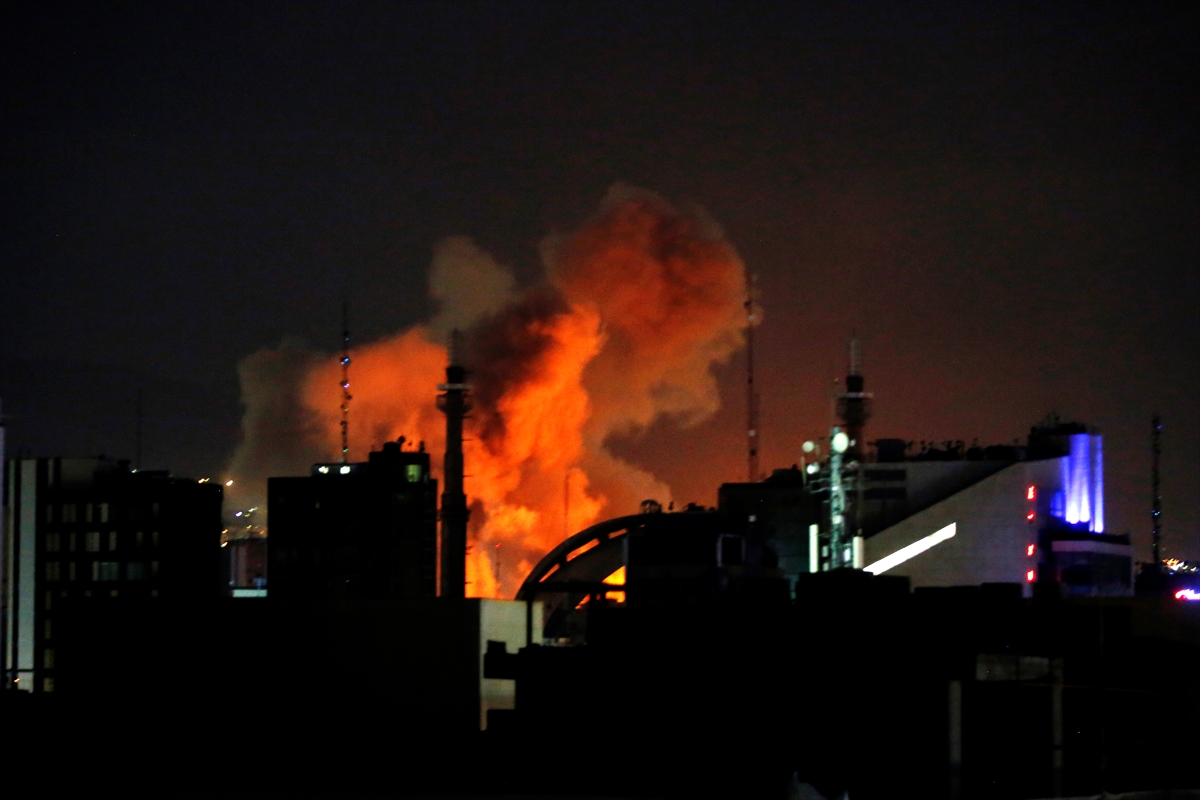
[Photo: Smoke rises after explosions rocked multiple areas of Tehran, following Israel’s announcement of new attacks on Iran, on March 01, 2026. Photojournalist: Fatemeh Bahrami/AA]