By Middle East Correspondent
London, (The Muslim News): The United Arab Emirates has announced it will withdraw its remaining forces from Yemen, marking a major rupture within the Saudi-led coalition and underscoring escalating tensions between the two Gulf allies following a Saudi airstrike on the southern port of Mukalla.
The decision came hours after Saudi Arabia revealed details of a coalition bombing targeting what it described as a UAE-linked shipment of weapons and military vehicles destined for Yemen’s separatist Southern Transitional Council (STC). Riyadh accused Abu Dhabi of backing the group’s recent military advances in southern Yemen, which Saudi officials said posed a direct threat to the Kingdom’s national security.
In a statement on Tuesday, the UAE Ministry of Defence said it had conducted a “comprehensive assessment” of its role in Yemen and had decided to terminate what it described as its remaining “counterterrorism” mission in the country. The ministry said the withdrawal would be carried out “of its own volition” and in a manner that ensured the safety of Emirati personnel.
The announcement followed mounting pressure from both Yemen’s internationally recognised government and Saudi Arabia. Yemen’s Presidential Leadership Council, headed by Rashad al-Alimi, formally demanded that all Emirati forces leave
Yemeni territory within 24 hours, a call that was publicly backed by Riyadh.
Earlier the same day, Saudi-led coalition forces struck the port of Mukalla, targeting two vessels that Saudi officials said were carrying more than 80 military vehicles along with containers of weapons and ammunition. Coalition spokesman Major-General Turki al-Maliki said the shipment had arrived from the UAE port of Fujairah and that Emirati personnel and equipment had been transferred to the al-Rayyan air base without Saudi coordination.
Al-Maliki said the operation was conducted in line with the coalition’s rules of engagement and did not result in casualties.
Saudi Arabia later expressed disappointment at what it described as UAE pressure on the STC to launch military operations in the southern provinces of Hadramout and Mahara, both strategically sensitive regions bordering or near the Kingdom. In a statement, the Saudi Ministry of Foreign Affairs said such actions constituted a “red line”.
“Any threat to the Kingdom’s national security is a red line, and the Kingdom will not hesitate to take all necessary steps and measures to confront and neutralise any such threat,” the ministry said, urging the UAE to halt all military and financial support to Yemeni factions.
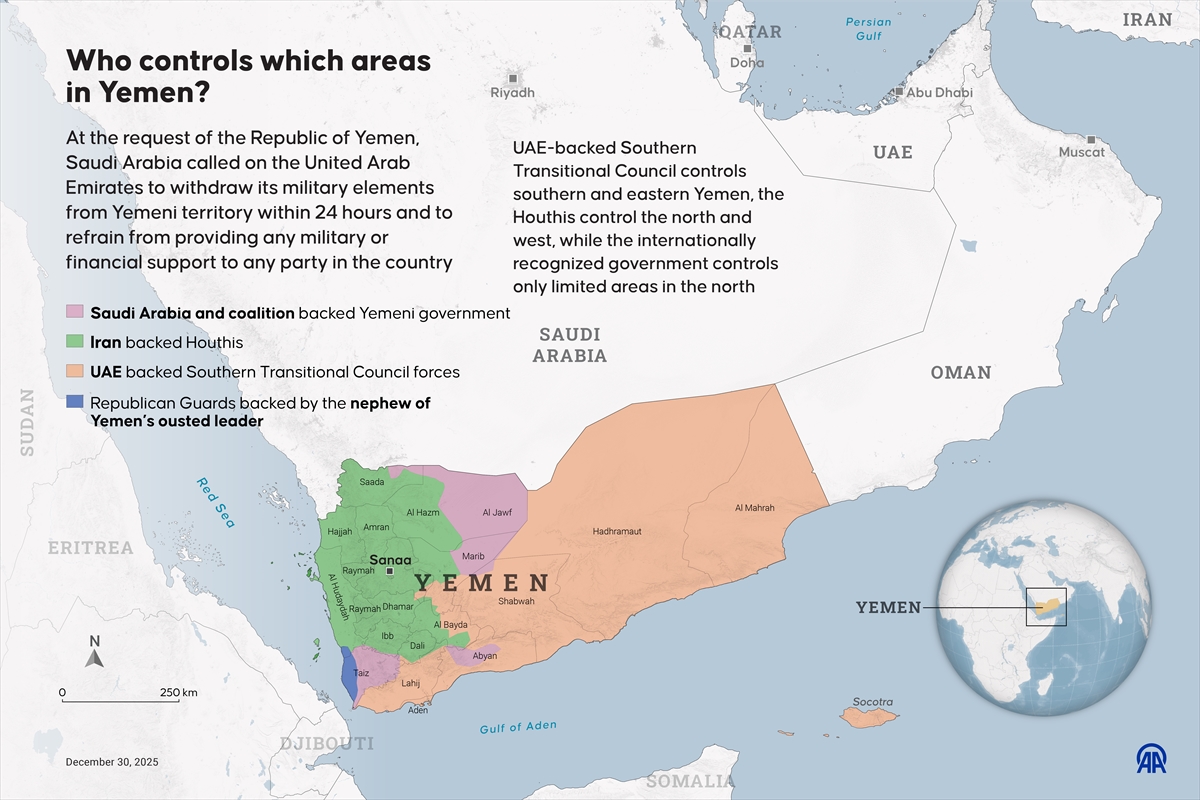
The STC, which initially aligned with the Saudi-backed government against the Houthi movement, has in recent weeks seized large swathes of southern Yemen, breaking years of political deadlock and challenging the authority of the recognised government. The group is seeking an independent southern state, a goal long opposed by Riyadh.
Following the Mukalla strike, al-Alimi cancelled a defence agreement with the UAE and imposed a 72-hour air, sea and land blockade, along with a temporary no-fly zone. In a televised address, he said it had been “definitively confirmed” that the UAE had directed and supported the STC’s military escalation.
Saudi Arabia endorsed the move, reinforcing its demand for a full Emirati withdrawal.
The UAE, however, said it had been surprised by the Saudi airstrike and denied that the shipments contained weapons for the STC, insisting they were intended for Emirati forces. Abu Dhabi said it remained committed to regional stability and to Saudi Arabia’s security, and called for de-escalation based on verified facts.
Regional actors moved swiftly to calm tensions. Qatar welcomed statements from both Riyadh and Abu Dhabi, describing them as a sign of commitment to regional stability and Gulf Cooperation Council principles. Saudi Foreign Minister Prince Faisal bin Farhan also held calls with US Secretary of State Marco Rubio and Pakistan’s Foreign Minister Ishaq Dar to discuss the unfolding crisis.
The episode has laid bare widening fractures within a coalition formed in 2015 to fight the Iran-aligned Houthis, who continue to control much of northern Yemen. While the UAE significantly reduced its troop presence in 2019, its formal announcement of withdrawal now signals a decisive end to its military role in the conflict.
Despite the diplomatic fallout, the STC remains defiant. Its spokesman, Anwar al-Tamimi, said the group had “no intention of withdrawing” from territory it has seized, warning that any move against its forces would be met with resistance.
The UAE’s withdrawal, however, marks a turning point in Yemen’s war, raising fresh questions about the future of the Saudi-led coalition and the balance of power in the country’s fractured south.
[An infographic titled “Who controls which areas in Yemen?” created in Ankara, Turkiye on December 30, 2025. Photojournalist: Murat Usubal/AA]