By Elham Asaad Buaras
London, (The Muslim News): The United States has paused its military strikes on Iran for a second consecutive night, with President Donald Trump signalling that he is allowing “some space” for diplomacy even as senior military officials warn against a renewed escalation that could trigger a wider regional conflict.
Speaking to NBC News on Sunday, US Ambassador to the United Nations Mike Waltz said Trump was keeping “all options on the table” while diplomatic discussions with Tehran continued.
“The president is keeping all options on the table,” Waltz said, adding that negotiations were taking place “at every level.” Asked whether Trump had ruled out further military action, Waltz replied: “I wouldn’t go that far at all,” insisting that Iran’s leadership should take the president’s warnings seriously.
The diplomatic opening follows growing concerns within the US administration about the costs and consequences of expanding the conflict.
According to CNN, Vice President JD Vance and Chairman of the Joint Chiefs of Staff Gen. Dan Caine urged Trump during a high-level meeting on Friday to avoid returning to full-scale combat with Iran. Caine reportedly outlined a range of military options while warning that continued operations would come with significant strategic and humanitarian risks.
Among the concerns raised were dwindling munitions stockpiles, the likelihood of heavy civilian casualties inside Iran, the potential for a refugee crisis, and the risk of Iranian retaliation against Gulf energy infrastructure and desalination facilities. Officials also reportedly cautioned that any attacks on civilian infrastructure — including roads, bridges, and power plants — could leave millions of Iranians without electricity, food and other essential services.
Trump dismissed concerns about US weapons supplies, telling The Wall Street Journal that America has “far more munitions than anyone in the world, and far more than we need.”
Separate reporting by Axios suggested the military itself had concluded that the current air campaign had largely achieved its immediate objectives.
US Central Command (CENTCOM) commander Gen. Brad Cooper reportedly advised the White House that two weeks of strikes around the Strait of Hormuz had significantly reduced Iran’s ability to threaten commercial shipping and that the designated targets were now “mostly exhausted.”
According to the report, Cooper argued that continuing the bombardment would offer little additional strategic benefit without committing to a much broader war.
Gen. Caine also reportedly warned both Trump and Defence Secretary Pete Hegseth that declining stocks of air-defence interceptors could leave American forces and regional allies more vulnerable to Iranian retaliation.
CENTCOM declined to comment on the reported internal briefing.
No US or Iranian strikes were reported overnight into Sunday, marking the second consecutive night without military exchanges following two weeks of sustained bombardment.
The current pause comes despite continuing tensions surrounding last month’s memorandum of understanding between Washington and Tehran.
The agreement, brokered through Qatari and Pakistani mediation, included a ceasefire and committed both sides to negotiations aimed at ending the conflict.
However, on July 8 Trump declared the memorandum “over,” accusing Iran of violating its terms after attacks on three oil tankers in the Strait of Hormuz and renewed disputes over freedom of navigation through the strategic waterway.
Fresh tensions emerged on Sunday when Iranian media reported that an oil tanker struck a naval mine in the Strait of Hormuz after deviating from a navigation route designated by Tehran.
According to the semi-official Mehr News Agency, citing Defapress, the vessel left the shipping corridor prescribed by Iranian authorities before colliding with the mine. No information was immediately available regarding casualties, the identity of the vessel or the extent of the damage.
Iran had warned on June 26 that vessels transiting the Strait of Hormuz would only be permitted to use routes designated by Tehran, while Washington has continued to insist on unrestricted international navigation through the waterway.
Israeli forces kill nine Palestinians in Gaza
While the US-Iran confrontation showed tentative signs of easing, Israeli military operations continued in the occupied Palestinian territories.
In Gaza, the Health Ministry said nine more Palestinians were killed by Israeli fire during the past 24 hours, including seven people killed in new attacks and two who later died from previous injuries.
Thirty-six wounded Palestinians were also brought to hospitals, bringing the overall death toll since October 2023 to 73,326, with 173,997 people reported injured.
The ministry said many victims remain trapped beneath rubble or stranded in areas inaccessible to ambulance and civil defence crews because of ongoing Israeli attacks.
Although a ceasefire came into effect on October 10, 2025, Gaza’s Health Ministry says Israeli attacks have continued daily, killing at least 1,200 Palestinians and injuring a further 3,888 people since the truce began.
The wider Israeli assault, ongoing since October 2023, has left much of Gaza devastated and its 2.4 million residents facing severe humanitarian conditions.
Israeli settlers set fire to mosque & other sites supported by Israeli Defence Forces
Violence also intensified across the occupied West Bank, where illegal Israeli settlers carried out a series of attacks targeting Palestinian communities and religious sites.
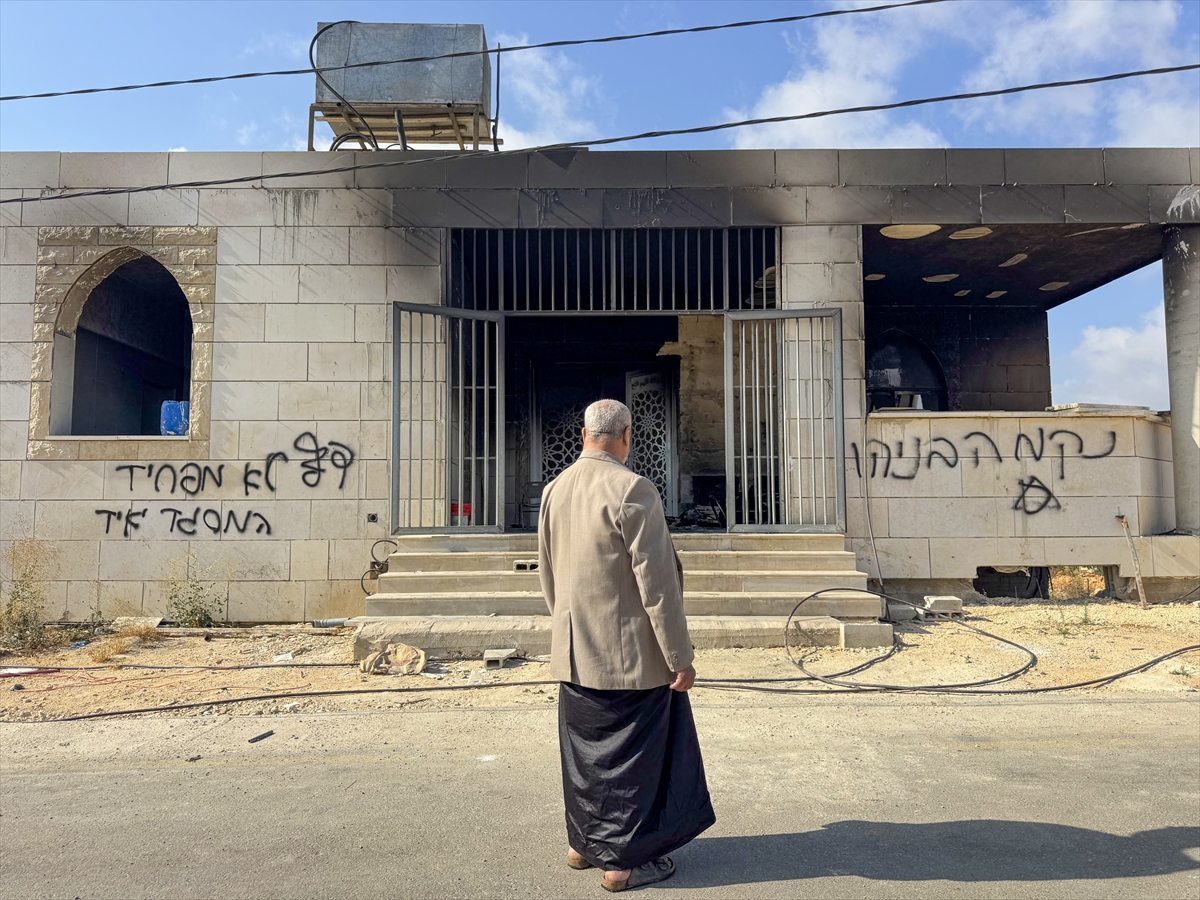
According to the Palestinian news agency WAFA, illegal Israeli settlers set fire to a mosque in the village of Kur, south of Tulkarem, causing partial damage before residents managed to extinguish the blaze. Racist graffiti was sprayed on the mosque’s walls before the attackers fled.
Hours earlier, another group of settlers reportedly set fire to Al-Rahma Mosque, which was under construction in the town of Qusra, south of Nablus. Qusra Mayor Abdel Azim Wadi said construction materials and equipment were destroyed in the attack.
The Palestinian Ministry of Awqaf and Religious Affairs condemned what it described as a “heinous crime”, stating that Israeli occupiers have attacked 45 mosques across the occupied West Bank during 2025 under the protection of the Israeli army.
Elsewhere, in Beit Furik east of Nablus, settlers allegedly set fire to a Palestinian home before firefighters brought the flames under control. Racist slogans calling for revenge against Arabs were also sprayed on nearby property.
The attacks follow several days of escalating violence across the West Bank.
On Friday, Israeli settlers, backed by the army, attacked the town of Tell near Nablus, killing four Palestinians. Two Israelis were also killed during the confrontation, according to Palestinian and Israeli sources.
Israeli forces subsequently imposed a siege on Nablus and surrounding communities, launched mass arrest raids and announced preparations for what officials described as a broad military operation across the occupied territory.
Since October 2023, official Palestinian figures say Israeli forces and settlers have killed at least 1,182 Palestinians in the West Bank, injured thousands more and detained approximately 24,000 people.
The Palestinian Colonization and Wall Resistance Commission reported earlier this month that Israeli settlers carried out 3,488 attacks against Palestinians and their property during the first half of 2026 alone, including shootings, arson attacks, assaults on villages, land seizures and the establishment of settlement outposts, leaving 17 Palestinians dead.
Palestinian officials say the escalating violence forms part of a broader effort to facilitate the formal annexation of the occupied West Bank, further undermining prospects for an independent Palestinian state in line with longstanding United Nations resolutions.
[Photo: A view of fire damage and Hebrew graffiti at Al-Rahmah Mosque after an arson attack by illegal Israeli settlers in the village of Kusra, south of Nablus in occupied West Bank, Palestine on July 26, 2026. The attack damaged parts of the mosque, while slogans were sprayed on its exterior walls. Photojournalist: Hisham K. K. Abu Shaqra/AA]