By Mohammed Al-Jabri
Sana’a, YEMEN (The Muslim News): The centre of gravity in Yemen’s war has shifted within days from the relatively static internal front lines to the western coast and Bab Al-Mandab, after forces of Ansar Allah, known as Houthis, reached the city of Makha, the town of Dhubab and Mayyun Island, located within the strait, following the withdrawal of internationally recognised government forces from their positions in the area.
Reuters reported on Friday that the Houthis had reached Mayyun Island, after government forces withdrew from it. Two government sources also said the group had taken control of Dhubab, located opposite the island. Houthi forces had entered Makha on Thursday, after previously reaching the Henaish Islands in the southern Red Sea.
These developments give the Houthis a significant land and island presence on the Yemeni side of Bab Al-Mandab, along with greater capacity to monitor the passage and threaten vessels or influence the calculations of shipping companies and countries concerned with Red Sea security.
The International Organization for Migration said the latest escalation had displaced at least 46,000 people within a single week, particularly from areas along the western coast and in Taiz, amid growing difficulties in reaching affected families.
However, as of Friday evening, the group had not issued a detailed military statement announcing control of Mayyun Island.
The end of the 2022 lull
The escalation marks a departure from the relative calm that followed the United Nations-brokered truce in April 2022. The truce halted offensive ground, air and naval operations, as well as cross-border attacks during its formal period.
On September 10, the UN Special Envoy for Yemen, Hans Grundberg, told an emergency session of the Security Council that the renewed war “effectively marks the end of the relative calm” Yemen had experienced for more than four years, warning that the country was entering a new and more dangerous phase of the conflict.
Grundberg added that the Houthi takeover of Makha had given the group “a direct presence on the approaches to one of the world’s most important straits”, amid international concerns about the implications for freedom of navigation.
Thus, the value of territory in Yemen’s war is no longer linked solely to control over cities, mountains and inland roads. It is also increasingly measured by its ability to open the way towards ports, islands and maritime corridors.
Who was in control?
Before the Houthis entered the city, Makha, located about 75 kilometres from Bab Al-Mandab, served as the most important political, military and logistical headquarters of the National Resistance, led by Presidential Leadership Council member Tareq Saleh, as part of the joint forces opposing the group along the western coast. Arab coalition-backed forces had taken the city and its port from the Houthis in early 2017, after which Makha gradually became a principal base for Tareq Saleh’s forces and his local governing institutions.
The forces deployed along the coast comprised several formations, including the National Resistance, the Giants Brigades, the Nation’s Shield Forces and units from the Taiz Axis, alongside other components of the joint forces.
The fall of Makha was not the result of a single assault on the city, but came at the end of a series of simultaneous breakthroughs along a lengthy coastal front. The Houthis advanced through southern Hodeidah Governorate and western Taiz, taking control of Hays, Khokha and other positions. This placed the defending forces under increasing pressure and threatened supply and communication routes between Makha and the Taiz hinterland.
According to government officials, the forces withdrew south after continued defence of Makha threatened to isolate or encircle their units. Al Jazeera reported that the government had called in reinforcements and attempted to halt the offensive, but the superior military pressure ultimately led to the Houthis entering the city and its port.
The Houthis therefore entered Makha after the defending forces retreated, rather than taking the city in a prolonged street battle. There is still no independent military account that accurately explains the commanders’ decisions or the extent of the defensive breakdown.
After the withdrawal from Makha, pressure quickly shifted to Dhubab and Mayyun. Government sources said forces withdrew from the island before Houthi fighters arrived by boat, while other units deployed along the Bab Al-Mandab coast.
Bab Al-Mandab and Energy
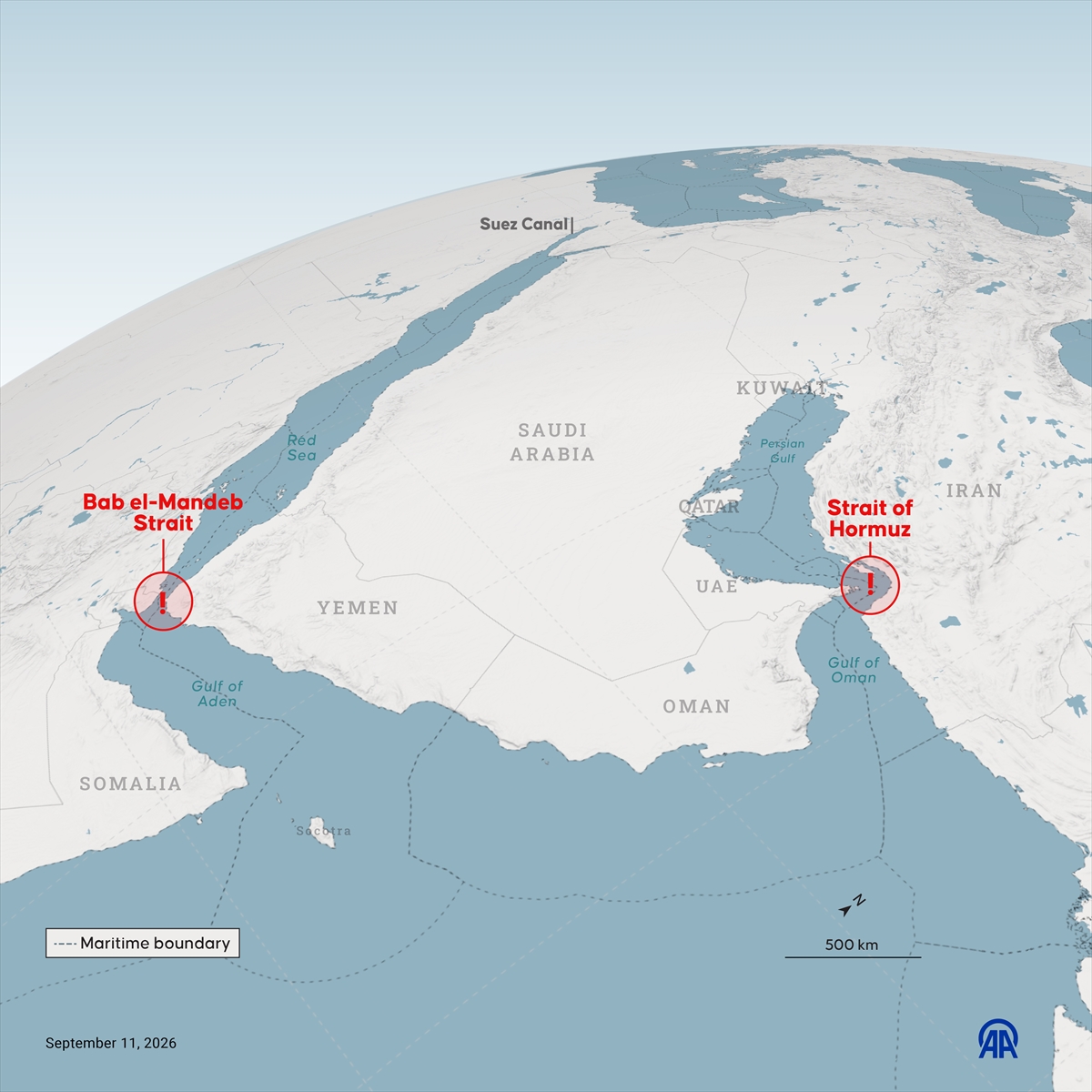
The strategic importance of Bab Al-Mandab stems from its role as a link between the Indian Ocean and the Gulf of Aden on one side and the Red Sea and Suez Canal on the other, connecting Asian and European trade routes with energy flows originating in the Gulf and the Red Sea.
Although the number of vessels transiting the strait has declined since the beginning of the Red Sea crisis, recent data indicate that its importance to energy trade increased again in 2026. The US Energy Information Administration estimated that oil and petroleum-product flows through Bab Al-Mandab rose to approximately 8.1 million barrels per day in the second quarter of 2026, following the rerouting of part of Saudi Arabia’s exports through the East-West Pipeline to the Red Sea port of Yanbu.
Regarding navigation, Yahya Saree, the military spokesman for Houthi movement, said on Friday, September 11, that maritime navigation remained safe for all shipping companies except Saudi vessels subject to a previously announced ban.
The group had warned shipping companies in July against loading or unloading cargo at Saudi ports, suggesting that vessels violating the warning could be targeted.
Tareq Saleh’s warning
Before the latest developments, Tareq Saleh had warned that a Houthi seizure of Mayyun Island could enable the group to exert influence over Bab Al-Mandab. In a field interview with CNN, he said that removing the group from the island after it had established a presence there could require “a massive international force and naval forces”, warning that the cost to global trade would rise if action were delayed.
However, the speed of the withdrawal from Makha and Mayyun has raised questions about the readiness of the forces under his command, particularly since media outlets affiliated with the National Resistance had stated about a month earlier that the military and security situation in Makha and along the western coastal fronts was “under full control”, and that the forces were at the highest level of readiness.
The calculations of both sides
For the Houthis, the coastal advance delivers a combination of overlapping gains: expanding the area under their control, weakening one of the most prominent military forces opposing them, seizing logistical positions near the strait, and turning maritime geography into a pressure tool in dealing with the Yemeni government, Saudi Arabia and international powers.
Reuters quoted Yemeni, Iranian and regional sources as saying that the Houthi advance had come under direct guidance from Iran’s Islamic Revolutionary Guard Corps, and that Tehran had provided support, funding, weapons and experts.
For the Yemeni government, meanwhile, the challenge extends beyond retaking Makha. Preventing the consolidation of the new reality requires reorganising the various forces along the coast, securing supply lines, providing air defences and maritime surveillance, and coordinating among the National Resistance, the Giants Brigades, the Nation’s Shield Forces, the Taiz Axis and other units.
The legitimate government forces announced that they would use weapons and aircraft against Houthi forces in strategic areas and urged civilians to avoid the road between Taiz and Makha and to stay away from equipment and positions belonging to the group.
[Infographic showing “Bab el-Mandeb Strait and Strait of Hormuz” created in Ankara, Turkiye on September 11, 2026. Photojournalist: Bedirhan Demirel/AA]