By Harun Nasrullah
LONDON, (The Muslim News): A Palestinian woman was killed and several others injured Monday in an Israeli drone strike on a home in central Gaza City, as Israel continued attacks despite a ceasefire and the UN warned that restrictions and funding shortages were leaving Gaza dangerously unprepared for the approaching winter.
Medical sources told Anadolu that the woman was killed and several others wounded when an Israeli drone struck the rooftop of a home and a tin-roofed room in the Al-Nafaq area. Some of the injured were in critical condition.
Earlier Monday, a Palestinian was seriously wounded after being shot in the head by Israeli forces near the Six Martyrs Roundabout west of the Jabalia refugee camp, according to a medical source.
Israeli army artillery also shelled eastern areas of Gaza City at dawn, while Israeli naval forces opened heavy fire towards the coast of Gaza City, Deir al-Balah in central Gaza and Khan Younis in southern Gaza, witnesses said. No injuries were reported in the naval attacks.
According to Gaza’s Health Ministry, at least 1,421 Palestinians have been killed and nearly 5,000 injured by Israeli fire since the ceasefire ag reement came into effect on October 10, 2025.
The ministry said the overall death toll from Israel’s war on Gaza since October 2023 had exceeded 74,000, with more than 175,000 injured, while around 90 per cent of the enclave’s civilian infrastructure has been destroyed.
UN warns of winter shelter shortages due to Israeli restrictions
The UN warned Monday that continued Israeli restrictions and funding shortfalls were severely limiting preparations for Gaza’s winter season, with available tents and shelter materials sufficient for only about 50,000 households.
“The Israeli authorities need to approve critical items, and they need to do so quickly,” UN spokesman Stephane Dujarric told reporters at a news briefing.
“Our humanitarian colleagues warn that funding shortfalls, as well as continued Israeli restrictions, are severely limiting preparations for the rainy season,” he said.
Dujarric said humanitarian partners had established community heating points at 88 displacement sites during the first three weeks of September. The sites collectively host about 10 per cent of Gaza’s population, with 170 reinforced tents installed.
However, he said many more tents, shelter kits, heaters and sustained fuel supplies were needed, adding that thousands of heating points would be required when temperatures fall.
Humanitarian agencies are also replacing worn-out shelters, unblocking drainage systems and identifying voluntary relocation options for people living in flood-prone areas.
Dujarric said funding shortages meant that tents, tarpaulins and sealing-off kits already available or being procured would support only about 50,000 households, in addition to supplies that member states and the private sector may provide.
The ceasefire agreement reached in October 2025 halted much of the fighting but has not prevented continued Israeli attacks or restrictions on the entry of food, medicine and shelter materials into Gaza, where the vast majority of the population remains dependent on humanitarian assistance.
Israeli settlers storm Al-Aqsa
Scores of Israeli settlers stormed Al-Aqsa Mosque compound in occupied East Jerusalem on Monday as Israeli authorities forced Palestinian businesses in the Old City to close to allow Jewish prayers during the Sukkot holiday.
Videos circulated on social media showed groups entering the mosque compound and performing prayers, singing and other religious rituals, particularly in the eastern section.
The incursion followed Sunday’s entry by more than 1,500 Israeli settlers, including National Security Minister Itamar Ben-Gvir, according to the Islamic Waqf Department in Jerusalem and Palestinian media.
Palestinian presidential spokesman Nabil Abu Rudeineh condemned Sunday’s incursion, describing it as a “dangerous provocation” and warning of the risk of a wider religious conflict.
Al-Aqsa Mosque is Islam’s third-holiest site. Jews refer to the wider compound as the Temple Mount and regard it as the site of two ancient Jewish temples.
Israeli settler incursions have increased during the Jewish holiday period, which began with Rosh Hashanah on September 12-13, followed by Yom Kippur on September 21-22. Sukkot runs from September 26 to October 2, followed by Simchat Torah on October 3.
Palestinian businesses ordered to close
Monday’s incursion came as Israeli authorities ordered dozens of Palestinian shopkeepers to close their businesses and residents to remain inside their homes in the Cotton Merchants Market, a route leading to Al-Aqsa Mosque.
The Association for Civil Rights in Israel said dozens of Palestinian shop, cafe and restaurant owners had been ordered to close during the Sukkot holiday to allow Jewish prayers to take place in the market.
It said around 200 Palestinians living along the prayer route had also been ordered not to leave their homes while prayers were being held.
The market contains 56 shops, cafes and restaurants, according to the association.
Traders said they had previously been required to close for limited periods but that this was the first time they had been ordered to close throughout the holiday period.
The association said Israeli police first informed traders of the closures by telephone before officers visited businesses and told owners directly that they had to close on most days of the holiday.
It said police had not provided a written order or detailed instructions, telling traders only that the measure was intended to facilitate Jewish prayers in the market.
The association said the restrictions were disproportionate and that authorities could instead alter the prayer route, shorten prayer hours or deploy additional forces to protect traders and their businesses.
Tal Hassin, an attorney with the association, said Palestinian traders should not be forced to close their businesses and residents ordered to remain in their homes to facilitate prayers.
Palestinians regard occupied East Jerusalem, where Al-Aqsa Mosque is located, as the capital of a future Palestinian state. Israel occupied East Jerusalem in 1967 and annexed it in 1980, a move not recognised by the UN.
Israeli attacks continue in southern Lebanon
Meanwhile, the Israeli army carried out what Lebanon’s National News Agency described as a “massive” explosion in the southern Lebanese town of Mansouri on Monday.
The blast caused strong tremors in the area and was heard in Tyre and surrounding villages, the agency reported.
A Lebanese army engineering unit also dismantled an Israeli surveillance camera equipped with a solar power system on the outskirts of Wadi Zibqin in the Tyre district.
In the Nabatieh district, Israeli warplanes carried out an airstrike on an area between Mayfadoun and Zawtar al-Sharqiya. No casualties or material damage were reported.
The attacks came despite a US-brokered framework agreement signed by Israel and Lebanon on June 26.
The agreement provides for the gradual withdrawal of Israeli forces from Lebanese territory and the deployment of the Lebanese army in areas from which Israeli forces withdraw.
Lebanese authorities say Israeli attacks since March 2 have killed at least 4,386 people, injured 12,407 and displaced more than one million.
US-Iran talks
Separately, a US official told American media outlets Axios and CNN Monday that US President Donald Trump was willing to offer sanctions relief and release frozen Iranian funds in exchange for concrete progress on Iran’s nuclear programme.
Washington was engaging in “positive and constructive” talks through mediators, CNN quoted the official as saying, while stressing that negotiators would not finalise an agreement unless nuclear-related concerns were fully addressed.
The White House did not immediately respond to Anadolu’s request for comment.
The reported diplomatic opening came after Trump rejected an Iranian proposal on Saturday aimed at easing tensions and reopening the strategic Strait of Hormuz, describing Tehran’s conditions as unacceptable amid the seven-month Iran war.
Trump said Sunday that he expected further negotiations with Tehran this week and accused Iranian officials of having “overplayed” their hand in earlier talks.
Five released on bail after RAF Fairford arrests
In Britain, five men arrested near RAF Fairford in Gloucestershire have been released on police bail while counter-terrorism officers continue investigating a security incident at the military base. Some media and politicians alleged suspected involvement of Iran. However, no Iranians were arrested.
Head of Counter Terrorism Policing Laurence Taylor said the men were released following “extensive interviews and inquiries” but remained under investigation and were subject to conditions governing their movement and contact with others.
The men were initially arrested on suspicion of explosives offences and later arrested on suspicion of preparing a terrorist act, Taylor said.
Police have examined three vehicles linked to the men with assistance from military and forensic experts.
A 400-metre cordon remained in place outside Whelford, a village next to RAF Fairford, while a significant police presence remained at the airbase’s main entrance.
Taylor said police were considering the incident from “every angle”, including whether it had been carried out by proxies or individuals working on behalf of a foreign state.
The investigation comes amid heightened security around RAF Fairford, which has been used since February to support operations against Iran.
Iran has rejected suggestions that it was linked to the arrests.
The Iranian Embassy in London said it “categorically rejects and strongly condemns” what it described as speculation linking Iran to the five suspects.
Iraqi Airways resumes Iran flights
Iraqi Airways also resumed flights between Najaf International Airport and Iranian airports on Monday, according to Iraqi state media.
The resumption followed what the Iraqi News Agency described as “intensive efforts” by Prime Minister Ali al-Zaidi.
Iraqi Ambassador to Iran Yasser Abdul Zahra Al-Hajjaj had earlier said Najaf International Airport would resume receiving Iranian flights, the agency reported.
Iraq, Azerbaijan, Georgia, Oman and the UAE had recently suspended flights to and from Iran following new US sanctions on Iran’s aviation sector.
Iran has filed a complaint with the International Civil Aviation Organization over the US restrictions, according to Abuzar Shiroudi, head of Iran’s Civil Aviation Organization.
Shiroudi told Iranian IRNA news agency that Tehran had submitted supporting documents and was pursuing legal and diplomatic efforts to lift the restrictions and restore previously operated routes.
He said direct flights to European countries faced restrictions, with travellers using regional hubs, particularly Istanbul, as alternatives.
Iran and Iraq had also discussed operating flights between Tehran and Najaf instead of Tehran and Baghdad, although the Tehran-Najaf route was subsequently cancelled before Monday’s reported resumption.
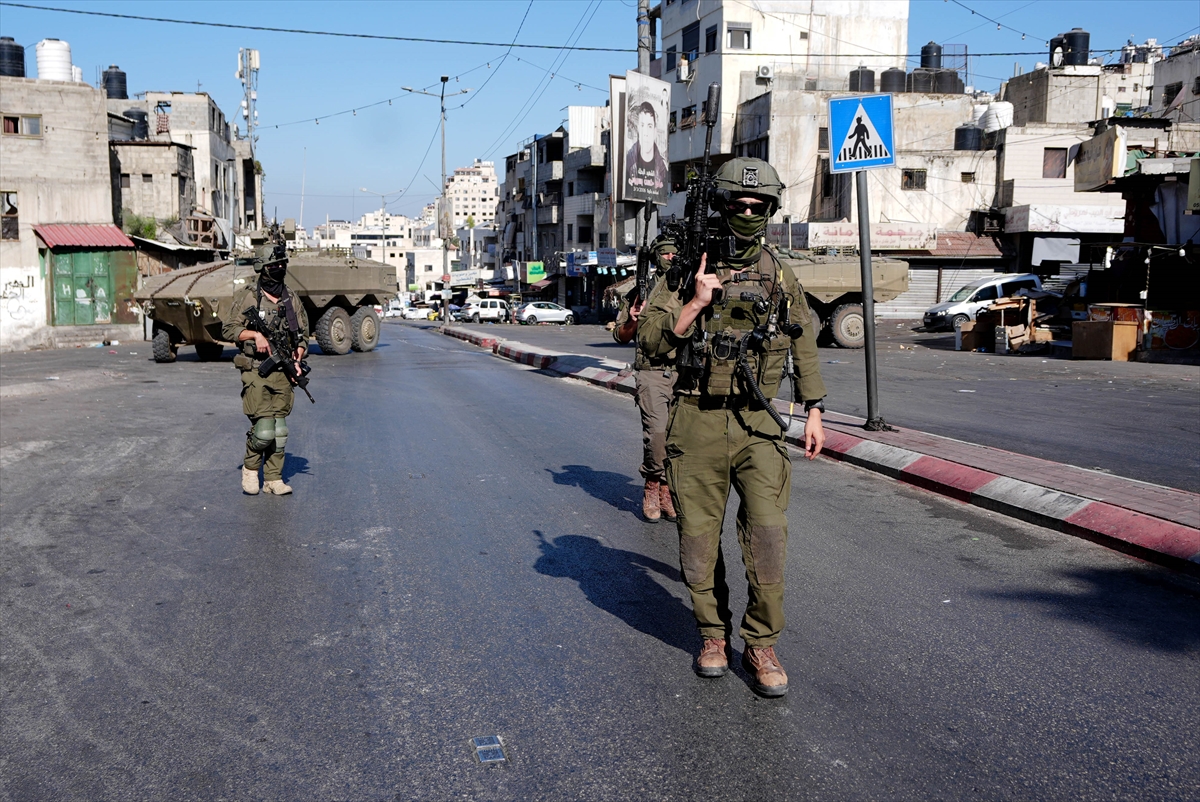
[Photo: Israeli soldiers raid on the Ain Refugee Camp in Nablus, West Bank, Palestine on September 17, 2026. Israeli forces restricted the movement of local Palestinians during the operation in the refugee camp. Photojournalist: Issam Rimawi/AA]