By Middle East Correspondent
LONDON, (The Muslim News): Iran’s Ambassador to the UN said Wednesday that more than 1,348 civilians have been killed and over 17,000 injured since the US and Israel launched attacks on Iran, as the conflict continued to escalate across the Middle East.
Amir Saeid Iravani told a UN meeting that the ongoing military strikes had caused widespread civilian casualties and extensive damage to infrastructure in several parts of the country. He said the attacks violate international law and the UN Charter and urged the international community to take action to halt the military operations.
The latest figures come amid a rapidly widening regional crisis triggered by the joint US–Israeli offensive, which began on February 28.
As the scale of the campaign has become clearer, an Israeli military official told The Washington Post that Israel has carried out more than 6,000 airstrikes targeting around 3,400 sites across Iran since the start of the operation. According to Israel, the strikes targeted military installations, infrastructure linked to Iran’s missile capabilities and other facilities described as posing a security threat. According to the official, the attacks form part of a broader effort to degrade Iran’s military capabilities and prevent it from deploying missile systems against Israel. However, civilian infrastructure has also been hit.
Iran has responded with missile and drone attacks targeting Israel and countries hosting US military assets across the region, widening the conflict well beyond its initial battlefield.
Qatar said Wednesday it came under a new wave of Iranian attacks involving nine ballistic missiles and several drones.
“Our Armed Forces, by the grace of God, successfully intercepted all drones and (8) ballistic missiles, while one missile fell in an uninhabited area,” the Qatari Defence Ministry wrote on the social media platform X.
Similar incidents were reported elsewhere in the Gulf.
Saudi Arabia said its forces intercepted and destroyed three ballistic missiles launched toward Prince Sultan Air Base southeast of Riyadh. In a separate statement, the kingdom’s Defence Ministry said air defences also intercepted three drones over eastern parts of the country.
Kuwait likewise reported activating its air defence systems in response to incoming threats.
“The General Staff of the Kuwaiti Armed Forces confirms that any explosions that may be heard are the result of air defence systems intercepting hostile targets,” the Defence Ministry said in a statement on X, urging residents to follow official safety instructions.
While Gulf states faced incoming missiles, the conflict also intensified along Israel’s northern frontier.
The Lebanese group Hezbollah [Hizbullah], in coordination with Iran, launched a barrage of about 100 rockets from Lebanon toward northern Israel, according to Israel’s public broadcaster KAN. Air-raid sirens sounded in Haifa, Acre, the Krayot area and several towns in northern Israel.
The Israeli military said warning sirens were also activated across central Israel, including Tel Aviv and Jerusalem, after rockets were detected being launched simultaneously from Lebanon and Iran.
Israeli media reported that a rocket was intercepted over central Israel, while others landed in open areas in the Galilee. Videos circulating on social media appeared to show rockets striking locations in northern Israel and one falling in Tel Aviv, though no immediate details on casualties were provided.
The Israeli army confirmed the launches and said its warplanes were simultaneously striking what it described as rocket launch platforms and infrastructure across Lebanon while intercepting incoming projectiles. Hezbollah later announced the beginning of an operation it called “Al-Asf Al-Ma’koul (The Devouring Storm).”
The growing exchanges along the Israel–Lebanon border have raised concern at the United Nations.
Jean-Pierre Lacroix told an emergency meeting of the UN Security Council that Israeli air violations over southern Lebanon had reached their highest level since hostilities resumed.
“On 9 March alone, UNIFIL recorded 159 air violations, the highest number observed in a 24-hour period since the resumption of hostilities,” Lacroix said.
He added that since March 1, UN peacekeepers had recorded around 4,120 trajectories, including 2,733 crossing from south to north across the Blue Line and 323 Israeli air attacks.
Israeli ground forces have also reinforced positions north of the Blue Line and carried out incursions into Lebanese territory in locations including Yarun, Hula, Khiyam and Markaba.
The deteriorating security situation has significantly restricted the operations of the UN Interim Force in Lebanon (UNIFIL).
“Peacekeepers have largely been confined to their bases with some spending significant periods of time in shelter,” Lacroix said, warning that the conditions “seriously impede UNIFIL’s freedom of movement and limit the Mission’s monitoring and reporting ability.”
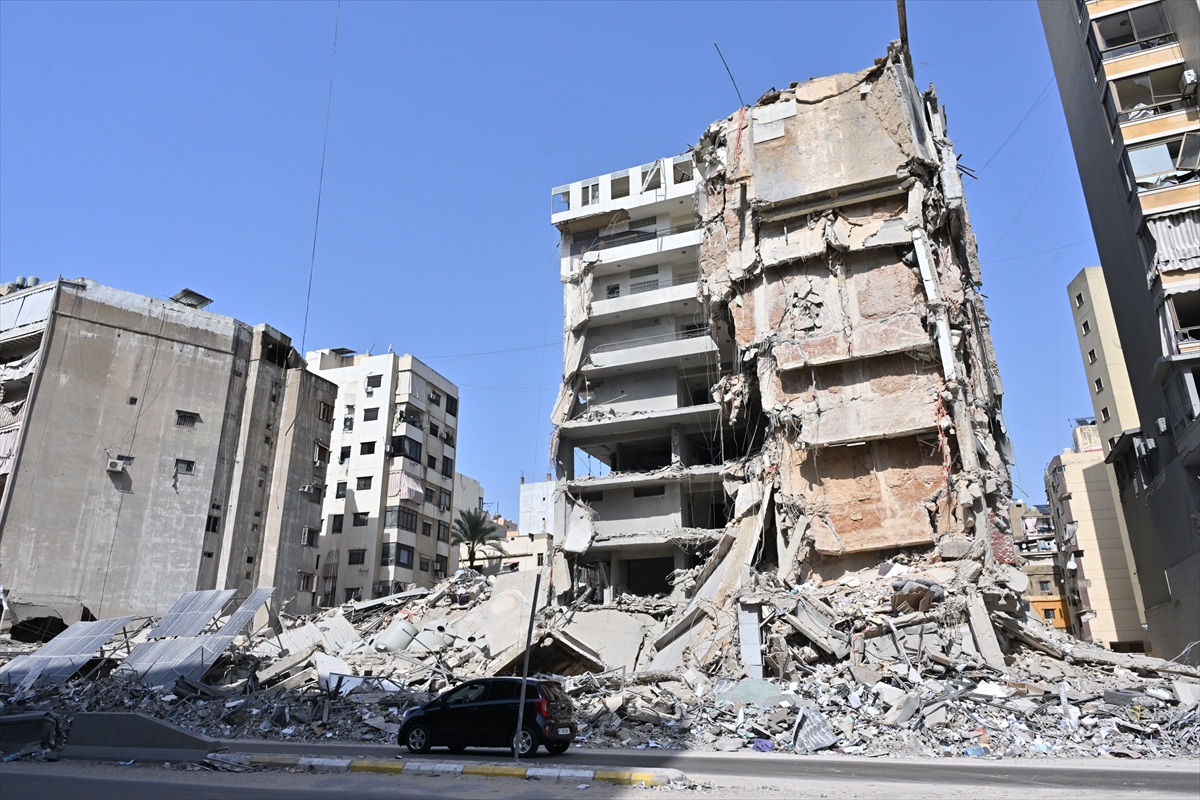
Lebanon’s Health Ministry said Israeli strikes since March 2 have killed 634 people and injured 1,586 others. It added that 816,700 people have applied to shelters, with around 125,800 people currently housed in 580 emergency shelters.
Amid the escalating fighting, US President Donald Trump said Washington would continue military operations against Iran despite claiming that the campaign had already achieved decisive results.
“We’re not leaving until that job is finished. And it’s going to be very fast. Going to be very fast,” Trump said during an event in Kentucky.
“We’ve won. Let me tell you, we’ve won. You know, you never like to say too early you won. We won. We won the bet—In the first hour, it was over.”
Trump said US forces had destroyed 58 Iranian naval ships and described the operation as an “excursion.”
“You know what an excursion means? We had to take a little trip to get rid of some evil, very evil people. It should have been done 47 years ago. They’ve been killing our people,” he said.
Iran’s President, Masoud Pezeshkian, meanwhile, said the only path to ending the conflict was through recognition of Iran’s rights and international guarantees against further attacks.
“I reaffirmed Iran’s commitment to peace in the region. The only way to end this war—ignited by the Zionist regime & US—is recognising Iran’s legitimate rights, payment of reparations, and firm int’l guarantees against future aggression,” he wrote on X following calls with the leaders of Russia and Pakistan.
Diplomatic efforts to address the crisis at the United Nations also faltered on Wednesday after the Security Council failed to adopt a draft resolution mourning the “tragic loss of life” during the ongoing hostilities and calling for an immediate halt to military actions.
The resolution, drafted by Russia, received four votes in favour from Russia, China, Somalia and Pakistan, while the United States and Latvia voted against it. Nine countries abstained, including the United Kingdom and France.
Vassily Nebenzia sharply criticised the outcome, describing the vote as “surreal” and “a disgrace,” and arguing that opposition to the resolution reflected political pressure within the Council.
US envoy Mike Waltz rejected the criticism, accusing Moscow of attempting to shield Tehran.
“The Russian Federation knew it did not have the votes to adopt its resolution today, yet it insisted on proceeding to a vote,” Waltz said, adding that Washington would continue efforts “to hold the Iranian regime to account and to bring to light its destabilising and unlawful actions.”
[Photo: A view of destruction of residential area following the Israeli attacks on Dahieh area of Beirut, Lebanon on March 12, 2026. Photojournalist: Houssam Shbaro/AA]