By Ahmed J Versi
London, (The Muslim News): The United Nations has reported an unprecedented rise in grave violations against children in armed conflicts worldwide, with Israel and the Occupied Palestinian Territory recording the highest number of verified incidents in 2025.
According to a forthcoming UN report on Children and Armed Conflict, 38,558 grave violations affecting 24,174 children were verified during the year, representing the highest number recorded since the monitoring mechanism was established three decades ago.
The report documents violations including killings, injuries, recruitment by armed groups, abductions, denial of humanitarian access, and attacks on schools and hospitals.
A senior UN official stated that government forces were identified as the primary perpetrators of violations against children for the first time in the history of the mandate. Among government actors, Israeli forces ranked first, followed by Russian forces operating in Ukraine.
The report recorded 12,445 verified grave violations in Israel and the Occupied Palestinian Territory, including thousands affecting Palestinian children in Gaza, the West Bank and East Jerusalem.
UN Secretary-General Antonio Guterres expressed alarm at what he described as the scale of violations.
“I am shocked by the ongoing grave violations in the Gaza Strip, and I am deeply alarmed by the escalating violence in the West Bank, including East Jerusalem,” Guterres said.
The report also highlighted the growing role of advanced military technologies, including artificial intelligence-enabled systems, warning that their expanding use has increased risks to children in conflict zones.
Continuing Israeli violence despite Gaza ceasefire
Despite a ceasefire that took effect in October 2025, violence has continued in Gaza, with repeated reports of Israeli strikes causing civilian casualties.
Medical sources reported that two Palestinians were killed and six others wounded when an Israeli drone struck a beachfront area in Al-Mawasi near Khan Younis. Witnesses said the area was crowded with displaced families seeking relief from extreme summer temperatures and difficult conditions in overcrowded camps.
A day later, another drone strike in central Gaza City reportedly killed three Palestinians and injured several others after a civilian vehicle was targeted near the Abu Khadra intersection.
According to Gaza health authorities, more than 1,000 Palestinians have been killed and over 3,000 injured in incidents described as ceasefire violations since the truce began.
Humanitarian conditions remain severe. Hundreds of thousands of Palestinians continue to live in tents and temporary shelters after extensive destruction caused by the war. Large sections of Gaza’s civilian infrastructure remain damaged or destroyed, limiting access to healthcare, sanitation, electricity and housing.
The UN report also raised concerns over restrictions on humanitarian access, documenting thousands of incidents affecting aid delivery operations in Gaza and other Palestinian territories.
US-Iran agreement signals potential diplomatic breakthrough
Amid ongoing regional tensions, Iran announced that it had finalized a 14-point memorandum of understanding with the United States intended to establish a framework for ending hostilities and reducing regional instability.
Iranian Foreign Ministry spokesman Esmail Baghaei said the agreement became official after being signed by both governments. According to Iranian officials, negotiations under the framework will focus on nuclear issues, sanctions relief and regional security arrangements.
The agreement reportedly establishes an initial sixty-day negotiation period, with the possibility of extension should further discussions be required.
Iranian officials stated that implementation of certain confidence-building measures had already begun, including steps related to maritime access and navigation.
The development follows months of heightened tensions following attacks by Israel and the United States, raising cautious hopes that a broader diplomatic process could emerge.
Iranian leadership divided but supportive
Iran’s Supreme Leader, Mojtaba Khamenei, publicly acknowledged reservations about the agreement but said he ultimately approved it after receiving assurances from President Masoud Pezeshkian and senior national security officials.
In a statement carried by Iranian media, Khamenei emphasized that any future talks with Washington would not amount to accepting American political demands.
He said his approval was based on commitments by Iranian officials to safeguard national interests and protect what Tehran describes as the “Resistance Front.”
The remarks suggest continuing debate within Iran’s political establishment regarding engagement with the United States, despite official support for the new framework.
Israeli disagreements over US-Iran deal
The emerging diplomatic process has generated significant opposition among some Israeli officials.
National Security Minister Itamar Ben-Gvir rejected suggestions that Israel should halt military operations or withdraw from positions in southern Lebanon as part of a broader regional arrangement.
“We are an independent state,” Ben-Gvir said, arguing that Israeli security considerations must remain paramount regardless of international diplomatic initiatives.
Prime Minister Benjamin Netanyahu likewise indicated that Israel would maintain its security presence in areas it considers strategically important until security objectives are met.
The statements highlight continuing disagreements between Israeli policymakers and the emerging diplomatic framework promoted by Washington.
Washington pushes regional peace initiative
US President Donald Trump described the agreement with Iran as a step toward broader regional stability and expressed optimism about future negotiations.
Trump said the United States expected progress towards a comprehensive ceasefire involving multiple regional actors and reiterated Washington’s commitment to diplomacy.
Vice President JD Vance strongly defended the administration’s approach, criticizing Israeli officials who publicly opposed the agreement.
Vance argued that the United States remains Israel’s most important strategic ally and urged all regional actors to support the peace process.
“The Israelis, just like everybody else, have to respect this peace process,” he said.
The comments reflected rare public tensions between senior US and Israeli officials regarding regional strategy.
Hezbollah says it repelled Israeli attempts to occupy more Lebanese land
In Lebanon, Hezbollah announced that it had repelled multiple Israeli attempts to advance toward areas near Kfartebnit and Ali al-Taher in southern Lebanon.
The group claimed its fighters used rockets, drones and loitering munitions to target Israeli forces, inflicting casualties and forcing withdrawals.
Hezbollah’s statement marked its first significant military announcement in nearly two days and came amid reports that fighting along parts of the Lebanese front had slowed following the US-Iran agreement.
While independent verification of battlefield claims remains difficult, the situation illustrates the continuing fragility of security conditions along Israel’s northern border.
Region at a crossroad
The Middle East enters the second half of 2026 facing a contradictory reality.
On one hand, the humanitarian consequences of ongoing conflicts continue to deepen, particularly for civilians and children. The UN’s latest findings underscore the devastating human cost of prolonged warfare.
On the other hand, diplomatic developments between Washington and Tehran have opened a potential pathway toward de-escalation that could reshape regional dynamics.
Whether these diplomatic efforts can translate into lasting stability remains uncertain. For now, violence continues on multiple fronts even as negotiations offer a glimpse of a possible alternative to conflict.
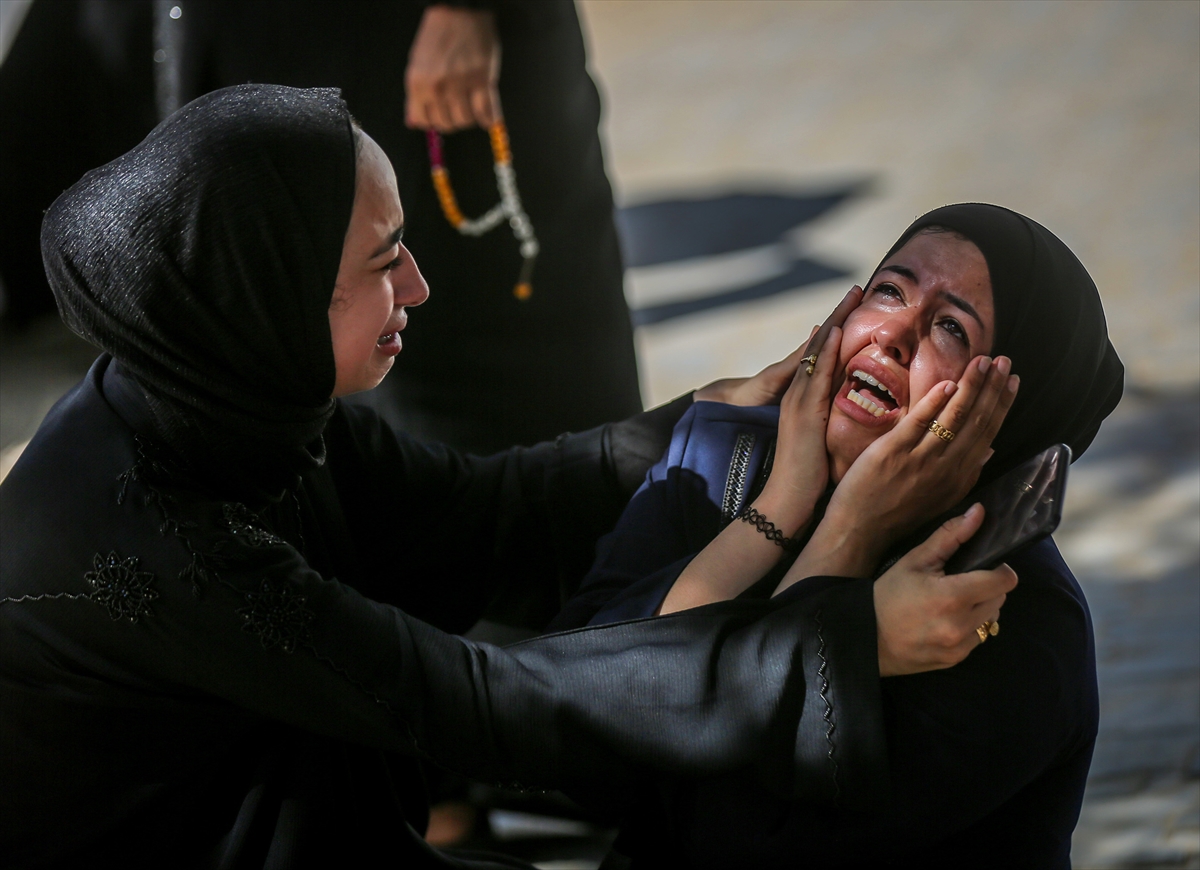
[Photo: Relatives of Palestinian youth Abduljawad Abu Laban, who was killed in an Israeli airstrike targeting a vehicle while he was distributing his wedding invitations, mourn during his funeral ceremony after receiving his body from Al-Shifa Hospital in Gaza City, Gaza, Palestine on June 18, 2026. Photojournalist: Saeed M. M. T. Jaras/AA]