By Ahmed J Versi
LONDON, (The Muslim News): The statements released by London and Ankara following the phone call between Keir Starmer and Recep Tayyip Erdoğan earlier this afternoon, reveal a noticeable divergence in emphasis regarding the current escalation involving Iran and the wider regional crisis.
According to a statement from Downing Street, Starmer “reiterated his strong condemnation of Iran’s ballistic missile attack on NATO ally Türkiye,” and stressed that “it was vital Iran ceased its aggression.” The British readout framed the conversation primarily around Iranian actions and highlighted the United Kingdom’s decision to increase regional military capability to strengthen “defences and stabilisation.” The statement also emphasised plans to deepen defence and security cooperation between the United Kingdom and Türkiye ahead of the upcoming NATO summit scheduled to take place in Türkiye.
However, the official Turkish statement presented a markedly different tone and focus. Erdoğan did not echo the British condemnation of Iran. Instead, he emphasised concern about the broader escalation following attacks by the United States and Israel on Iran, warning that prolonged military interventions could cause “significant damage to regional and global stability.” The Turkish readout highlighted the need for diplomacy and the creation of a “dialogue platform,” underscoring Türkiye’s continuing efforts to pursue a peace-focused approach.
The difference between the two statements is significant. While the British account places Iran at the centre of the crisis and seeks to frame events as Iranian aggression against a NATO ally, the Turkish account avoids adopting that characterisation. Instead, Erdoğan situates the escalation within the context of the earlier US-Israeli attacks on Iran, which Ankara appears to view as the catalyst for the current tensions.
This distinction reflects broader disagreements about the origins of the crisis. Critics of the US-Israeli strikes argue that attacks on Iranian territory without authorisation from the United Nations Security Council and outside the framework of immediate self-defence violates core principles of international law, particularly the prohibition on the use of force contained in the United Nations Charter. Under Article 2(4) of the Charter, states are prohibited from using force against the territorial integrity or political independence of another state except under narrowly defined circumstances.
From this perspective, the strikes by Washington and Tel Aviv are viewed as unprovoked actions that have contributed to a dangerous cycle of escalation in the region. Erdoğan’s emphasis on dialogue and stability suggests that Ankara is wary of becoming drawn into a narrative that places sole responsibility on Iran while overlooking the initial military actions that intensified tensions.
The contrasting statements therefore highlight a diplomatic balancing act. Starmer’s government appears keen to align firmly with Western security narratives and NATO solidarity, while Erdoğan’s response signals a more cautious position, stressing de-escalation and diplomacy rather than explicitly endorsing the British condemnation of Iran.
Taken together, the two readouts illustrate how even close partners can frame the same conversation very differently, reflecting their distinct geopolitical priorities and interpretations of the unfolding crisis.
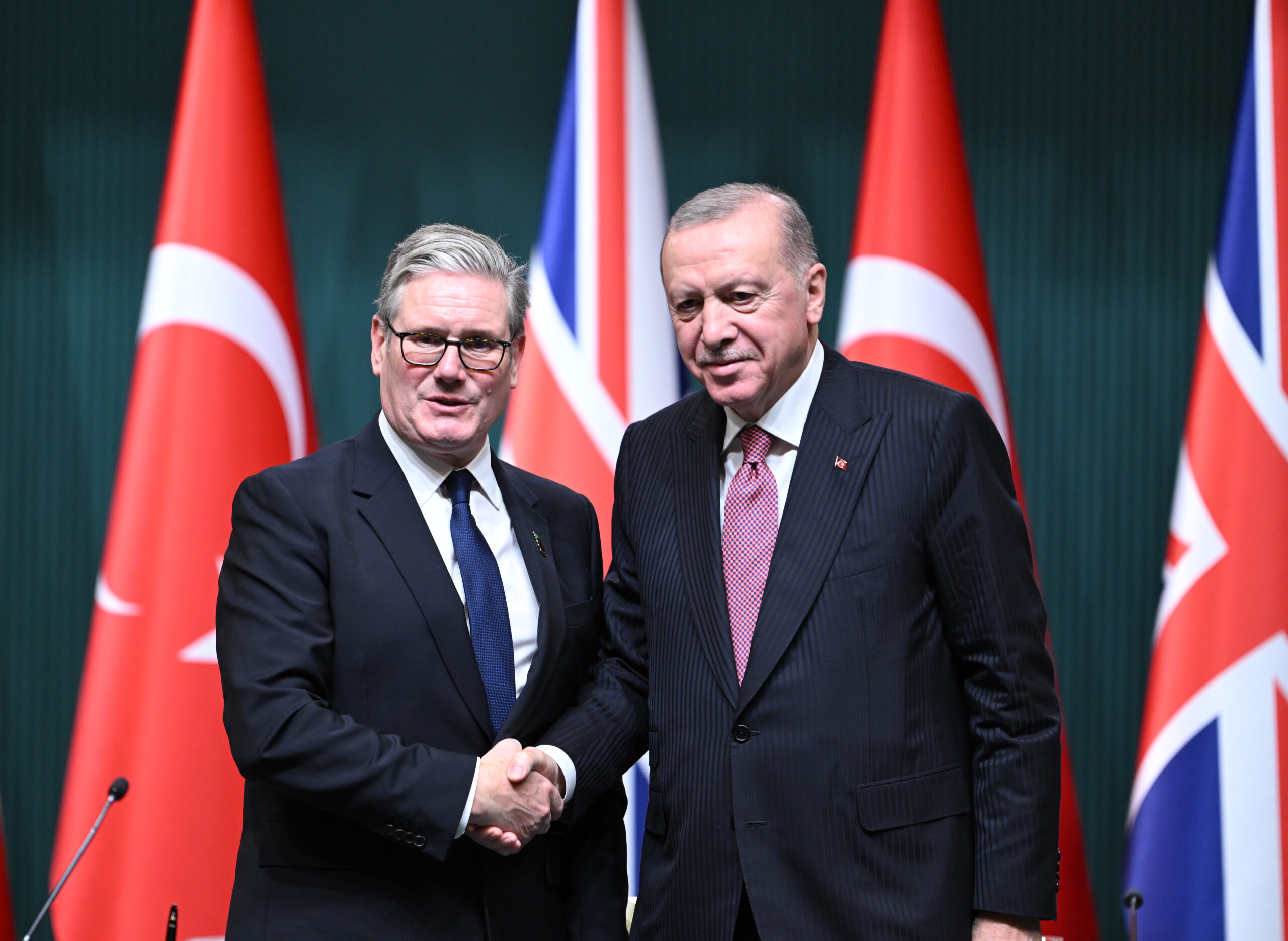
[Photo: Turkish President Recep Tayyip Erdogan and UK Prime Minister Keir Starmer in Ankara, Turkiye on October 27, 2025. Photographer: Mehmet Ali Özcan/AA]