By Middle East Correspondent
LONDON, (The Muslim News): Israeli military strikes have killed at least four people in southern Lebanon and wounded several others, including journalists, placing renewed strain on a fragile 10-day ceasefire as regional tensions continue to escalate.
Among the dead is Lebanese journalist Amal Khalil, who was killed while reporting in southern Lebanon. Her colleague, Zeinab Faraj, was wounded in the same attack. The Lebanese Red Cross confirmed Khalil’s death, while the state-run National News Agency reported that Israeli forces had initially besieged the two journalists, preventing emergency responders and the Lebanese army from reaching them.
Lebanese Prime Minister Nawaf Salam condemned the incident, describing the targeting of Khalil and the obstruction of rescue efforts as a “blatant war crime”. Writing on X, he said Israel’s repeated targeting of media professionals in southern Lebanon could no longer be viewed as isolated incidents but rather as part of a “proven pattern” in violation of international law.
The Israeli military denied deliberately targeting journalists and rejected claims that it had blocked rescue access, stating it takes measures to minimise harm to media workers. The incident follows a similar strike last month in which three journalists were killed when a clearly marked press vehicle was hit in southern Lebanon.
Since March 2, more than 2,200 people have been killed and over one million displaced by intensified Israeli attacks on civilian infrastructures on Lebanon, launched shortly after the outbreak of war involving Iran. Israel has continued attacks despite a US-mediated ceasefire agreed on April 16.
In Washington, President Donald Trump announced an extension to the ceasefire framework with Iran, even as the United States continues to enforce a naval blockade on Iranian ports—an issue Tehran says undermines prospects for meaningful negotiations.
Iranian President Masoud Pezeshkian said “breach of commitments, blockade, and threats” remain the principal obstacles to genuine dialogue with the United States, accusing Washington of hypocrisy. Parliament Speaker Mohammad Bagher Qalibaf echoed those concerns, arguing that a ceasefire cannot be considered credible while a naval blockade remains in place, describing it as tantamount to “hostage-taking of the global economy”. He added that reopening the Strait of Hormuz would be impossible under what he called ongoing violations of the truce.
Iran’s Revolutionary Guard also announced it had seized two vessels accused of “disrupting security” in the Strait of Hormuz, further heightening tensions in one of the world’s most critical shipping lanes.
Israel kills five Palestinians incl 3 children in Gaza despite ceasefire
Meanwhile, in Gaza, Israeli strikes and military activity have continued despite a separate ceasefire agreement. The Palestinian news agency Wafa reported that five people, including three children, were killed in a drone strike near a mosque in Beit Lahiya in the northern Gaza Strip, with several others seriously injured.
Medical sources said a Palestinian man was also killed and two others wounded in an attack east of Jabalia. Elsewhere, Israeli artillery shelling and heavy gunfire targeted eastern neighbourhoods of Gaza City, while military vehicles opened fire towards areas east of Khan Younis in the south.
According to Gaza’s Government Media Office, Israel has committed around 2,400 violations of the ceasefire agreement since April 14, including killings, arrests and blockade measures. The Gaza Health Ministry reports that these violations have resulted in 784 deaths and more than 2,200 injuries.
The broader conflict, which began on October 8, 2023, has killed more than 72,000 Palestinians and wounded over 172,000, with widespread destruction affecting the vast majority of infrastructure across the enclave.
Over 500 Israeli settlers enter Al-Aqsa mosque compound
Tensions have also intensified in occupied East Jerusalem, where hundreds of Israeli settlers entered the Al-Aqsa Mosque compound under heavy police protection. The Islamic Waqf said at least 508 individuals entered the site during the morning, with more expected later in the day.
Witnesses reported that some settlers raised Israeli flags and carried out what Palestinian authorities described as provocative religious rituals within the compound, including near the Dome of the Rock. The Jerusalem Governorate said such actions form part of a broader effort to alter the status quo at the site, which is revered by Muslims as Islam’s third holiest sanctuary.
The incursions come amid tightened Israeli security measures across East Jerusalem, including road closures and restricted access for Palestinian worshippers. Palestinian officials accuse Israel of attempting to alter the city’s demographic and religious character, claims Israel rejects.
UN raises alarm over Israeli military incursions in Syria
Beyond the Palestinian territories, the United Nations has also raised alarm over Israeli military activity in Syria. Addressing the UN Security Council, Deputy Special Envoy for Syria Claudio Cordone said Israeli forces continue to carry out near-daily incursions in southern Syria, in breach of international agreements.
He highlighted a recent incident in which dozens of Israelis crossed into the Area of Separation near the village of Hadar, describing the move as “highly provocative”. Cordone called on Israel to respect Syria’s sovereignty, adhere to the 1974 Disengagement of Forces Agreement, and cease all violations.
He warned that such actions risk undermining Syria’s fragile political transition, despite a notable reduction in direct conflict-related violence in recent months.
As ceasefires across multiple fronts come under increasing strain, the region faces mounting instability, with diplomatic efforts struggling to contain a widening cycle of violence.
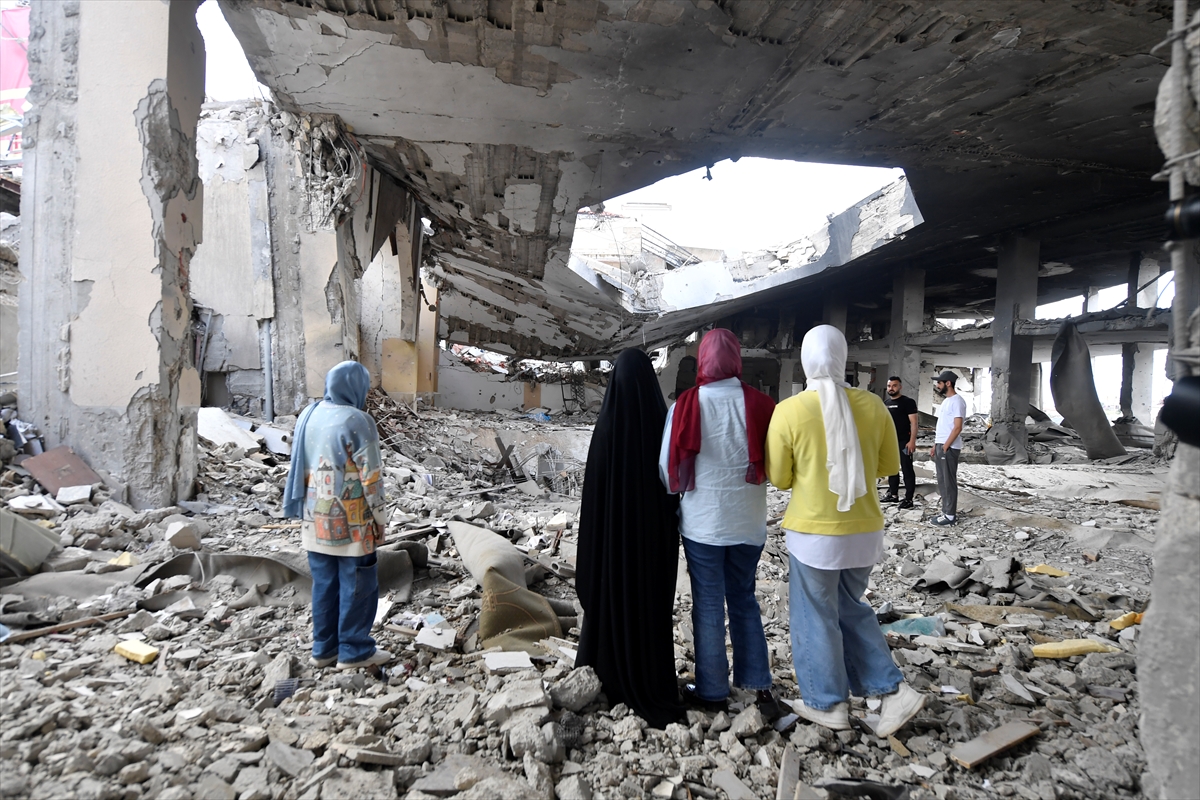
[Photo: A view of the heavy destruction after Israeli strikes on the town of Jebchit in Nabatieh, Lebanon on April 21, 2026. Many homes and businesses in the town were destroyed due to the targeted attacks, while numerous vehicles were also rendered unusable. Photojournalist: Houssam Shbaro/AA]