By Middle East Correspondent
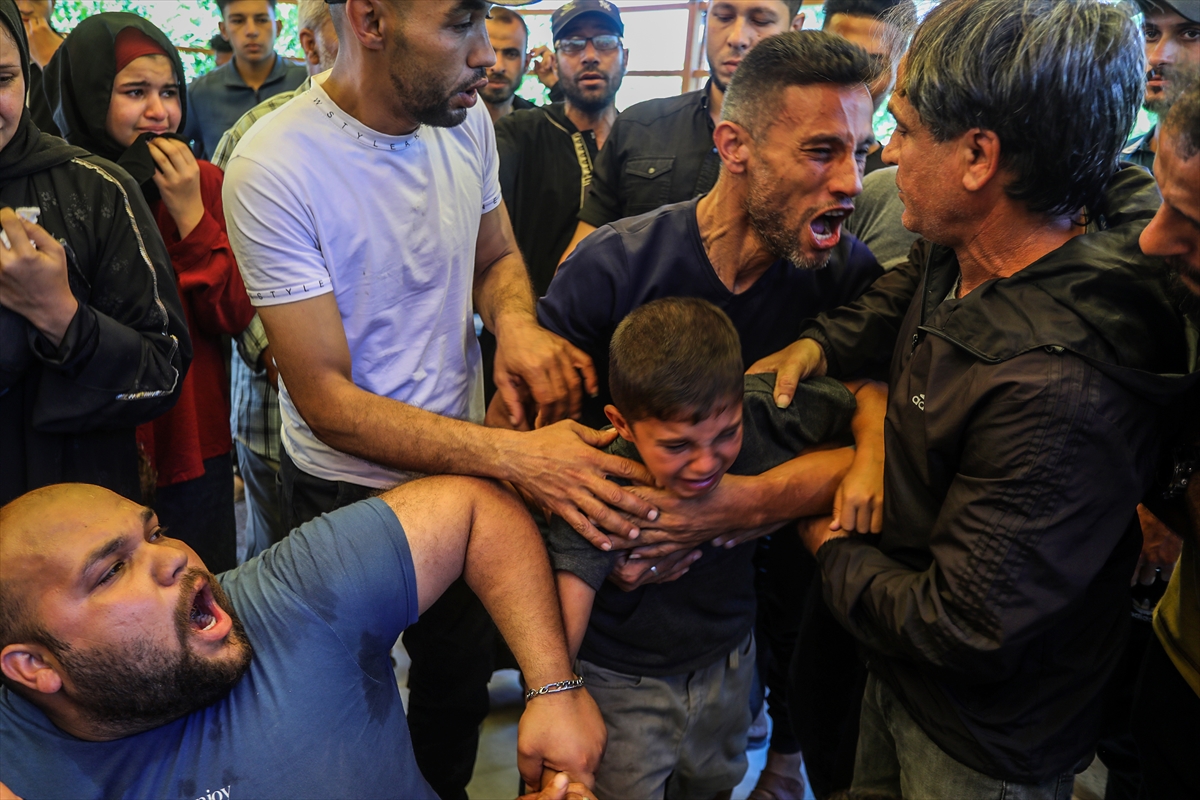
London, (The Muslim News): Israeli airstrikes killed at least 13 civilians across southern Lebanon on Tuesday, including a 16-year-old boy, as fresh violence threatened to shatter an already fragile ceasefire and deepen fears of a wider regional conflict.
The latest wave of attacks came just one day after Israel and Iran halted a dangerous exchange of missile and air strikes that had pushed the Middle East to the brink of all-out war.
Among the dead was a teenager killed in an Israeli drone strike on the town of Haboush, according to Lebanon’s National News Agency (NNA).
The deadliest attack struck a public housing complex in the coastal city of Tyre, where at least nine people were killed and 28 others wounded.
Further strikes were reported across southern Lebanon. One person was killed when a farm in Adshit, in the Nabatieh district, was hit by an airstrike, while two more people died in a dawn drone attack on the Al-Marj neighbourhood of Kfar Rumman.
Israeli attacks were also reported in Deir Qanoun, Ras al-Ain, al-Ramadiyah and al-Abbasiyah in the Tyre district.
In Sharqiyah, rescue workers came under fire while responding to an earlier strike. Two drone attacks carried out within minutes of each other wounded three people, including two members of Lebanon’s Civil Defence.
According to the NNA, emergency crews were treating a casualty from the first attack when the second-strike hit.
“Civil Defense teams worked to extract and provide first aid to an injured person following a drone strike on a vehicle when a second-strike hit,” the agency said.
The renewed bombardment has triggered a fresh wave of displacement across southern Lebanon.
Shelters in Tyre have reportedly reached full capacity as families flee the violence, while Civil Defence teams have been evacuating elderly residents from areas under attack.
Lebanese media also reported Israeli drones flying at low altitude over Beirut and its southern suburbs.
The escalation came despite the ceasefire that followed the recent Iran-Israel confrontation.
Tehran has warned that any further Israeli attacks on Lebanon would provoke what it described as a “crushing” response.
According to Lebanese officials, Israeli attacks since March 2 have killed more than 3,600 people, wounded over 11,000 and displaced more than 1.6 million others.
As fighting continues, reports have emerged suggesting Iranian retaliatory strikes may have caused damage inside Israel.
Satellite imagery analysed by Israeli monitoring company Soar reportedly indicates that a hangar at Ramat David Air Force Base in northern Israel may have been struck during recent Iranian missile attacks.
The analysis, first reported by Yedioth Ahronoth, showed a darkened area where the hangar had previously stood in imagery captured on June 5.
Iran’s military announced on Sunday that it had targeted the base with ballistic missiles in retaliation for Israeli attacks on civilians in southern Lebanon and Beirut’s southern suburbs.
The Israeli military has not commented on the claims.
The latest round of hostilities began after Israeli strikes on Beirut despite an existing ceasefire, prompting Iranian missile attacks on northern Israel and triggering several rounds of Israeli air raids on Iranian territory.
Although Tehran later halted its attacks, Iranian officials reiterated that further Israeli military action in Lebanon would be met with force.
Regional tensions have remained dangerously high since the United States and Israel launched coordinated strikes on Iran in late February, sparking a cycle of retaliation that has repeatedly threatened to draw additional countries into the conflict.
The increasingly volatile security situation was underscored by the crash of a US Army Apache helicopter near the strategically vital Strait of Hormuz on Monday.
Both crew members survived and were rescued within hours, according to US Central Command (CENTCOM).
“At 7:33 p.m. ET on June 8, two crew members from a U.S. Army AH-64 Apache were rescued by American forces after their helicopter went down near the coast of Oman while patrolling regional waters,” CENTCOM said.
“The Soldiers were safely rescued within approximately two hours and are in stable condition. The cause of the incident is under investigation.”
The operation involved US naval and air assets, including the 82nd Airborne Division and Task Force 59 of the US Fifth Fleet.
US President Donald Trump later sought to reassure reporters.
“The pilots are fine, nobody injured, we are going to issue a report tomorrow, but the pilots are fine,” he said.
Investigators are examining whether the aircraft suffered mechanical failure, encountered hostile fire or experienced another operational problem.
The crash highlights the growing dangers facing military forces operating around the Strait of Hormuz, where Iran has effectively disrupted commercial shipping throughout the conflict.
Since fighting erupted on February 28, Tehran has reportedly shot down around 30 MQ-9 Reaper drones, while several US fighter aircraft have also been lost.
Meanwhile, Gaza’s humanitarian crisis continues to worsen.
The Gaza Health Ministry said on Tuesday that eight more Palestinians were killed and 34 wounded during the previous 24 hours.
The latest figures bring the overall death toll since October 2023 to 72,988.
According to the ministry, at least 978 Palestinians have been killed and more than 3,000 injured since a ceasefire agreement came into force on October 10, 2025, amid repeated Israeli shelling and gunfire.
The war has devastated Gaza’s civilian infrastructure, with the United Nations estimating that reconstruction will cost around $70 billion after approximately 90 per cent of the territory’s infrastructure was damaged or destroyed.
Health officials also warned that thousands of critically ill patients remain trapped inside the besieged enclave.
Speaking at Al-Shifa Medical Complex in Gaza City, acting Deputy Health Minister Maher Shamiya said Israel was preventing more than 17,000 Palestinians from accessing urgently needed medical treatment abroad.
“The number of documented medical referrals had reached 17,757 as of May 20,” he said.
Only 3,226 people have been allowed to leave Gaza through the Rafah and Kerem Shalom crossings, including just 1,204 patients.
The health system, already pushed to the brink after nearly two years of war, faces severe shortages of medicines, fuel and medical supplies.
Although Rafah briefly reopened under a ceasefire arrangement earlier this year, access remains heavily restricted.
Shamiya said travel through Rafah had been reduced to three days per week, while only one day had been allocated for medical evacuations through Kerem Shalom.
“The measures reflect a systematic policy to obstruct patients’ access to specialized health services outside the Gaza Strip,” he said.
“Israel bears the primary responsibility for the crisis.”
As violence continues across Gaza, Lebanon and the occupied Palestinian territories, Prime Minister Keir Starmer’s government is facing growing pressure to toughen its stance on Israeli illegal settlements in the occupied West Bank.
The United Kingdom joined Australia, Canada, France, New Zealand and Norway in announcing sanctions against organisations and individuals accused of financing and enabling attacks by Israeli settlers against Palestinians.
The coordinated move comes amid record settlement expansion and escalating violence in the occupied territory.
However, critics say the measures do not go far enough.
More than 137 Labour MPs — over a third of the parliamentary party — have signed a letter urging the Government to ban all trade with Israeli settlements in the occupied West Bank.
They argue that stronger economic measures are needed if Britain is serious about upholding international law.
While ministers have strengthened guidance warning British companies about the legal and reputational risks associated with settlement activity, Downing Street has stopped short of imposing a full trade ban.
The decision has fuelled frustration among campaigners and MPs, particularly as several European countries move towards tougher restrictions on settlement goods.
For many observers, the contradiction is becoming increasingly difficult to ignore.
While Western governments are imposing sanctions on individuals and organisations linked to settler violence, broader commercial ties with settlements remain largely untouched.
As wars in Gaza and Lebanon continue to drive instability across the region, pressure is likely to intensify on governments that condemn settlement expansion while continuing to permit trade linked to it.