By Elham Asaad Buaras
London, (The Muslim News): Israeli forces carried out airstrikes, artillery fire and ground incursions across southern Lebanon on Tuesday, causing fires and injuring at least one person, despite a US-brokered agreement signed in June calling for Israel’s gradual withdrawal from Lebanese territory.
The attacks targeted the Tyre, Marjayoun, Bint Jbeil and Nabatieh districts and were accompanied by earthworks and movements by Israeli military vehicles, Lebanon’s National News Agency (NNA) reported.
In the Tyre district, Israeli warplanes struck Mansouri and Wadi Hassan, while the area between Tayr Harfa and Majdal Zoun was also subjected to airstrikes. Israeli ground forces shelled Mansouri and Majdal Zoun.
In Tayr Debba, a Lebanese man was injured when leftover Israeli ordnance detonated.
The attacks continued in Marjayoun, where Israeli forces shelled Mais al-Jabal, Markaba and Bani Hayyan. The NNA reported intensive movements by Israeli military vehicles, military construction and what it described as scorched-earth operations, with columns of smoke rising from the area.
Artillery fire also struck the Marjayoun plain below Hamamis Hill, causing fires. At dawn, Israeli warplanes targeted the Litani River channel below Deir Mar Mima.
Israeli forces deployed in Kafr Kila and Tall al-Nahas also built fortifications near a strategic junction connecting several roads.
In Bint Jbeil, Israeli artillery reportedly struck Ainata, Beit Lif and Wadi al-Uyun. Military vehicles were seen moving from the Khallat Haris area towards Awwal al-Jabbaneh, accompanied by machine-gun fire.
In Nabatieh, Israeli forces carried out a controlled explosion in Zawtar al-Sharqiya that was heard in several nearby towns. A drone also fired a guided missile at a van on the Doha-Kfar Rumman Road. The vehicle was hit by shrapnel, but no injuries were reported.
During the early hours of Tuesday, Israeli ground forces advanced towards Al-Sawan Hill in Mayfadoun and took up positions inside a local residence, according to the NNA.
The latest attacks come despite the US-brokered agreement signed in June, which calls for Israel’s gradual withdrawal from all Lebanese territory and would allow the Lebanese army to deploy in areas vacated by Israeli forces. The agreement also calls for the disarmament of militant groups, in reference to Lebanon’s Hezbollah.
Since early March, almost-daily Israeli attacks on southern Lebanon have killed 4,348 people and injured more than 12,000, according to Lebanon’s Health Ministry.
Israeli forces continue to occupy several parts of the region, including areas that have been occupied for decades and others seized during fighting in 2023 and 2024, when Israeli troops advanced more than 10 kilometres into Lebanese territory.
Oman and Iran discuss over arrangements for Strait of Hormuz
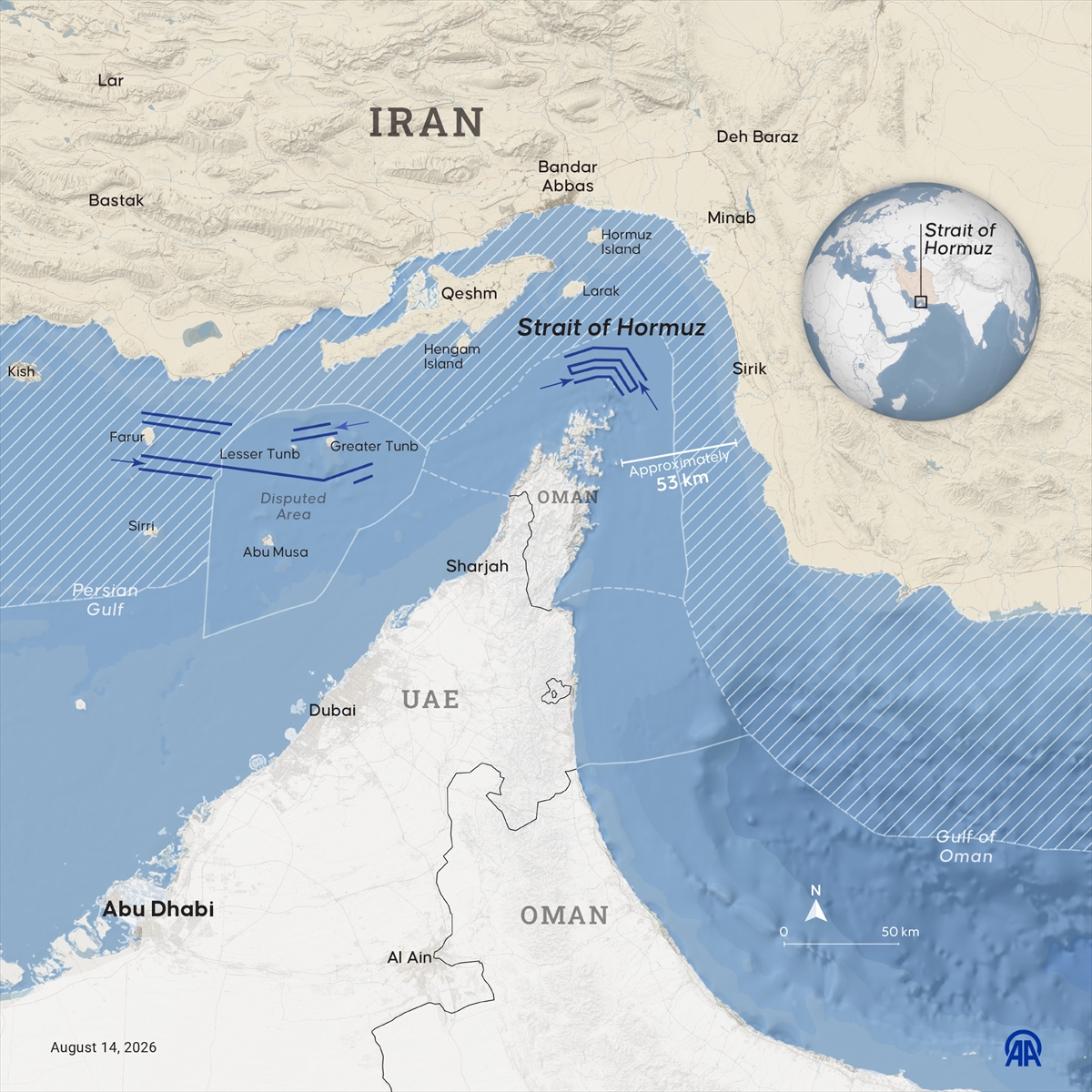
The escalation in Lebanon came as regional diplomacy was also focused on securing freedom of navigation through the Strait of Hormuz, another key flashpoint in the region.
Oman’s Foreign Minister Badr al-Busaidi said Tuesday that he was “hopeful” a temporary shipping corridor through the strait would soon be announced after meeting his Iranian counterpart, Abbas Araghchi, in Tehran.
“I am hopeful we will soon announce a temporary corridor for the Strait of Hormuz and practical arrangements to restore safe navigation,” al-Busaidi wrote in a social-media post.
“Future management of the strait and a permanent solution will follow in due course, as per Article 5 of the Islamabad Memorandum,” he said.
“Discussions with regional partners will be held to promote peace, cooperation, and freedom of navigation,” al-Busaidi added.
Earlier Tuesday, Oman’s state-run news agency reported that Araghchi and al-Busaidi had discussed a proposed framework for a joint maritime corridor through the strait during the Omani minister’s visit to Tehran.
The talks come amid continuing discussions between Tehran and Muscat over arrangements for the Strait of Hormuz, a critical route for global oil and gas exports.
[An infographic titled ‘Strait of Hormuz’ created in Ankara, Turkiye. Photojournalist: Murat Usubaliev/AA]