By Middle East Correspondent
LONDON (The Muslim News): At least eight people were killed and 11 injured by Israeli fire in Lebanon over the past 24 hours, Lebanese authorities said on Thursday, underscoring the fragility of a ceasefire that has been repeatedly violated.
In a statement, the Cabinet’s Disaster Risk Management Unit said the latest casualties brought the death toll due to Israeli bombings since March 2 to 2,483, with 7,707 people wounded. The violence comes despite a US-brokered 10-day ceasefire that took effect on April 16 and had been due to expire on Sunday.
Diplomatic efforts to stabilise the situation intensified in Washington, where US President Donald Trump announced that the truce would be extended by three weeks following ambassador-level talks at the White House. The meeting brought together Israeli Ambassador Yechiel Leiter and Lebanese Ambassador Nada Hamadeh Moawad, marking the second round of direct engagement between the two sides in as many weeks.
“The Ceasefire between Israel and Lebanon will be extended by THREE WEEKS,” Trump said, describing the discussions as “very successful”. He added that Washington would continue working with Lebanon to help it “protect itself” from Hezbollah, and indicated that Israeli Prime Minister Benjamin Netanyahu and Lebanese President Joseph Aoun could visit the White House during the extended truce.
The talks follow an initial round held on April 14, the first such negotiations in more than four decades, which resulted in the temporary ceasefire and a commitment to pursue further dialogue. Lebanese officials have said they are seeking a longer truce and a full Israeli withdrawal from occupied territory.
However, hostilities have continued on the ground. Early on Friday, Israeli media reported that a reservist was wounded in a drone attack launched by Hezbollah targeting Israeli forces occupying in southern Lebanon. The Lebanese group said it had fired artillery at Israeli troops near a school in Bint Jbeil, struck a bulldozer in Rashaf with an explosive drone, and launched rockets toward the settlement of Shtula. Hezbollah was retailiating against attacks by Israeli forces who are occupying Lebanon.
Israeli authorities said sirens sounded in Shtula, with several rockets intercepted and others falling in open areas. In response, Israeli warplanes carried out strikes in Lebanon, with the military claiming it destroyed rocket launchers and killed three Hezbollah fighters.
The United Nations also voiced concern over the conduct of hostilities. UN spokesperson Stephane Dujarric condemned the killing of Lebanese journalist Amal Khalil in an Israeli strike in the southern town of Tayri, which also wounded reporter Zeinab Faraj.
“The secretary general recalls that civilians, including journalists, must be respected and protected at all times,” Dujarric said, calling for a prompt and impartial investigation. He added that UN peacekeepers had coordinated with the Israeli military to allow the Lebanese Red Cross access to the wounded.
The escalation in Lebanon comes against the backdrop of a wider regional conflict involving attacks by US and Israel on Iran. Trump on Thursday dismissed suggestions he was considering the use of nuclear weapons, saying such arms should “never be allowed to be used by anybody”.
At the same time, he ordered the US Navy to “shoot and kill” any vessel laying mines in the Strait of Hormuz, a vital global shipping route that has been disrupted since the start of the US-Israeli conflict with Iran in late February. US officials say clearing mines in the waterway could take months, while Iran has begun collecting transit fees from passing ships, according to state-linked media.
The US Navy seized several tankers that were ostensibly carrying Iranian crude in the Indian Ocean this week:
Tifani, boarded on April 21
Deep Sea, Sevin and Dorena, were reported as intercepted by the US Navy on April 22
Majestic X, boarded on April 23
All of these vessels were seized by US warships far from the Strait of Hormuz, which means that the US campaign against shipping with Iranian oil extends beyond the Gulf region.
The US may pressure littoral states in Southeast Asia to police their waters in order to crack down on such tankers, the South China Morning Post suggests.
Such seizures may raise legal questions under the United Nations Convention on the Law of the Sea, especially if interdictions move into regional waters.
In the meantime, US seizures of the tankers contribute to: Oil prices increases, rising costs of shipping insurance, greater volatility in freight markets and further delays in Persian Gulf transit.
However, the seized Iranian “TOSKA” ship by the US Navy carried dialysis supplies and vital medical equipment for Iranian civilians.
Before, the US claimed its blockade would not seize/stop ships that transported food or medical equipment.
Israeli forces kill 4 Palestinians in Gaza
The conflict has also continued to reverberate in Gaza. Palestinian medical sources said four people were killed and five injured in Israeli drone strikes on Thursday, including an attack on a civilian vehicle near the Maghazi refugee camp in Deir al-Balah and another in the al-Maslakh area south of Khan Younis.
Witnesses reported ongoing artillery shelling and demolitions by Israeli forces in eastern Gaza City and surrounding areas. The attacks come despite a separate ceasefire in Gaza that took effect in October 2025, which Palestinian officials say has been repeatedly violated.
According to Gaza’s Health Ministry, hundreds have been killed and thousands injured in such violations, while humanitarian conditions remain dire for the enclave’s 2.4 million residents, many of whom have been displaced and face severe shortages of food, medicine and shelter.
Taken together, the continued violence by Israel in Lebanon and Gaza, alongside tensions in the Gulf, highlights the precarious state of multiple ceasefires across the region, even as diplomatic efforts seek to prevent a broader escalation.
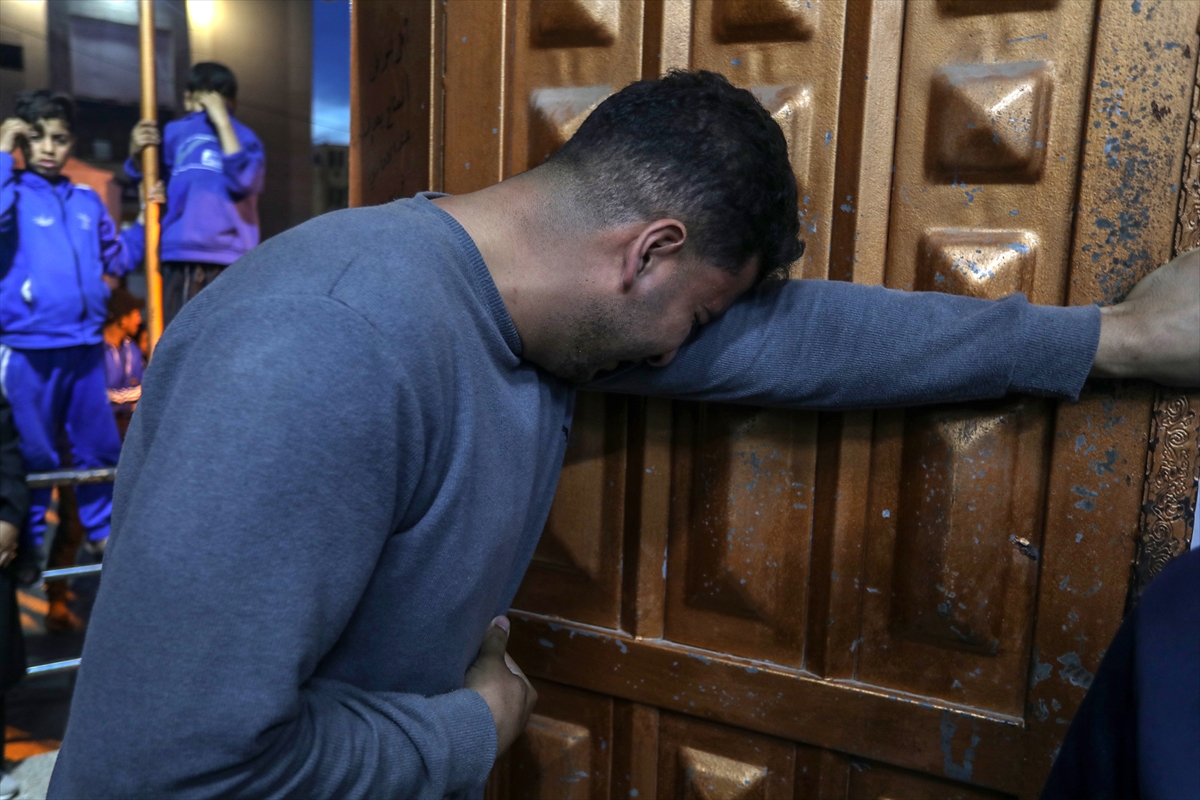
[Photo: A Palestinian mourns at Nasser Hospital after an Israeli strike targeting a police vehicle in the al-Mawasi area where five Palestinians lost their lives and several others were injured in Khan Yunis, Gaza, Palestine, on April 24, 2026. Photojournalist: Abed Rahim Khatib/AA]