By Middle East Correspondent
LONDON, (The Muslim News): Iran has accused Israel of carrying out a “deliberate terrorist attack” in Beirut that killed four Iranian diplomats, as widespread Israeli and US military operations against Iranian targets and allied forces reverberated across the region.
Iran’s Ambassador to the United Nations, Amir Saeid Iravani, conveyed the accusation in an urgent letter to the UN Secretary General and the presidents of the UN Security Council and General Assembly. According to Iran’s Tasnim News Agency, he said the diplomats were killed in an Israeli airstrike that struck the Ramada Hotel in central Beirut on 8 March. The letter described the incident as “a deliberate terrorist attack” by Israel.
The Lebanese Health Ministry confirmed four deaths and ten injuries in the strike on an apartment in the Ramada Hotel building, in one of the most serious spillovers from the widening conflict. While the status of all building occupants has not been fully clarified, state media linked the casualties to the Iranian diplomatic mission, which Tehran claims was deliberately targeted.
The strikes on Beirut were not isolated. Later on Tuesday, Israeli warplanes attacked several southern suburbs, including Lailaki, Jamous and Bajour Street in Borj el Barajneh. Witnesses described the attack on Jamous as “particularly powerful,” with thick plumes of black smoke rising above the area. There was no official Lebanese statement on further casualties or damage. The strikes followed evacuation warnings issued by the Israeli army around 1.30 pm local time for residents in Haret Hreik, Ghobeiri, Lailaki, Hadath, Borj el Barajneh, Tahwitat al Ghadir and Chiyah.
The bombardment extended beyond Beirut. State media reported a drone strike on a car in Qlaileh, Tyre district, killing two people. Another strike killed the Mayor of Jouya town and a municipal council member, while a Lebanese man was killed near the Kfarjouz roundabout in Nabatieh. These attacks followed evacuation orders for residents south of the Litani River.
The conflict coincided with intensifying hostilities between Iran and a US–Israeli coalition.
Tehran accused the US of striking key infrastructure, including a freshwater desalination plant on Qeshm Island, affecting the water supply of 30 villages.
Iranian media also reported airstrikes on five oil facilities in and near Tehran and the Alborz region. Keramat Veyskarami, CEO of the National Iranian Oil Products Distribution Company, told state television that the facilities “were damaged” but the “fire was brought under control.”
Against this backdrop, former US President Donald Trump addressed the hostilities, deflecting questions about the infrastructure strike and condemning Iran’s leadership. In his remarks, he repeated a claim regarding the killing of babies that has since been widely debunked: “They are among the most evil people ever on earth, they cut babies’ heads off, they chop women in half, what they did, take a look at October 7th… if they’re complaining about a desalination plant, we complain about the fact that they shouldn’t be chopping babies’ heads off, okay?” Iran was not involved in October 7 attacks.
US and allied operations extended into maritime and aerial theatres. Trump said American forces had destroyed “10 inactive mine-laying boats and/or ships” in the Strait of Hormuz after warning of “unprecedented military consequences” should Iran fail to remove mines. Defence Secretary Pete Hegseth said US Central Command carried out the operations “with ruthless precision.”
Pentagon spokesperson Sean Parnell reported 140 US service members wounded since the start of the campaign, eight severely. He said 108 had returned to duty, and the eight severely injured were receiving “the highest level of medical care.” These figures were in addition to eight service members killed, a toll Trump has described as anticipated amid the conflict.
Retaliatory strikes by Tehran targeted Israel and Gulf states hosting US bases and forces.
Saudi Arabia, Bahrain and the UAE reported intercepting missiles and UAVs launched from Iran. Saudi officials said two UAVs targeting the Shaybah oil field were shot down, six ballistic missiles aimed at Prince Sultan Air Base were intercepted, another missile was downed in the east, and two drones were neutralised in Hafar al Batin. The UAE confirmed its air defences were actively responding to threats, maintaining “full readiness” to protect citizens and territory.
Explosions were also reported in Tehran, Isfahan and Tabriz as US–Israeli strikes continued, though no casualty details have been released.
On the diplomatic front, Russia expressed alarm over attacks on its facilities. Foreign Ministry spokeswoman Maria Zakharova said its consulate general in Isfahan was damaged in a nearby attack over the weekend, with shattered windows and blast impacts on staff, though no casualties occurred. Moscow condemned attacks on diplomatic missions as a “flagrant violation” of international law and called for an immediate end to hostilities.
Meanwhile, Iran announced another wave of missile attacks on Israeli and US targets.
The Islamic Revolutionary Guard Corps said it carried out “large-scale strategic missile strikes” as part of the 35th wave of its operation “True Promise 4,” using missiles including Fattah, Emad, Kheibar Shekan, Khorramshahr and Qadr.
Israeli media reported one missile landed in an unpopulated area near Beit Shemesh, west of Jerusalem, triggering sirens across the Jerusalem area and coastal plain, with additional alerts in Haifa. Israel Police conducted widespread searches for debris and projectiles. However, Israel, meanwhile, has barred publication of content deemed a direct security threat, such as live broadcasts showing city skylines during missile attacks, images that identify locations of missile impact sites or information on military plans and air defenses.
The widening conflict has drawn international concern. US Special Envoy Steve Witkoff said he would take Russia at its word following President Vladimir Putin’s assurance to Trump that Moscow was not sharing intelligence with Iran. Witkoff remarked: “We can take them at their word. Let’s hope that they’re not sharing,” but acknowledged independent verification was “a better question for the Intel people.” This followed Iranian Foreign Minister Abbas Araghchi confirming Russia was providing military assistance to Iran “in many different directions,” without specifying whether intelligence on US forces was included.
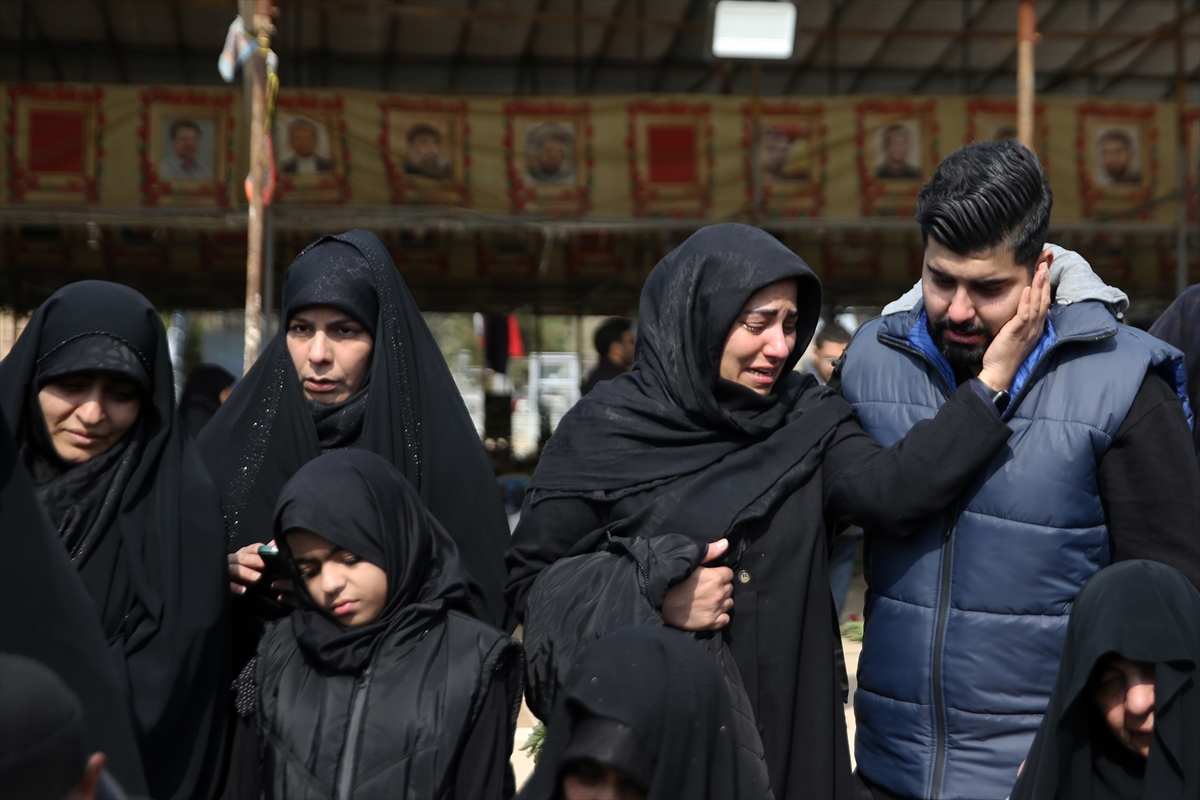
[Photo: Relatives mourn as funeral ceremony is held for people, who lost their lives following the attacks launched by the US and Israel against Iran on February 28, at Behesht-e Zahra cemetery in Tehran, Iran on March 9, 2026. Photojournalist: Fatemeh Bahrami/AA]