By Ahmed J Versi
London, (The Muslim News): A third round of face-to-face talks between Iran and the United States, mediated by Pakistan, concluded early Sunday in Islamabad, with key differences between the two sides still unresolved as Israel kills 27 civilians in airstrikes across southern Lebanon, including entire families.
According to Iranian officials, negotiations formally ended at 3:12 a.m. local time (22:12 GMT), though technical teams continued exchanging written proposals afterward—an indication that diplomacy remains active despite limited breakthroughs.
Sources familiar with the discussions said significant disagreements persist, particularly over security and maritime issues. Progress, they added, will depend on whether Washington shifts away from what Tehran describes as a “maximalist approach” toward more pragmatic positions.
Contentious issues and fragile progress
The talks resumed late Saturday following a dinner break and stretched close to midnight, with expectations they could extend into a second day. Initial indirect discussions eventually transitioned into direct engagement, accompanied by ongoing written exchanges—signaling cautious, if fragile, progress.
A source close to the Iranian delegation told Fars News that the US had made what Tehran considers excessive demands regarding the Strait of Hormuz, along with other “unacceptable” conditions.
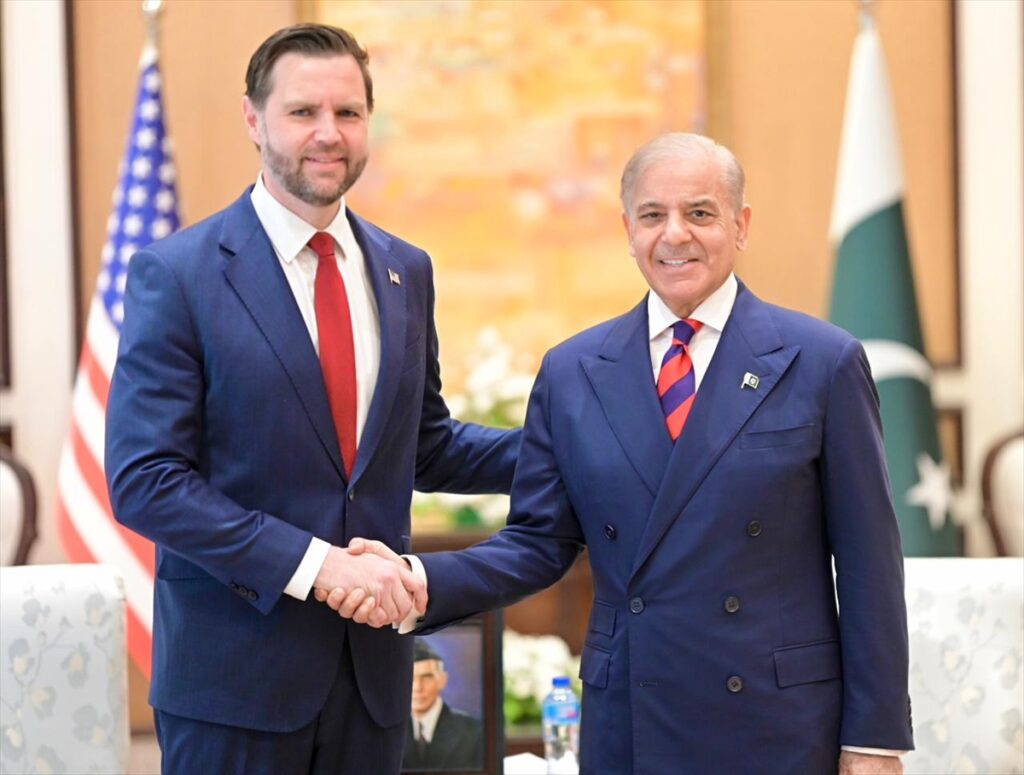
[Photo: Pakistan Prime Minister Muhammad Shehbaz Sharif (R) holds with J.D. Vance (L), Vice President of the United States of America during Islamabad Talks, in Islamabad, capital of Pakistan, on 11 April, 2026. Photo: Pakistani Prime Ministry/AA]
US Vice President J. D. Vance said Iran had “chosen not to accept our terms,” underscoring the gulf between the two sides.
Pakistan urges continued diplomacy
Pakistan, acting as mediator, emphasized the importance of sustaining the ceasefire and keeping diplomatic channels open. Foreign Minister Ishaq Dar warned of the risks of renewed conflict if the truce collapses.
“We hope that the two sides will continue with the positive spirit to achieve durable peace and prosperity for the entire region and beyond,” Dar said, reaffirming Islamabad’s commitment to facilitating dialogue.
High-level delegations
The US delegation was led by Vice President J. D. Vance, joined by special envoy Steve Witkoff and senior adviser Jared Kushner.
Iran’s team was headed by Parliament Speaker Mohammad Bagher Ghalibaf, alongside Foreign Minister Abbas Araghchi and senior security official Ali Bagheri Kani.
Strait of Hormuz tensions escalate
Meanwhile, tensions in the Gulf intensified. Iran’s Islamic Revolutionary Guard Corps (IRGC) Navy warned that any military vessels attempting to pass through the Strait of Hormuz would face a “firm and decisive response.”
The IRGC stated it maintains “full and intelligent control” over the strategic waterway and denied reports that US naval vessels had recently transited the strait. However, a US official, cited by Axios, confirmed that several US Navy ships had crossed the passage without coordination with Tehran.
Iran’s Khatam al-Anbiya Central Headquarters also rejected claims by US Central Command regarding such movements, reiterating that Iranian forces oversee all maritime traffic in the area.
War fallout and regional developments
The ongoing diplomatic efforts come against the backdrop of a broader conflict that began on Feb. 28, following US-Israeli strikes on Iran.
In Iran, engineers reportedly restored four damaged railway bridges along the Iran–Mashhad line in under 40 hours after Israeli airstrikes.
Meanwhile, former Foreign Minister Kamal Kharrazi has died from injuries sustained during recent bombardments, marking a significant loss for Iranian diplomacy.
Escalation in Lebanon
Elsewhere in the region, violence intensified in Lebanon. At least 27 civilians were killed in Israeli airstrikes across southern areas, including entire families, according to state media.
Strikes hit multiple towns, including Tefahta, Toul, Kfar Sir, and Qsaibeh, while infrastructure such as power facilities was also targeted. The escalation follows renewed hostilities after a cross-border attack by Hezbollah in early March.
Despite the violence, Lebanon and Israel are set to hold their first direct talks on April 14 in Washington, D.C., aimed at securing a ceasefire.
Israeli Prime Minister Benjamin Netanyahu signaled conditional openness to negotiations, insisting that Hezbollah must disarm and that any agreement must ensure lasting peace. He also warned that military operations would continue, stating the war “is not over yet.”
Uncertain path forward
The Islamabad talks reflect a rare diplomatic opening between Iran and the United States, facilitated by Pakistan, but the path to resolution remains uncertain. With disagreements unresolved and regional tensions escalating—from the Gulf to Lebanon — the success of future negotiations may hinge on both sides’ willingness to compromise.
The next phase of talks is expected to depend on further exchanges between technical teams, as well as broader political decisions in Washington and Tehran.
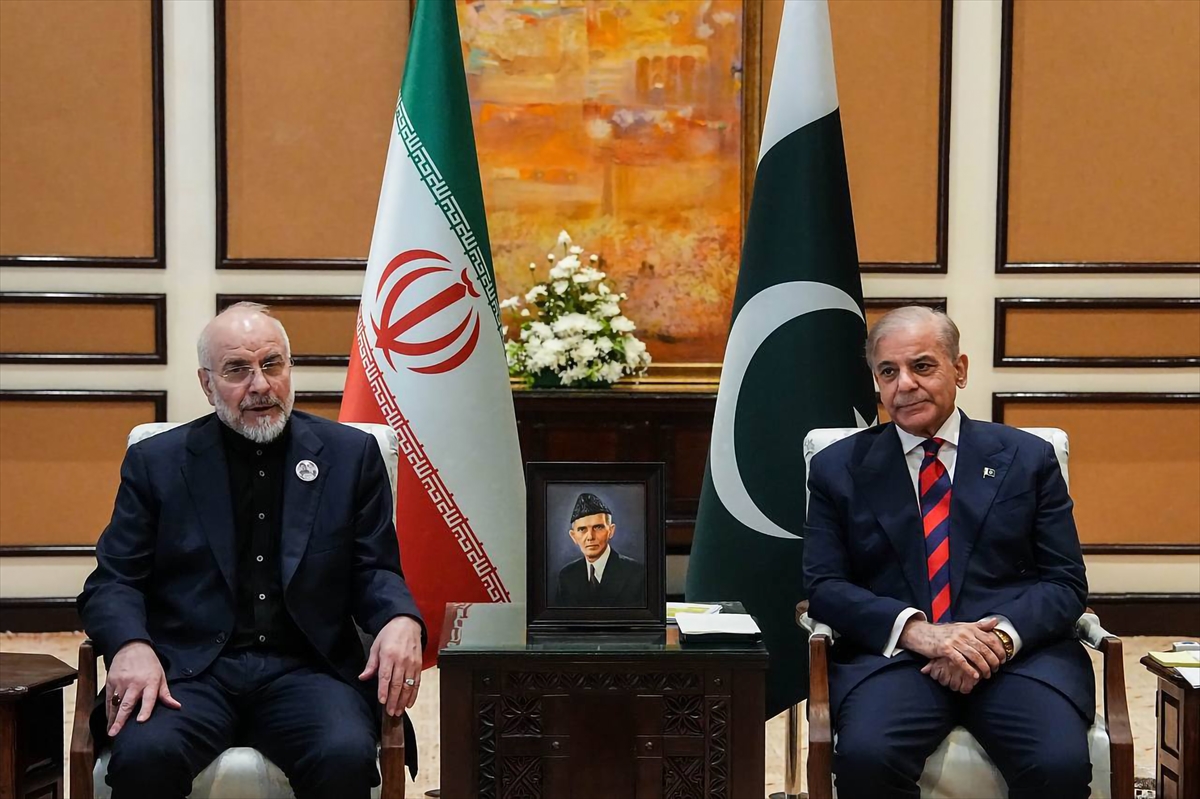
[Photo: Pakistan Prime Minister Muhammad Shehbaz Sharif with Speaker of the Iranian Parliament and head of the delegation Mohammad Baqir Qalibaf during Islamabad Talks, in Islamabad, capital of Pakistan, on 11 April, 2026. Photo: Iranian Foreign Ministry/Handout/AA]