By Middle East Correspondent
London, (The Muslim News): More than 2,700 Palestinian families have been completely wiped out during 1,000 days of the war in Gaza, according to the territory’s Government Media Office, which says the enclave has been reduced to a landscape of devastation.
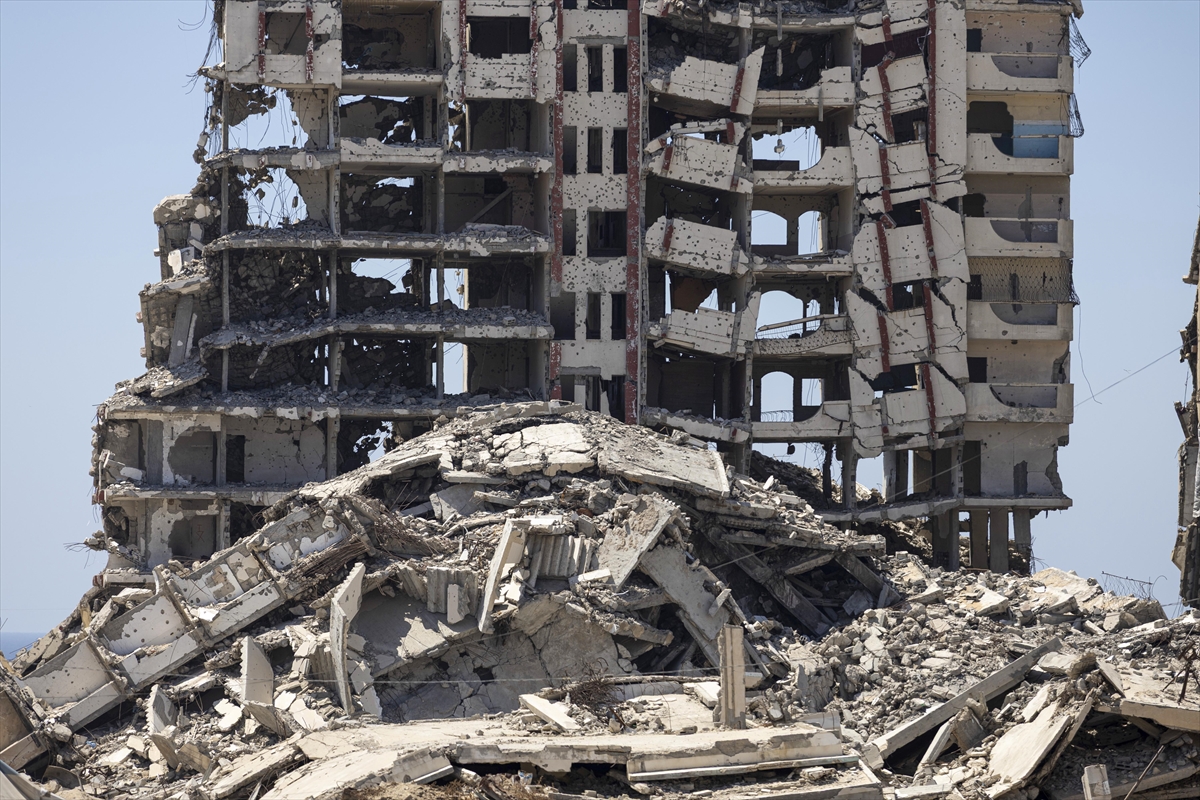
Officials claimed on Thursday that more than 90 per cent of Gaza has been destroyed, with entire neighbourhoods flattened, hospitals crippled and millions struggling to survive amid shortages of food, water and medicine.
Director-General Ismail al-Thawabteh described the crisis as ‘an unprecedented humanitarian catastrophe’, saying Gaza had gone from relative stability to ‘a reality of total destruction’.
The office said more than 39,000 families had been directly targeted during the conflict, including 2,700 families who were completely exterminated, leaving no surviving members and resulting in their removal from the civil registry.
A further 6,020 families were said to have been almost entirely wiped out, with just one surviving relative remaining in each case.
According to Gaza officials, more than 73,000 bodies have reached hospitals, while 173,514 people have been injured. Another 9,500 people remain missing, with many believed to be trapped beneath rubble or lying in areas inaccessible because of ongoing military operations.
Al-Thawabteh said hundreds of bodies remain unrecovered in streets and neighbourhoods under Israeli military control because ambulance crews and civil defence teams have been unable to reach them safely.
Gaza ‘set back decades’
The Government Media Office accused Israel of systematically destroying civilian infrastructure throughout the Strip.
Officials said more than 90 per cent of Gaza’s buildings and infrastructure have been damaged or destroyed, including residential districts, hospitals, schools, universities, places of worship, roads, water networks, electricity systems and sewage facilities.
The health service has been particularly hard hit, with hospitals still functioning providing only around 20 per cent of the services they offered before the war, according to the office.
More than 22,000 wounded and seriously ill Palestinians are said to require urgent treatment abroad, but restrictions on border crossings have prevented many from leaving the territory.
Families living in tents
The humanitarian situation continues to deteriorate, officials said, with more than 1.5 million Palestinians suffering severe psychological trauma after repeated displacement and the loss of homes and livelihoods.
More than one million displaced people are now living in tents and makeshift shelters in the al-Mawasi area of southern Gaza, where they face extreme summer temperatures while lacking reliable access to clean water, food, healthcare and medicine.
Officials also claimed that more than 80 per cent of Gaza’s population now lives below the poverty line, with many families surviving on one meal a day or less.
They alleged that 1.1 million children receive only one meal daily, describing the situation as a ‘systematic starvation policy’ affecting civilians, particularly women and children.
International community criticised
Al-Thawabteh accused the international community of failing to halt the conflict, saying global institutions had been unable to protect civilians despite repeated appeals.
He said the UN Security Council and international organisations bore ‘moral and legal responsibility’ for the continuation of the humanitarian crisis.
Officials said they continue documenting deaths, destruction and alleged violations affecting civilians and civilian infrastructure.
Billions needed to rebuild
The Government Media Office estimated that rebuilding Gaza would require an enormous international reconstruction effort.
Officials said more than 500 schools and universities, over 1,000 mosques and three churches would need rebuilding, alongside extensive repairs to roads, water systems, sewage networks and public infrastructure.
“If the situation continues as it is, the Gaza Strip is heading toward an unprecedented humanitarian collapse, and the world will remain a witness to one of the greatest humanitarian tragedies in modern history,” al-Thawabteh said.
Fresh figures released
In a separate statistical update marking 1,000 days of the conflict, Gaza’s Government Media Office claimed Israel now controls more than 80 per cent of the Gaza Strip and has dropped more than 223,000 tonnes of explosives on the territory.
The office said more than 73,000 Palestinians have been killed, including over 21,500 children and 12,500 women, while 9,500 people remain missing.
It added that 433 journalists have been injured, 5,400 people have undergone amputations—including children accounting for 18 per cent of cases—and more than 58,800 children have been orphaned.
Officials also reported 2.14 million cases of infectious disease, including more than 71,000 cases of viral hepatitis.
According to the statement, 1,047 mosques have been destroyed, with another 210 damaged, while three churches were targeted.
The office further alleged that 38 hospitals, 96 healthcare centres, 197 ambulances, 84 emergency vehicles and 16 civil defence centres have been destroyed or forced out of service.
Preliminary direct economic losses were estimated at around $80 billion, including $34 billion in housing, with 335,000 buildings and homes destroyed and another 737,000 damaged.
The media office said the conflict officially ended with a ceasefire in October 2025 but alleged that Israeli military operations, bombardment and restrictions on humanitarian aid have continued despite the agreement.
Save the Children: 21,000 children confirmed dead
Separately, Save the Children said at least 21,000 children have been confirmed killed during the conflict, warning the true number is likely to be significantly higher because many remain buried beneath collapsed buildings.
Marking the 1,000th day of the war, the charity said more than 800,000 children—around 80 per cent of Gaza’s child population—have been displaced, while 625,000 school-age children have missed approximately three years of formal education.
Regional Director for the Middle East, North Africa and Eastern Europe Ahmad Ahendawi said: “Every day for the past 1,000 days, the world has failed one million children in Gaza, by not intervening to stop the killing and maiming of children.”
Children interviewed by the charity spoke of living in constant fear while hoping for peace.
“We could die at any moment. I hope the war stops for us,” said Amani, 14.
“I hope the war stops so that I can continue my education in Gaza and live my rights as a human like any girl in other countries. There are many children in Gaza whose voices are not heard.”
Another 14-year-old, Bisan, said: “My wish is for the war to stop, for every one of us to return to their home, and for our lives to return to how they were.”
Save the Children also warned that an estimated 245,000 children are at risk of or already suffering from malnutrition because humanitarian aid remains severely restricted.
The charity cited a recent UN Commission of Inquiry report alleging Israeli authorities deliberately targeted Palestinian children, resulting in allegations of genocide, crimes against humanity and war crimes.
It called for an immediate and permanent ceasefire, accountability for crimes committed against children and the suspension of arms transfers to Israel.
Israel rejects allegations that it is committing genocide in Gaza, saying its military campaign targets Hamas following the group’s October 2023 attacks and that it takes measures to minimise civilian casualties while accusing Hamas of operating from civilian areas.
[Photo: A general view from the damaged area as Palestinians trying to pass their daily lives in Gaza City, Gaza, Palestine, on July 01, 2026. The destruction left behind by Israeli attacks on the Gaza Strip was seen in Gaza City on the 1,000th day of the war. Thousands of displaced Palestinians continue to struggle for survival amid the rubble left by the Israeli attacks. Deprived of basic necessities, families are trying to carry on with their daily lives under harsh conditions in makeshift tents set up near their destroyed homes and inside heavily damaged buildings. Photojournalist: Anas Zeyad Fteha/AA]