By Middle East Correspondent
LONDON, (The Muslim News): Switzerland, Italy, and France have expressed outrage after three UN peacekeepers were killed and three others injured by Israeli forces in southern Lebanon within 24 hours, amid escalating regional violence. According to Lebanon’s Health Ministry, nine civilians were killed and 137 injured in just 24 hours, bringing the overall toll since March 2 to 1,247 dead and 3,680 wounded.
The United Nations Interim Force in Lebanon (UNIFIL) confirmed that two peacekeepers died and two others were critically wounded on Monday when their UN-marked vehicle, carrying members of the Indonesian contingent, was destroyed by a blast near Bani Hayyan, a dusty area surrounded by banana trees. The vehicle was split in two amid intermittent gunfire.
The bloodshed followed a separate deadly incident just 24 hours earlier, when another UN peacekeeper was killed and one injured after an Israeli projectile struck a UN base near Adshit al-Qusayr, also in southern Lebanon. UNIFIL cautioned that investigations are ongoing, noting the attacks could involve crossfire, misidentification, or non-state armed groups, but the incidents occurred amid Israel’s ongoing campaign against Hezbollah positions in the area.
In a sharply worded statement, the Swiss Foreign Ministry said it “reaffirms its full support for UNIFIL” and insisted “international law must be respected,” citing UN Security Council Resolution 2730 and stressing that both civilians and peacekeepers must be protected.
Italy’s Defence Minister Guido Crosetto condemned the attacks in the strongest terms: “Attacking United Nations contingents is neither tolerable nor acceptable. UN forces are in Lebanon to ensure peace. Those who attack the UN peacekeepers do not target individual forces: they attack the international community as a whole and the principles that guarantee coexistence between states.”
Crosetto revealed he had discussed the crisis with his French counterpart, underlining the shared concern over the safety of UN personnel.
France called for an emergency UN Security Council meeting. Foreign Minister Jean-Noël Barrot described attacks on peacekeepers as “unacceptable” and demanded a full investigation and maximum protection for the mission, which includes around 700 French troops.
UN Secretary-General António Guterres condemned the killings as “tragic and completely unacceptable,” emphasising that UN peacekeepers “must be able to operate safely and carry out their mandate without fear of attack.”
A UNIFIL spokesperson said the peacekeepers were conducting routine patrols when the incidents occurred, highlighting the extreme operational hazards in southern Lebanon amid ongoing Israeli-Hezbollah confrontations.
The attacks coincide with intensified Israeli bombardment across Lebanon. According to Lebanon’s Health Ministry, nine civilians were killed and 137 injured in just 24 hours, bringing the overall toll since March 2 to 1,247 dead and 3,680 wounded.
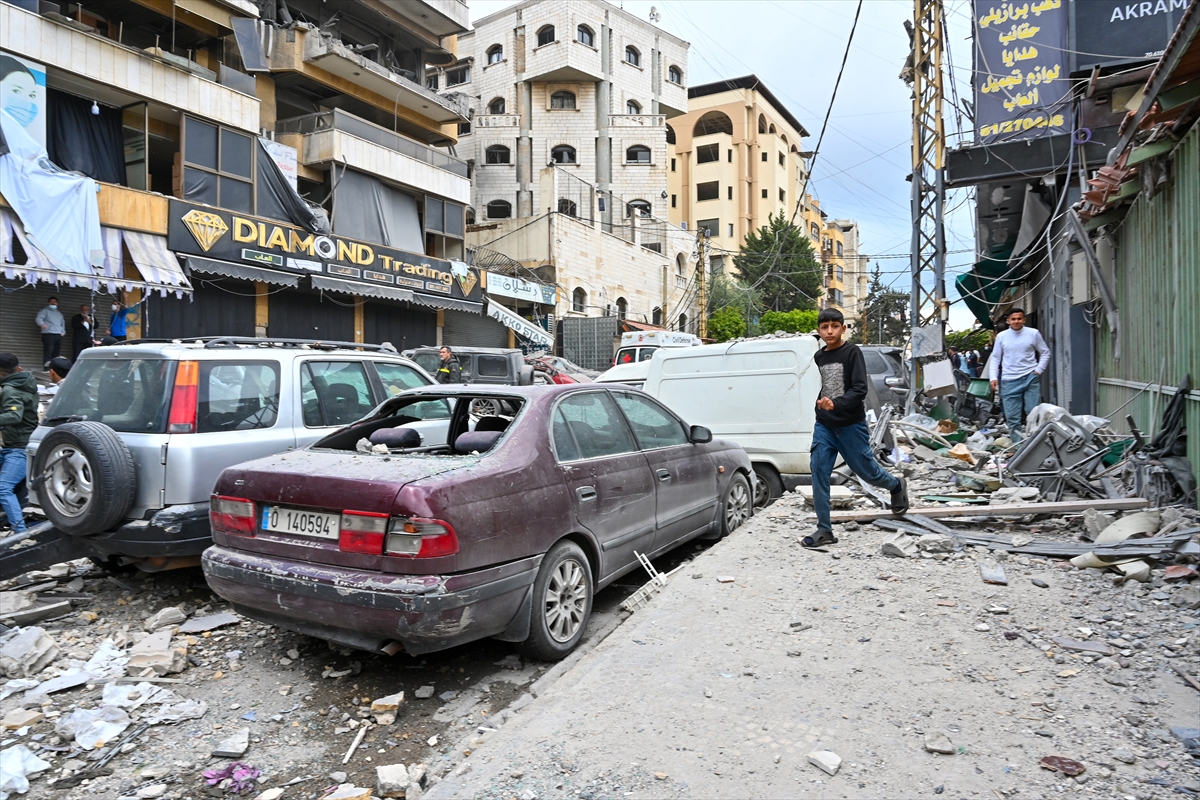
Southern regions and the outskirts of Beirut have been heavily affected, leaving buildings damaged and raising fears of a wider war. UNIFIL noted that many of its peacekeepers were deployed in these highly contested areas, increasing their exposure to both direct and indirect hostilities.
Late Monday, Iran reported explosions across Tehran, Karaj, Tabriz, Shiraz, and Bushehr. State media blamed US-Israeli strikes, though no casualties were confirmed.
Iranian President Masoud Pezeshkian said any end to the conflict must “guarantee the security and interests of the Iranian people,” adding: “The resistance shown by the army, along with the national unity shown by the Iranian people during the war, are among the most important factors.”
Meanwhile, a Mellman Group poll found 55% of American Jewish voters oppose US strikes on Iran, compared to 32% in favour. The survey showed 74% of Jewish Democrats opposed military action, while 83% of Jewish Republicans supported it.
Nearly three-quarters of respondents said President Donald Trump should have sought congressional approval before launching attacks, reflecting widespread concerns over executive military authority.
UNIFIL officials warned the recent casualties underline the extreme dangers facing peacekeepers, caught between Israeli strikes, local armed groups, and complex operations near the Blue Line. The incidents have prompted urgent international calls to strengthen protection for UN personnel and prevent further escalation in southern Lebanon, a critical buffer zone in the
Eastern Mediterranean. UNIFIL emphasized that these attacks not only threaten individual lives but risk undermining the credibility and effectiveness of the UN’s peacekeeping mission in the region.
Analysts note that the combination of Israeli military action, Hezbollah activity, and other non-state armed groups makes southern Lebanon one of the most volatile regions in the Middle East. With UN peacekeepers operating under constant threat, diplomatic efforts to reinforce international law and ensure mission safety are taking on heightened urgency.
[Photo: A view of the damaged building following the Israeli airstrikes on the Dahieh area in the south of Beirut, Lebanon on March 30, 2026. Photojournalist: Houssam Shbaro/AA]