By Middle East Correspondent
LONDON, (The Muslim News): At least 15 workers were killed and dozens injured in a joint US–Israeli strike on an industrial complex in central Iran, according to Iranian media reports on Saturday, as hostilities across the region continued to escalate.
Fars News Agency reported that the strike targeted the Ji Industrial Complex in the third most populated city Isfahan. Initial reports cited by the agency said more than 15 people were killed and several others wounded when missiles struck a factory producing cooling and heating equipment where workers were present at the time.
The attack comes amid intensifying regional tensions following joint military operations launched by Israel and the United States against Iran on February 28. Iranian authorities say the campaign has killed more than 1,200 people, including Iran’s then-Supreme Leader Ali Khamenei.
Iran has responded with a series of drone and missile strikes targeting Israel as well as Jordan, Iraq and Gulf states hosting what it described as “US military assets”.
Lebanon toll rises
In Lebanon, the country’s Health Ministry said on Saturday that Israeli attacks since March 2 have killed at least 826 people and injured 2,009 others.
Citing the ministry, Lebanon’s National News Agency said the fatalities were recorded between March 2 and March 13.
The Lebanese group Hezbollah began targeting Israeli military sites on March 2, saying the strikes were in response to ongoing Israeli attacks in Lebanon despite a ceasefire agreed in November 2024, as well as the killing of Khamenei in Tehran.
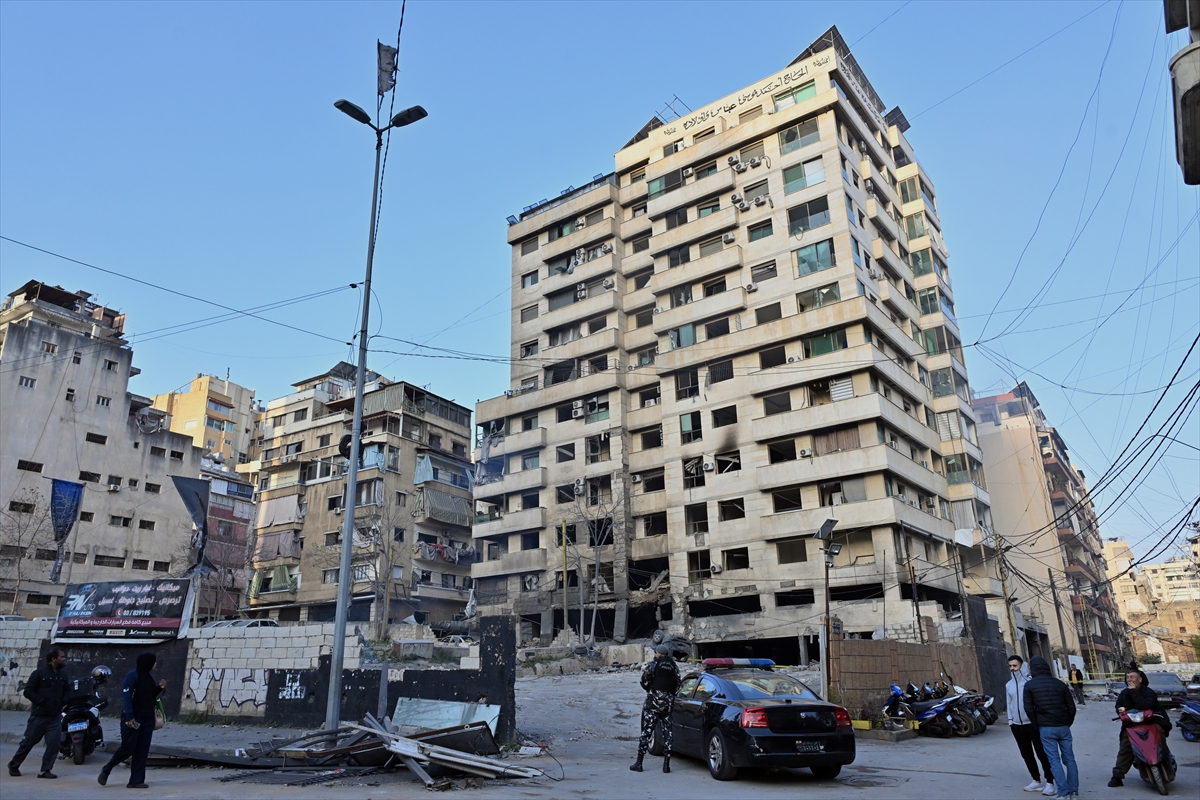
Israel expanded its military campaign the same day with air strikes on Beirut’s southern suburbs and areas in southern and eastern Lebanon. On March 3, Israeli forces launched what officials described as a limited ground incursion into southern Lebanon.
Further Israeli air strikes on Saturday killed at least 29 people across Lebanon, including five members of a family and 12 medical personnel, according to Lebanese authorities.
Lebanon’s Health Ministry said five members of the same family, including two children, were killed when an Israeli strike hit a house in the town of Mefdoun in southern Lebanon.
In a separate incident, one person was killed and four others injured after an Israeli strike targeted a residential apartment in the Nabaa district of Bourj Hammoud in Beirut.
Four people were also killed when a strike hit an apartment in Sidon in southern Lebanon, according to the National News Agency.
Ali Al Tiryaki, his wife Yumna, and their two adult sons Hassan and Abdullah were sleeping peacefully in their home when an Israeli strike hit their second-floor apartment in a three-storey residential building in the southern Lebanese city of Sidon, killing all four family members.
The Health Ministry said 12 medical workers – including doctors, paramedics and nurses – were killed when an air strike struck a primary health care centre in Burj Qalaouiyah in the Bint Jbeil district. Rescue teams were continuing to search for people trapped under the rubble.
The ministry said Israeli attacks have killed 26 paramedics and injured 51 others since March 2, adding that ambulance crews had repeatedly been targeted while conducting rescue operations.
Missiles and counter-strikes
In Israel, seven people were injured on Saturday after missile fragments fell in the southern city of Eilat following a barrage launched from Iran, according to Israel’s Channel 12.
Israel’s emergency service Magen David Adom said two people were treated at the scene, including one in serious condition and another with minor injuries.
The Israeli military said sirens had been activated in central and southern Israel after detecting two missile barrages launched from Iran within minutes of each other.
Alerts were first sounded in Jerusalem and the coastal plain, and later in Eilat and the Wadi Araba region, the military said.
Israel’s public broadcaster KAN reported that the final missile fired towards Eilat carried a cluster warhead that scattered fragments across around 10 locations in the city.
Israel’s Health Ministry said 3,138 people have been hospitalised since the start of the war with Iran and Lebanon. Of those, 81 remained in hospital, including one in very critical condition, nine in serious condition, eight with moderate injuries and 57 with minor wounds.
Israeli authorities maintain strict censorship on details related to damage and casualties from Iranian missile strikes, including the number of projectiles that landed and their impact locations.
Gulf and Iraq incidents
Saudi Arabia said it intercepted multiple incoming projectiles on Saturday.
The Saudi Ministry of Defence said its forces destroyed two drones in Riyadh and the Eastern Province. In an earlier statement on the social media platform X, the ministry said six ballistic missiles launched towards Al-Kharj Governorate had also been intercepted and destroyed. No casualties or damage were reported.
Iran’s IRGC said, in a statement, that Saudi Arabia announced that Riyadh and the Eastern Province were attacked by 10 drones, and that the drones were destroyed.
However, the IRGC said this attack has no connection to Iran, and the Saudi government should determine the origin of the attacks.
According to an informed source to Fars News Agency, the origin of the drone attacks on Riyadh and Eastern Province of Saudi Arabia is the UAE.
Meanwhile, Iran’s Foreign Minister, Araghchi, in an interview with the Qatari Al-Araby Al-Jadeed, said:
“Iran is ready to sit with regional countries and form a joint investigation committee to determine the nature of the targets attacked and whether they were American targets or not.
Tehran has intelligence that the US & Israel are carrying out false flag attacks from specific points towards Arab countries, with American copies of a drone similar to Iran’s “Shahed” drone called Lucas.”
Meanwhile, a drone strike targeted an oil refinery in Erbil in northern Iraq, triggering a fire and forcing the facility to suspend operations.
A local source told the Kurdish news outlet Shafaq News that an unmanned aerial vehicle struck the Lanaz Oil Refinery, causing a fire inside the facility. Operations were later halted, though no immediate information was available about casualties or the origin of the drone.
Diplomatic reactions
Iran’s Foreign Minister Abbas Araghchi said the United States was seeking assistance from other countries to secure the Strait of Hormuz, describing Washington’s regional security framework as ineffective.
Writing on X, Araghchi said the US security structure in the region had “proven to be full of holes and inviting rather than deterring trouble,” adding that Washington was “begging others, even China, to help it make Hormuz safe”.
Turkish President Recep Tayyip Erdoğan also criticised the violence during an iftar event marking Medicine Day at Istanbul University’s Faculty of Medicine.
“A bloodthirsty network continues striking schools and hospitals in Iran and Lebanon as it did in Gaza,” Erdoğan said.
He added that Türkiye was among the countries advocating “reason, dialogue and diplomacy” in response to the escalating conflict.
[Photo: The aftermath of Israeli strikes on the Al Bachoura neighborhood of Beirut, Lebanon, on March 13, 2026. At least 17 people were reported killed in a series of attacks targeting southern Lebanon, the Bekaa region, and the capital, causing significant damage to buildings and vehicles in the affected areas. Photojournalist: Houssam Shbaro/AA]