By Middle East Correspondent
LONDON, (The Muslim News): More than 53 people were killed and over 200 injured in an attack on a security training centre in Yemen’s southern Shabwa province on Monday, as Ansar Allah [Houthis] claimed to have targeted Saudi airports, oil facilities and military installations over the previous 48 hours.
The developments came amid escalating hostilities between Ansar Allah and forces aligned with Yemen’s government, backed by the Saudi-led coalition, and growing regional tensions involving Saudi Arabia, Pakistan and Iran.
The Shabwa governorate said the attack struck the training centre while new internal security recruits were undergoing training. Local authorities called for urgent military and security measures to prevent further attacks and urged the Yemeni government and Saudi-led coalition to strengthen the province’s defences. Ansar Allah did not immediately comment on the incident.
Ansar Allah claims strikes on Saudi targets
In a statement posted on Telegram, Ansar Allah spokesman Yahya Saree said the group had used ballistic and cruise missiles and drones to attack Saudi facilities in response to what he described as “Saudi aggression targeting our country”.
Saree claimed the targets included the Shaybah oil field, King Khalid International Airport in Riyadh and Abha International Airport. He also alleged attacks on radar installations at Jabal al-Hisn and Jabal al-Rahmah, as well as Khamis Mushait Air Base.
Saudi authorities had not immediately commented on the claims. Saudi Civil Defense said on Monday that the danger had passed in Riyadh and Al-Kharj province following earlier warning alerts, urging residents to follow official instructions and “avoid gathering and filming”.
Pakistan pledges support for Saudi Arabia
Pakistan reiterated its commitment to supporting Saudi Arabia’s defence amid the reported attacks. Pakistan Army spokesman Lieutenant General Ahmed Sharif Chaudhry said Islamabad was providing and would continue to provide whatever assistance was needed.
“It’s non-negotiable; it’s absolute as far as Pakistan is concerned,” Chaudhry told Independent Arabia in an interview aired on Sunday.
He described Saudi Arabia’s sovereignty, territorial integrity and the security of the two holy mosques as paramount to Pakistan, while insisting that the country’s defence commitments were not intended to promote offensive action.
Pakistan and Saudi Arabia have signed defence agreements intended to strengthen collective deterrence, including the Strategic Mutual Defense Agreement and the Mecca Joint Defense Alliance, which also includes Türkiye.
The Mecca agreement, signed on August 7, allows the signatories to treat an attack against one member as an attack against all three.
Citing Article 51 of the United Nations Charter, which recognises the right to individual and collective self-defence, Chaudhry said the alliance was designed to deter threats and preserve regional stability. He added that Islamabad’s discussions with the parties involved were focused on “dialing down the escalation”.
Iran calls for regional security without foreign forces
Iran called for a regional security framework based on cooperation among regional countries without foreign military intervention.
Iranian Foreign Minister Abbas Araghchi made the remarks on Monday during a joint news conference with Russian Foreign Minister Sergey Lavrov in Tehran, according to Iran’s state-run IRNA news agency.
“We welcome any initiative that leads to the establishment of security based on regional capabilities and collective security arrangements among regional countries, without the presence or intervention of foreign forces,” Araghchi said.
He argued that foreign forces and US military bases had failed to guarantee regional security and were instead becoming an obstacle to it. Tehran was ready to cooperate with neighbouring countries on a comprehensive security framework, he added.
Araghchi said his talks with Lavrov also covered developments in the Caspian Sea and Afghanistan. He described Iran and Russia as sharing a “fundamental opposition to the United States’ aggressive unilateralism” and pledged continued cooperation through international institutions.
Tehran and Moscow have expanded political, economic and military cooperation amid Western sanctions. In early 2025, Iranian President Masoud Pezeshkian and Russian President Vladimir Putin signed a 20-year Comprehensive Strategic Partnership Treaty covering defence, security, energy, trade and transport. The agreement provides for closer coordination but does not establish a mutual defence obligation.
Iran says war destroyed up to 30 passenger aircraft
The US-Israeli attacks on Iran has also damaged Iran’s civilian infrastructure, including its aviation sector. Iran Air chief executive Taher Abdolhai said on Monday that between 20 and 30 aircraft had been destroyed during the war involving the US and Israel, while between 70 and 80 aircraft had been targeted, according to the semi-official Tasnim news agency.
Of Iran’s approximately 300 passenger aircraft, only 130 to 140 had been operational before the war, Abdolhai said. He estimated that the country needed around 1,000 aircraft and claimed that Israeli attacks had caused particularly severe damage to Iran Air’s fleet.
He cited international sanctions, shortages of spare parts, financial constraints and staffing difficulties as major obstacles to restoring operations. Sanctions have restricted Iran’s access to new aircraft, maintenance services and international financing, while disrupting purchases from Boeing and Airbus following Washington’s withdrawal from the 2015 nuclear agreement in 2018.
Abdolhai said Iran Air employed more than 9,000 people and opposed privatising the national carrier, arguing that it served strategic national interests beyond commercial aviation.
Palestinian killed in Gaza despite ceasefire
Israeli attacks continued across the Gaza Strip despite a ceasefire agreement that took effect in October 2025. One Palestinian was killed and three others injured on Monday, according to a medical source cited by Anadolu.
A man was killed and two others wounded when an Israeli drone struck a gathering of civilians in the Sheikh Radwan neighbourhood of western Gaza City.
Another Palestinian sustained moderate injuries when Israeli forces opened fire towards tents sheltering displaced people in the Nahr al-Bared camp area, southwest of Khan Younis.
Local sources reported further heavy gunfire towards tents in southern and eastern parts of Khan Younis, as well as Israeli naval fire directed at Palestinian fishing boats off the coasts of Gaza City and Khan Younis.
Gaza’s Health Ministry said Israeli violations of the ceasefire had killed 1,522 Palestinians and injured 5,421 others.
Since October 2023, Israel’s military offensive has killed more than 74,000 Palestinians and injured over 175,000, according to the figures cited in the report. The offensive has caused widespread destruction, affecting approximately 90 per cent of civilian infrastructure.
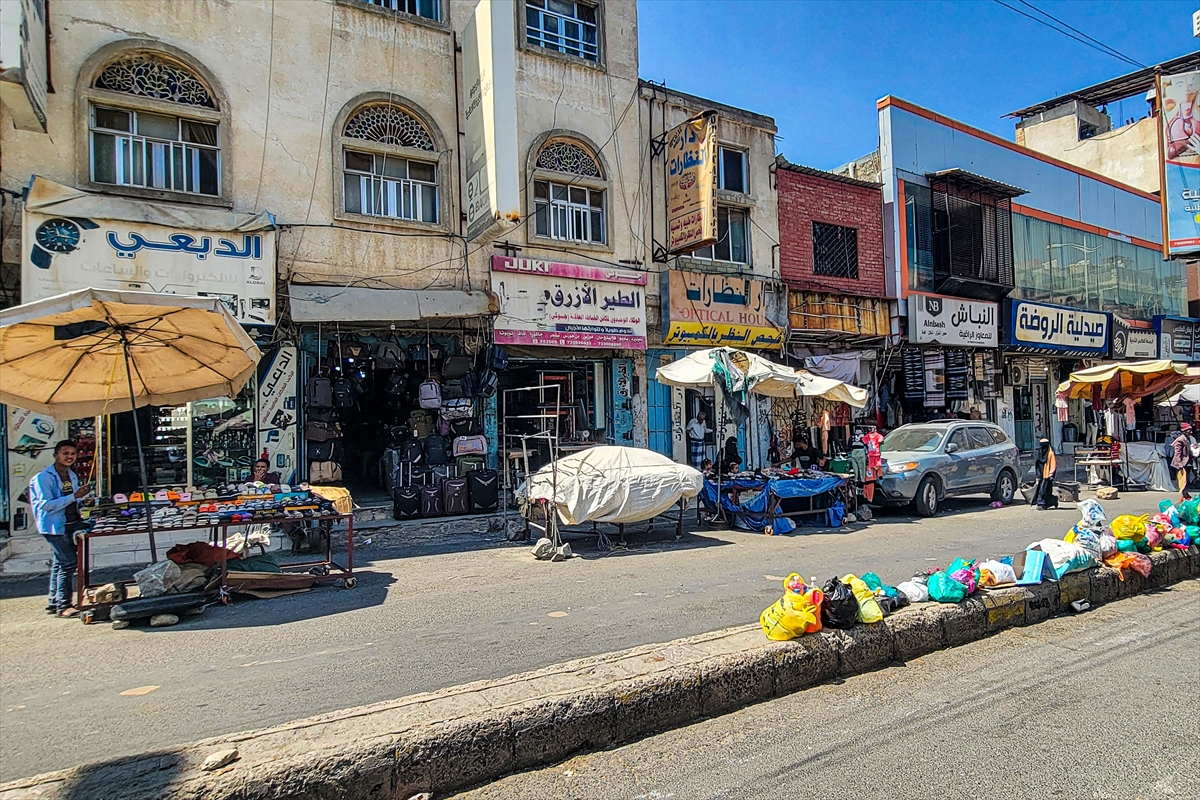
[Photo: A general view of daily life amid severe living conditions in Taiz, Yemen on October 18, 2026. Escalating localized clashes and blockades on key supply routes by Ansar Allah forces have driven up fuel and cooking gas prices, disrupted food supplies, and left local hospitals facing severe shortages of medicine and generator fuel.
Photojournalist: Muhammed el-Rumeym/AA]