By Middle East Correspondent
LONDON, (The Muslim News): Lebanon’s death toll has reached 1,029 with 2,786 injured since March 2, authorities announced, as Israeli strikes on more than 100 medical facilities killed 40 medical workers, while Iran reported 210 children killed and 1,510 injured and Israel said 4,564 people have been wounded amid escalating tensions over the Strait of Hormuz.
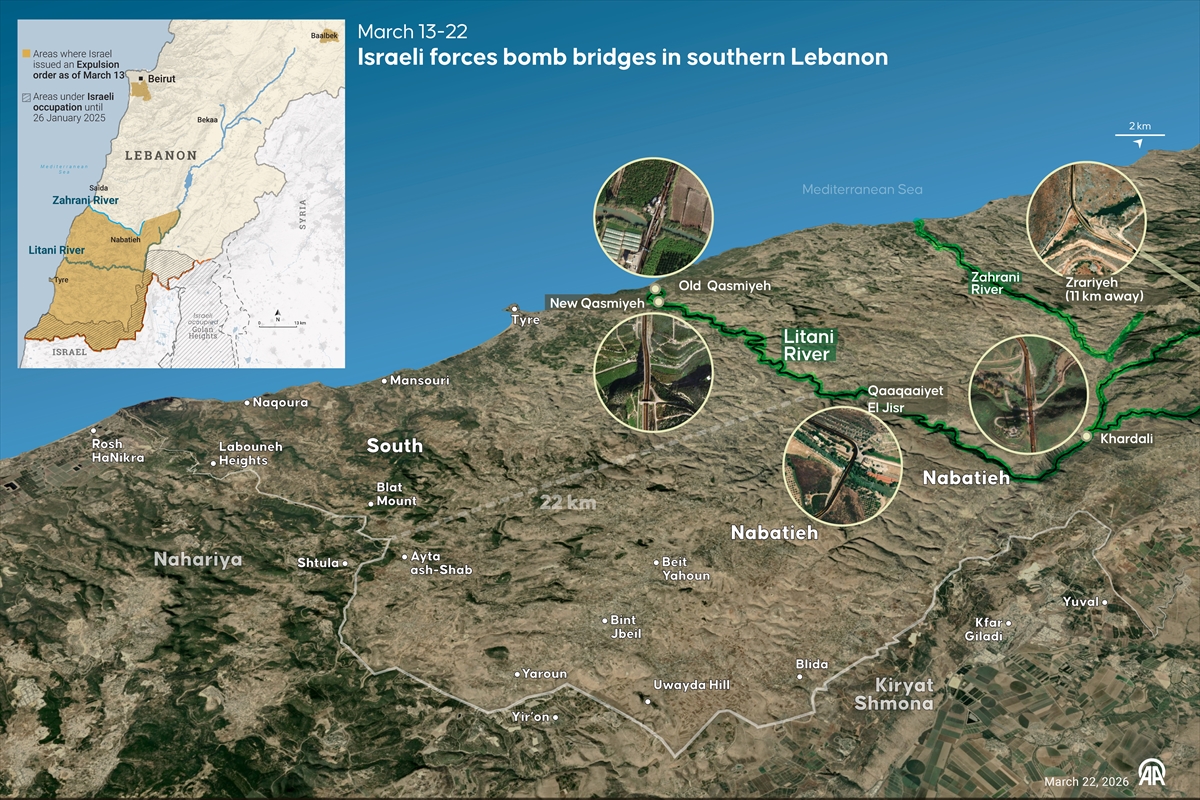
In southern Lebanon, at least four people were killed and seven others wounded in airstrikes on al-Sultaniyah and al-Sawana on Sunday. Israeli forces also struck the Qasmiya Bridge along the coastal highway linking Sidon to areas south of the Litani River, shortly after warning it would target the structure over alleged “militant activity” and the movement of operatives “under the cover of the civilian population.”
Israeli Prime Minister Benjamin Netanyahu ordered the army to “immediately” strike bridges over the Litani River, while further airstrikes were reported in the Nabatieh region, including Yahmar al-Shaqif, Shoukine, Mayfadoun and Zebdine.
Lebanese authorities say at least 1,029 people have been killed and 2,786 injured since March 2, when Israel expanded its offensive following cross-border attacks by Hezbollah.
Lebanese President Joseph Aoun said the strikes “constitute a dangerous escalation and a blatant violation of Lebanese sovereignty and are a prelude to a ground invasion,” and called on the UN Security Council to act.
Meanwhile, Hezbollah said it had launched rocket attacks on Israeli troop positions and vehicles at multiple locations along the border, including Khazzan Hill, Jabal Warda and Muhaisibat Hill, as well as in Khiam and at a newly established position known as Hamamis.
The escalation against Iran forms part of a wider regional conflict that has also intensified in Iran. Authorities there say at least 210 children have been killed and 1,510 others injured since the start of US-Israeli strikes, with around 300 health, medical and emergency centres damaged and approximately 30 ambulances put out of service since Feb. 28. The broader offensive has killed more than 1,300 people, according to Iranian figures.
Attention has also turned to the Strait of Hormuz, a key shipping route affected by the conflict. NATO Secretary General Mark Rutte said he was “absolutely convinced” the alliance would be able to reopen the waterway, following criticism from US President Donald Trump.
Iranian Foreign Minister Abbas Araghchi said the strait remained open but that shipping had been disrupted. “Strait of Hormuz is not closed. Ships hesitate because insurers fear the war of choice you initiated — not Iran,” he said on X. “No insurer — and no Iranian — will be swayed by more threats. Try respect… Freedom of Navigation cannot exist without Freedom of Trade. Respect both — or expect neither.”
Iranian Vice President Esmael Saghab Esfahani said a 48-hour ultimatum issued by Trump had increased pressure, warning of further retaliation. “The Hormuz Strait card has pressured Trump to the point that he set a 48-hour deadline,” he said.
“He is unaware that the next card – the destruction of the most important part of the electricity and water infrastructure of the Zionist entity and the United States in the region – will increase the pressure on him even more.” He added: “It is better for the residents of the Zionist entity and the peoples of the countries hosting Iran’s enemies to conserve water and charge their mobile phones during these 48 hours.”
An Iranian Foreign Ministry statement said the strait is “not blocked,” but added that vessels “belonging to the aggressor parties cannot be considered as normal and non-hostile passage” and would be treated accordingly.
Israel has also reported casualties from Iranian strikes. Its Health Ministry said 4,564 people have been injured since the start of the conflict, with 124 still in hospital, including one in critical condition and 13 in serious condition. In the past 24 hours, 303 people were injured, including eight seriously, following missile strikes including a barrage on Arad and Dimona in southern Israel.
In Gaza, a Palestinian was killed and several others wounded in an Israeli strike targeting a group of civilians in the Sheikh Radwan neighbourhood, according to a medical source.
At least 677 Palestinians have been killed and 1,813 injured since a ceasefire came into effect, the Health Ministry said. The wider war since October 2023 has killed more than 72,000 people and injured over 171,000, with widespread destruction of civilian infrastructure reported across the territory.
[An infographic titled “Israeli forces bomb bridges in southern Lebanon” created in Ankara, Turkiye on March 23, 2026. The Israeli military carried out an airstrike on Qasmiya Bridge on Sunday, March 22, targeting a key transit point that connects southern Lebanon to the north. Photojournalist: Elif Acar/AA]