By Middle East Correspondent
LONDON, (The Muslim News): Israeli attacks across Lebanon intensified on Saturday despite a US-brokered ceasefire, with at least 40 civilians killed and dozens more injured in a fresh wave of airstrikes and shelling, a day after dozens more were killed in one of the deadliest periods since Israel launched its invasion and bombardment campaign on March 2.
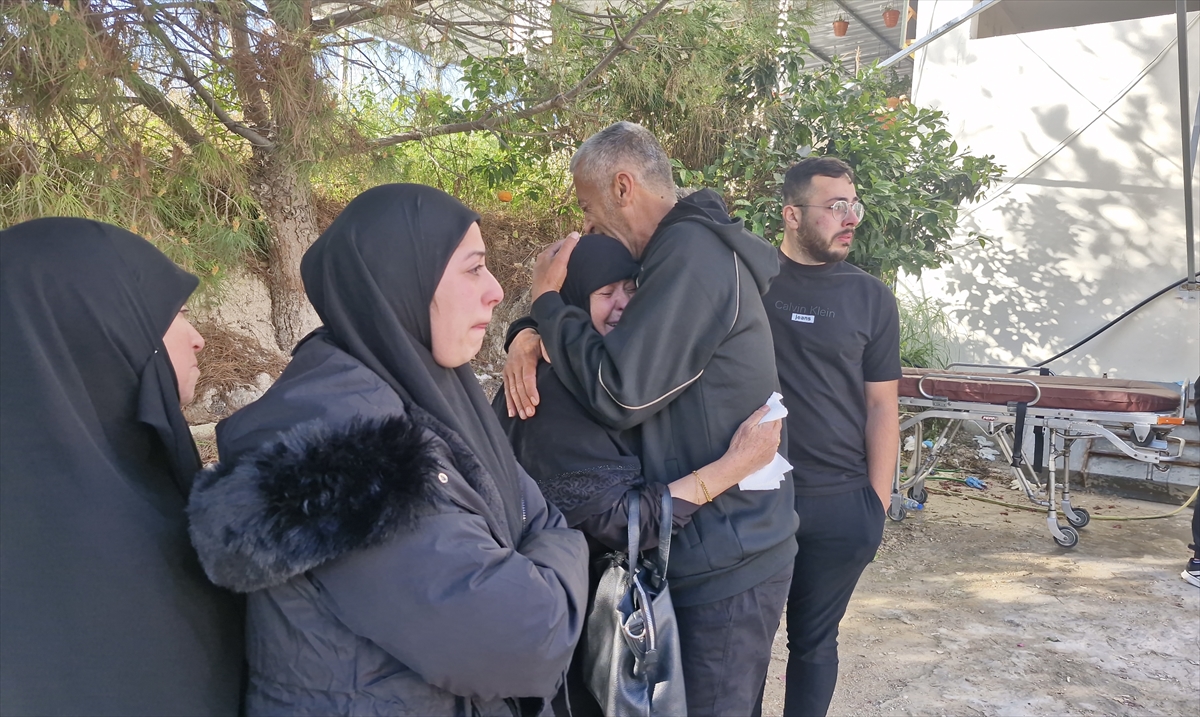
Among those killed were a Syrian man and his daughter in Nabatieh, where Israeli warplanes carried out three strikes on the southern Lebanese city. Three people were killed in Nahrain, another three in Saadiyat and three more in Haboush, while one of the deadliest strikes hit Saksakiyeh in south Lebanon, where displaced families—mostly women and children who had fled earlier bombardment in Jibsheet—were killed as their temporary shelter collapsed under the airstrike.
Further strikes targeted multiple areas across southern and central Lebanon. Three people died when an Israeli strike hit a vehicle travelling between the towns of Abbasiyah and Burj Rahal in the Tyre district. Another Israeli strike targeted a vehicle on the Moultaqa al-Nahrain road in the Chouf district of central Lebanon, killing all three people inside the car.
In Meifdoun, an Israeli drone strike on the Al-Masarib neighbourhood reportedly killed one person, while Israeli artillery shelling and demolition operations struck several towns across southern Lebanon amid clashes with Hezbollah fighters in Al-Bayada.
Artillery shelling hit the towns of Braachit, Safad al-Battikh and Touline, extending to Ghazieh and Froun, while the Israeli army fired illumination flares over villages in the western and central sectors of southern Lebanon.
In Bint Jbeil, Israeli forces demolished homes in the Al-Jabana neighbourhood and shelled the outskirts of Ghazieh before dawn.
Hezbollah said it targeted two separate groups of Israeli soldiers and military vehicles in the southern Lebanese town of Rshaf. The group also claimed it intercepted an Israeli drone over al-Abbasiyah using a surface-to-air missile.
The latest escalation comes despite a ceasefire agreement brokered by the United States, which came into effect on April 17 and was later extended until mid-May. Israel has nevertheless continued daily strikes across Lebanon, alongside ongoing exchanges of fire with Hezbollah.
Lebanese authorities say Israel’s offensive, launched shortly after the regional conflict involving Iran escalated in March, has killed more than 2,700 people and displaced over one million others. Israel also continues to maintain what it describes as a “buffer zone” inside Lebanese territory. Fresh US-hosted talks between Lebanese and Israeli officials are expected to take place in Washington on May 14 and 15.
The escalation followed Hezbollah’s announcement on Friday that it had launched what it described as its deepest strike into Israel since the ceasefire began, targeting the Shraga military base between the northern Israeli cities of Nahariya and Acre.
In a statement, Hezbollah said it fired a barrage of “qualitative missiles” at the base in retaliation for what it called repeated Israeli violations of the ceasefire and recent strikes on Beirut’s southern suburbs.
The base lies around 15 kilometres from the Lebanese border and marks the furthest target Hezbollah has publicly acknowledged striking since the truce came into force.
Hours earlier, the Israeli military said three rockets had been launched from Lebanon towards northern Israel, triggering air raid sirens in the Haifa Bay area, Nahariya and Acre in the first such incident since the ceasefire took effect. Israel later claimed one rocket was intercepted while two landed in open areas without causing casualties.
Despite the ceasefire remaining formally in place until mid-May, Israeli airstrikes and demolition operations across Lebanon have continued almost daily, drawing comparisons to the scale of destruction inflicted during Israel’s prolonged assault on Gaza.
Israeli forces continues attacks in occupied West Bank
Meanwhile, in the occupied West Bank, Israeli forces stormed the northern city of Nablus on Saturday, arresting three Palestinians, including two former prisoners.
According to the Palestinian news agency WAFA, Israeli troops entered the city through the Huwara checkpoint to the south and Checkpoint 17 to the north before deploying heavily around the Old City.
Among those detained were Tariq Jaber and Imad al-Masimi, both previously imprisoned by Israel. Israeli forces also carried out field interrogations of several Palestinians during the raid.
The occupied West Bank, including East Jerusalem, has witnessed a sharp escalation in Israeli military raids, arrests, shootings and settler violence since October 2023.
Palestinian officials say at least 1,155 Palestinians have been killed, around 11,750 wounded and nearly 22,000 arrested during that period.
In Jenin, Israeli forces reportedly compelled a Palestinian family to exhume and relocate the body of their son late on Friday, claiming the cemetery lay too close to an Israeli settlement.
WAFA cited local sources saying Israeli forces forced the family in the village of Asasa to dig up the grave and rebury the body elsewhere near Jaba’, south of Jenin. Residents said illegal settlers had initially begun digging at the grave before Israeli troops arrived and ordered the family to move the body.
Israeli authorities recently allowed settlers to return to the former illegal settlement of Sanur, evacuated in 2005 under former Prime Minister Ariel Sharon’s disengagement plan. Since then, residents say Israeli settlers and soldiers have repeatedly raided nearby towns including Jaba’ and Silat ad-Dhahr, while demolition orders have also been issued against Palestinian-owned shops along the Jenin-Nablus road.
On April 29, Israeli authorities approved plans for 126 illegal settlement units in Jenin.
Separately, satellite imagery has reportedly revealed large oil slicks near Iran’s Kharg Island, the country’s main oil export terminal. According to the Israeli newspaper Yedioth Ahronoth, images captured by the European Copernicus Sentinel satellites between May 6 and 8 appeared to show oil spreading west and south-west of the island across several kilometres of Gulf waters.
Comparisons with imagery taken on April 18 and newer satellite images from May 6 showed suspicious material dispersing across the sea surface, with visible patterns resembling offshore oil spills.
Israel’s airstrikes continue in Gaza injuring Palestinians
In Gaza, nine Palestinians, including a child, were injured in an Israeli airstrike on a residential home in the Al-Shati refugee camp west of Gaza City on Friday, according to medical officials and Gaza’s Civil Defense.
The strike targeted the home of the Al-Adham family on Al-Majadla Street near the Hamid junction after Israeli forces reportedly issued evacuation threats to residents in the surrounding area.
Witnesses said an Israeli surveillance drone first fired a missile at the house, but it failed to explode. A fighter jet later returned and bombed the property, destroying the single-storey building, igniting fires and damaging dozens of nearby homes.
The Civil Defense warned that the continued attacks and destruction could force more families to flee and appealed for urgent international intervention to protect civilians and halt attacks on residential neighbourhoods.
According to Gaza’s Health Ministry, more than 72,600 Palestinians, most of them women and children, have been killed and over 172,000 injured since Israel launched its assault on Gaza in October 2023.
[Photo: Close relatives mourn during the funeral ceremony held for seven people, including a child, who were killed in an Israeli strike targeting the town of Al-Saksakiyyeh in Sidon, Lebanon on May 10, 2026. Photojournalist: Mohammad Abushama/AA]